The 1906 Quake That Cracked Earthquake Science Wide Open
How a catastrophe that leveled San Francisco gave rise to modern seismology—and why the next 'Big One' still defies prediction.
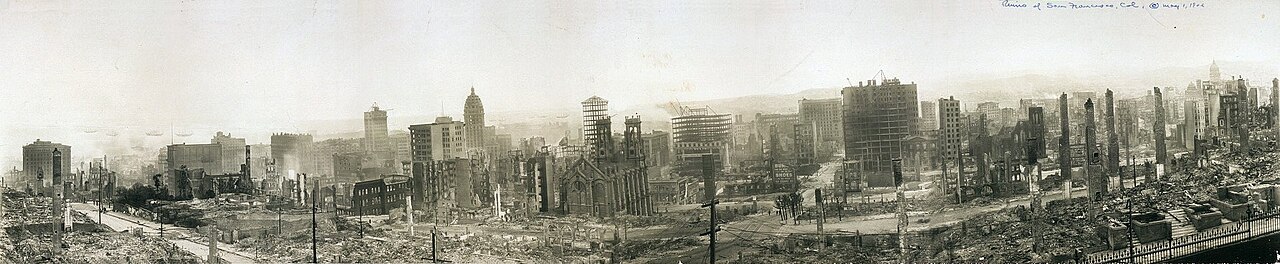
A City in Ruins, a Science in Its Infancy
On April 18, 1906, a magnitude 7.9 earthquake ruptured the San Andreas Fault. The quake and subsequent fires destroyed half the city’s buildings and killed over 3,000 people, according to historical accounts compiled by Works in Progress, a journal that synthesized data from multiple sources. But those numbers alone don’t capture what the temblor did to science. Before 1906, earthquakes were poorly understood—often attributed to mysterious forces deep underground. After 1906, they became measurable, theorizable, and eventually code-worthy.[9][11]
The Elastic Rebound: How a Glacier Man Solved the Riddle
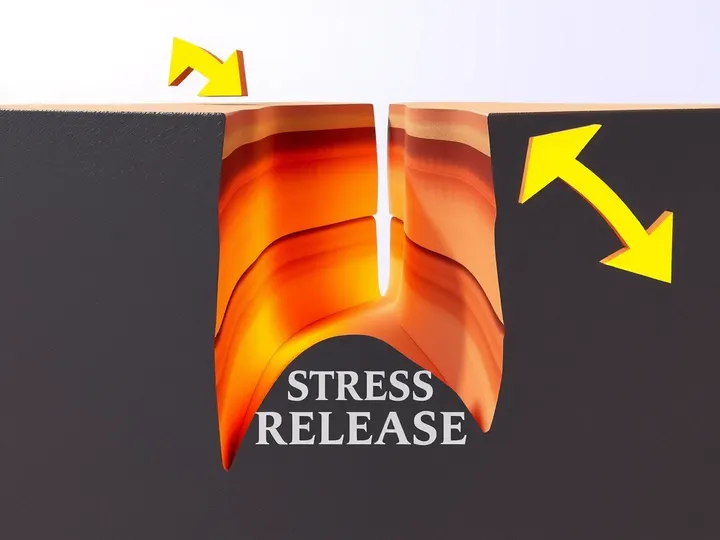
In the quake’s aftermath, California Governor George Pardee appointed the State Earthquake Investigation Commission, which included a geophysicist named Harry Fielding Reid. Reid had spent most of his career studying glaciers, according to a biography from the National Academy of Sciences. The 1906 event diverted him to faults. Reid examined ground displacement along the San Andreas Fault before the earthquake and found evidence of bending. He concluded that the quake resulted from the elastic rebound of previously stored strain energy in rocks on either side of the fault, a theory now known as elastic rebound theory, per the U.S. Geological Survey’s account.[2][3][10]
The 1906 rupture propagated northward and southward for a total of 296 miles—more than the distance from Paris to Berlin.
Reid’s theory became a foundational concept in geology. It explained that earthquakes are not random events but the sudden release of stress accumulated over decades or centuries along fault lines. The 1906 earthquake relieved strain along a 280-mile-long section of the San Andreas Fault, according to Wikipedia’s compilation of scientific consensus. That insight—that faults store and release energy—transformed earthquake science from descriptive natural history into a quantitative field.[9][10]
Founding the Seismological Society of America
The same urgency that drove Reid’s work also sparked the creation of a new institution. In the months following the April 18 quake, academic, government, and engineering professionals established the Seismological Society of America. The board of directors held its first meeting on December 1, 1906, according to the society’s Wikipedia entry. The society became a persistent advocate for earthquake-resistant construction, later joining forces with the Structural Engineers Association of California to push for seismic provisions in building codes.[4][7]
Building Codes: A Slow Awakening

Despite the devastation, the 1906 earthquake produced little or no immediate code development in the United States, according to a report from the Pacific Earthquake Engineering Research Center (PEER) at UC Berkeley. At the time, California municipalities had building codes, but none considered seismic effects, noted a Stanford University study. The 1906 earthquake did spark discussion, but it took nearly two decades for the first explicit seismic code to appear: Santa Barbara revised its code in 1925 to require structures to withstand horizontal forces, according to the Stanford report. Palo Alto followed in 1926, pushed by Stanford professors. The 1933 Riley Act then mandated that all California structures be designed to withstand a horizontal acceleration of 0.02g. Subsequent major earthquakes—the 1971 San Fernando and 1994 Northridge events—drove further significant code changes, per the same Stanford analysis.[6][7]
Why Prediction Remains Elusive
A century of progress in seismology has made earthquakes measurable but not predictable. Unlike hurricanes, floods, or tornadoes, which can be observed hours or days in advance, “earthquakes seem completely opaque to us,” noted Michael Ioffe in Works in Progress. Funding for prediction research has been close to nonexistent: the federal government has spent roughly $10 million per year over the past 30 years, Ioffe reported. Even the apparent precursory activity that scientists observed before 1906—decades of minor earthquakes—turned out to be misleading, according to Wikipedia’s summary of later research. Those small quakes had a strong seasonal pattern and are now believed to have been caused by large seasonal sediment loads, not foreshocks to the great rupture.[9][11]
Resilience Lessons for Modern California
The 1906 earthquake taught Californians that shaking intensity depends strongly on underlying geology—sediment-filled valleys shake more than bedrock sites. Modern seismic-zonation practice accounts for those differences, according to Wikipedia’s summary of current standards. Yet despite major advances in building codes, “a vast portion of the built environment remains highly vulnerable,” Ioffe reported, citing unreinforced masonry buildings and older structures. The next ‘Big One’ will find a more prepared society—but not a perfectly safe one.[9][11]
A Shaky Future
The 1906 earthquake gave seismology its first unifying theory, its first professional society, and its first impetus for seismic codes. But it also delivered a sobering truth: earthquakes are inevitable, their timing murky, and the built environment always lags behind the hazard. As California braces for the next rupture, the lessons of 1906 remain as relevant as the fault that still grinds beneath the state.[4][10][11]
Sources
- Elastic-rebound theory — courses.seas.harvard.edu
- Reid's Elastic Rebound Theory — earthquake.usgs.gov
- harry fielding reid - 1859—1944 — nasonline.org
- Seismological Society of America - Wikipedia — en.wikipedia.org
- @seismosocam.bsky.social on Bluesky — bsky.app
- Background of Seismic Codes and Performance ... — apps.peer.berkeley.edu
- 10: Evolution of Codes | Stanford University and the 1906 Earthquake — quake06.stanford.edu
- Seismic code - Wikipedia — en.wikipedia.org
- Wikipedia: 1906 San Francisco earthquake — en.wikipedia.org
- Wikipedia: Elastic-rebound theory — en.wikipedia.org
- Predicting earthquakes - by Michael Ioffe — worksinprogress.news
- Memories of the Future: The Uncertain Art of Earthquake Forecasting – Living With Earthquakes In The Pacific Northwest — open.oregonstate.education
- what - Wiktionary, the free dictionary — en.wiktionary.org
- WHAT definition in American English — collinsdictionary.com
- WHAT Definition & Meaning — merriam-webster.com
Reported with AI assistance using internet sources.