The Strait That Decides If Your Next Phone Exists
Five narrow waterways carry most of the world's manufactured goods. When one hiccups, the ripple reaches a warehouse near you.
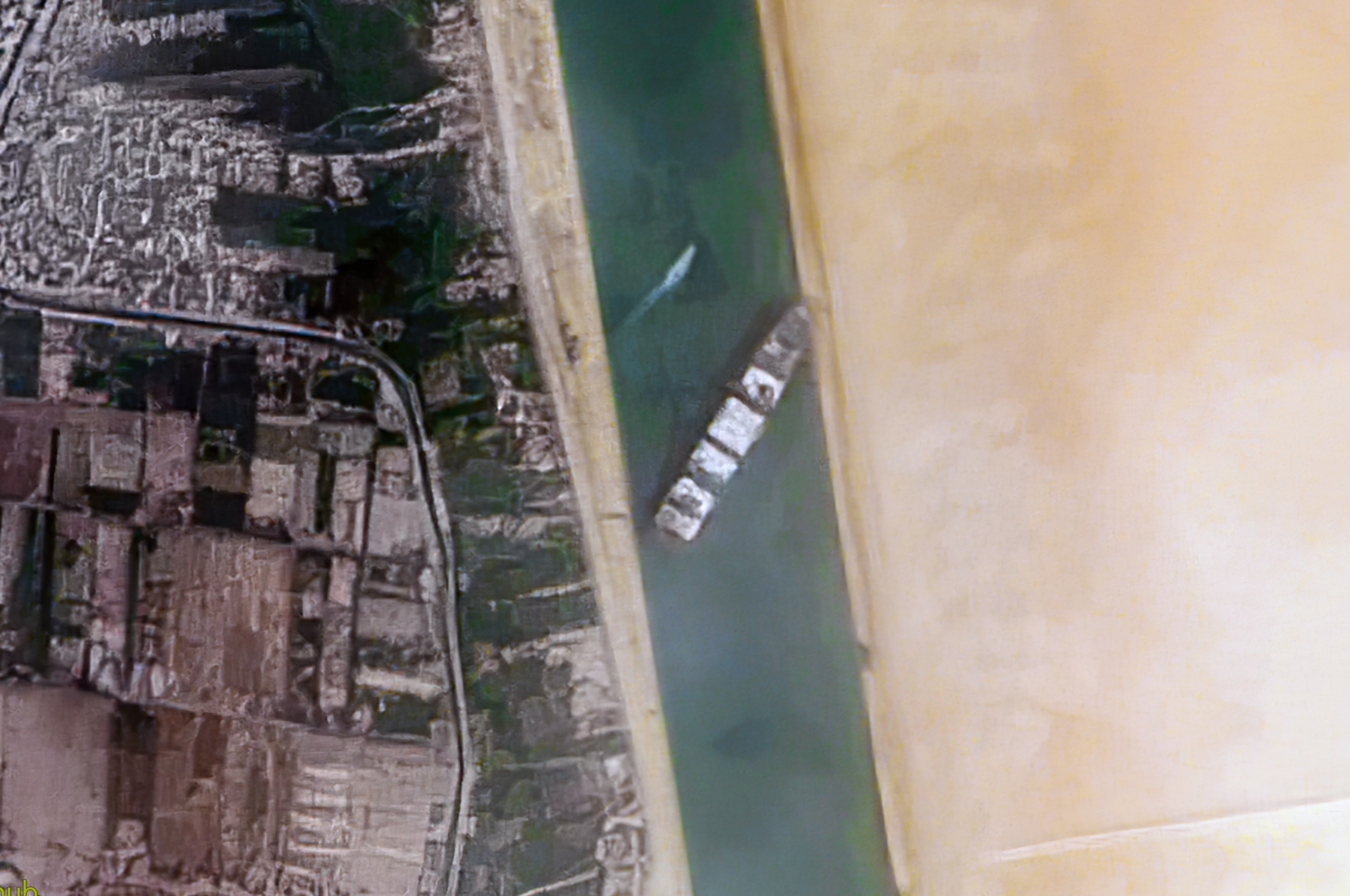
In March 2021, a 400-metre container ship named Ever Given wedged itself across the Suez Canal and stayed there for six days. According to the Baker Institute, the grounding blocked the channel and "wrought havoc with supply chains worldwide" — a single vessel, a single ditch in the Egyptian desert, and a planet's worth of delayed cargo. That is the chokepoint problem in one image: a handful of narrow passages carry the overwhelming majority of the world's traded goods, and when one closes, the bill lands in warehouses on every continent.[3]
The U.S. Energy Information Administration identifies six straits and canals as world oil transit chokepoints: the Strait of Hormuz, the Strait of Malacca, the Suez Canal, the Bosporus, Bab el-Mandab, and the Panama Canal. The Defence Horizon Journal lists a similar set — Suez, Hormuz, Bab el-Mandeb, Malacca, and Panama — as the corridors where modern disruption keeps happening. Over 90 percent of international trade travels by sea, per the U.S. Naval War College, so these narrow necks are not exotic trivia. They are the plumbing.[2][1][8]
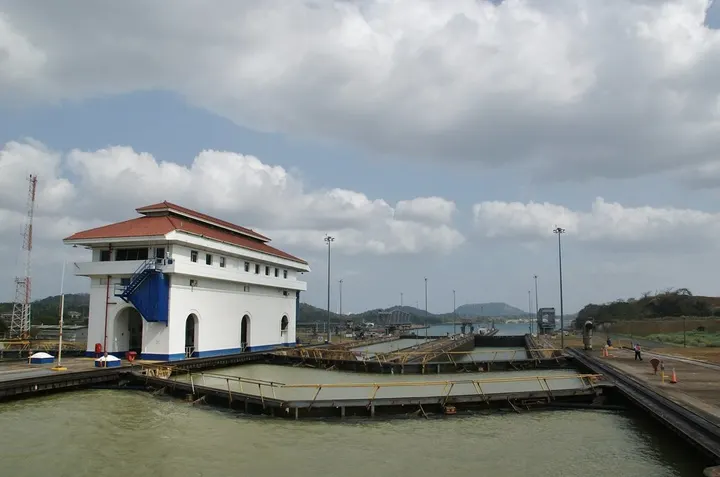
Five Doorways, One Planet's Cargo
Start in Southeast Asia. The Strait of Malacca spans roughly 800 kilometres and narrows to just 2.7 kilometres at its tightest, according to the Lowy Institute. It is the principal maritime corridor linking the Indian Ocean to the Pacific via the South China Sea, and more than 90,000 merchant vessels pass through annually — carrying nearly 25 percent of global trade. The Strauss Center puts oil traffic at about 12 million barrels a day. It is, by common consent, the most vulnerable chokepoint on earth, though also perhaps the easiest to route around if you must.[7][2]
Then the Middle East. The Strait of Hormuz handles about 20 percent of the world's oil, and in 2018 that meant 20.7 million barrels per day, per Wikipedia's background summary. Qatar and Kuwait are wholly dependent on seaborne transit through the strait, with no other options, according to the Baker Institute. Bab el-Mandab, the gate to the Red Sea, carries roughly three million barrels a day; close it and tankers from the Persian Gulf cannot reach Suez, primarily starving Europe of supply.[10][3][2]
Suez and the Sumed pipeline move about 4.2 million barrels daily, per the Strauss Center — 4.5 million by Wikipedia's count, with the canal carrying 7.5 percent of world trade as of 2011. Shut it and tankers divert around the Cape of Good Hope, adding thousands of miles and real money. The Panama Canal, the smallest of the oil chokepoints at roughly half a million barrels a day, is limited to Panamax-sized tankers by its lock dimensions.[2][10]
More than 90,000 merchant vessels pass through the Strait of Malacca annually, transporting nearly 25 percent of global trade.
Why Your Phone Cares About a Desert Ditch
A smartphone is not one product. According to Boise State University's account of the U.S. consumer electronics supply chain, each device comprises several hundred different parts, stitched together across a network of manufacturers, suppliers, retailers, and consumers. Apple sells around a quarter-billion iPhones a year while taking half the U.S. smartphone market, and around 97.6 percent of American consumers own a smartphone. The displays come from LG or Samsung in South Korea. The A18 Pro chip is designed in California but fabricated by TSMC in Taiwan. Every one of those legs crosses water.[4]
That is why chokepoint math becomes consumer math. Supply chain disruption is, by definition, an interruption in the flow of production, sales, and distribution of goods, and bottlenecks in the system tend to produce delays and higher production costs, according to Mitti. Slow supply chains lead directly to higher prices for consumers: when supply is constrained but demand holds, retailers raise prices to protect margins, per GFS Logistics. NetSuite's guide adds the obvious corollary — these events create shortfalls of raw materials, delay manufacturing, and raise costs for both inputs and finished products.[5][14][16]
The semiconductor shortage that hammered the auto industry is the cautionary tale. NetSuite notes that the 2021 cryptocurrency surge — mining rigs need chips — was one factor in the shortage that left carmakers short. A demand shock on one side of the world, a supply constraint on the other, and a factory line in a third country goes idle. The same logic applies to any container of displays or batteries stuck behind a blocked strait.[16]
The Disruption Decade
The last five years have been a stress test. The Ever Given blocked Suez for six days in 2021. Between November 2023 and November 2025, Houthi attacks on maritime targets in the Red Sea significantly affected Bab el-Mandab and the Suez Canal, per the Baker Institute, forcing most shipping to reroute around the Cape of Good Hope and adding roughly ten days to average journeys. And in 2026, Iran's closure of the Strait of Hormuz — following U.S.–Israeli strikes — diverted or blocked some 20 percent of global trade in crude oil and liquefied natural gas, halting exports of petrochemicals, fertilizers, helium, and aluminum.[3][1][6]
The Council on Foreign Relations frames the pattern bluntly: conflict-driven disruption of critical chokepoints has become a recurring feature of the world, from Russia's 2022 blockade of Ukrainian grain through the Black Sea to the Houthi campaign to the Hormuz closure.[6]
And yet. The Defence Horizon Journal cautions that while disruptions have raised costs, delayed shipments, and created strategic uncertainty, they have rarely produced the catastrophic outcomes public discourse predicts. Supply chain disruptions driven by geopolitical tension, climate events, labor shortages, and logistics bottlenecks have risen by around 40 percent in recent years, per Mitti, reducing global trade and industrial output and contributing to inflation — bad, expensive, inflationary, but not civilizational collapse.[1][5]
No Plan B, and That's the Point
The uncomfortable truth is that the same market efficiency that concentrates trade through these narrow passages is what strips out alternatives. CFR puts it plainly: the supply chains routed through chokepoints commonly lack alternatives to mitigate disruption. Wikipedia's background on choke points offers the historical measure — an alternate to the Suez/Sumed route required an additional 6,000 miles around the Cape of Good Hope. In many instances, alternate routes are nonexistent or impractical.[6][10]
Mitigation exists but is unglamorous: diversifying suppliers, rigorous risk assessment, and risk management, per NetSuite. The U.S. Naval War College notes that shipping companies themselves treat chokepoints not as strategic chess pieces but as geographic reality — while port operators, bunkerers, and ship repairers treat proximity to them as competitive advantage. The Port of Singapore and the Port of Fujairah, the world's two largest bunkering ports, sit near Malacca and Hormuz precisely because that is where the ships are. Three companies dominate global port operations: PSA International, Hutchison Port Holdings, and DP World.[16][8]
The threat is getting cheaper. CFR warns it will only become easier to interfere with or close chokepoints as drones, unmanned surface vessels, and anti-ship missiles proliferate among state and nonstate actors. The Naval War College adds that chokepoints governed by cooperative states tend to reinforce predictable legal regimes, while those in unstable or non-aligned regions expose systemic vulnerabilities. The Defence Horizon Journal argues NATO must deepen partnerships with littoral states to build resilience.[6][8][9]
So the next time a phone ships late, or a price ticks up without an obvious reason, the cause may be 8,000 kilometres away in a stretch of water 2.7 kilometres wide. Global maritime trade has more than quadrupled over recent decades, per the Defence Horizon Journal. The cargo grew. The doorways did not. That mismatch — more goods, same narrow necks — is the quiet arithmetic behind the price and availability of nearly everything you own.[9]
Sources
- Rethinking Maritime Chokepoints İn The Contemporary Global Economy - The Defence Horizon Journal — tdhj.org
- Strait of Hormuz - Other Chokepoints - Strauss Center — strausscenter.org
- Maritime Chokepoints and Risks to Global Shipping and ... — bakerinstitute.org
- The U.S. Consumer Electronics Supply Chain College of Business and Economics — boisestate.edu
- A Guide to Supply Chain Disruption | Mitti (by SafetyCulture) — mitti.com
- Conflict-Driven Chokepoint Disruptions | Council on Foreign Relations — cfr.org
- From Gallipoli to the Strait of Malacca: Why maritime choke points still decide the fate of nations | Lowy Institute — lowyinstitute.org
- Strategic Maritime Chokepoints: Global Shipping and ... — usnwc.edu
- Strategic Relevance Of Maritime Chokepoints For Global Trade - The Defence Horizon Journal — tdhj.org
- Wikipedia: Choke point — en.wikipedia.org
- SHARE | English meaning - Cambridge Dictionary — dictionary.cambridge.org
- SHARE Synonyms: 49 Similar and Opposite Words | Merriam-Webster Thesaurus — merriam-webster.com
- SHARE Definition & Meaning - Merriam-Webster — merriam-webster.com
- Exploring the Ripple Effects of Supply Chain Disruptions - GFS Logistics — gfslogistics.com
- Supply Chain Bottlenecks: Where They Pop Up and How To Address Them - SPS Commerce | The Supply Chain Source — spscommerce.com
- Supply Chain Disruptions: An Expert Guide | NetSuite — netsuite.com
Reported with AI assistance using internet sources.