The Dam Built to Die: Engineering for the Decommissioning Date
A small cadre of engineers now design dams with a demolition plan and sediment-release strategy from day one. It's harder than building for forever—and it's changing how we think about every bridge, road, and seawall.
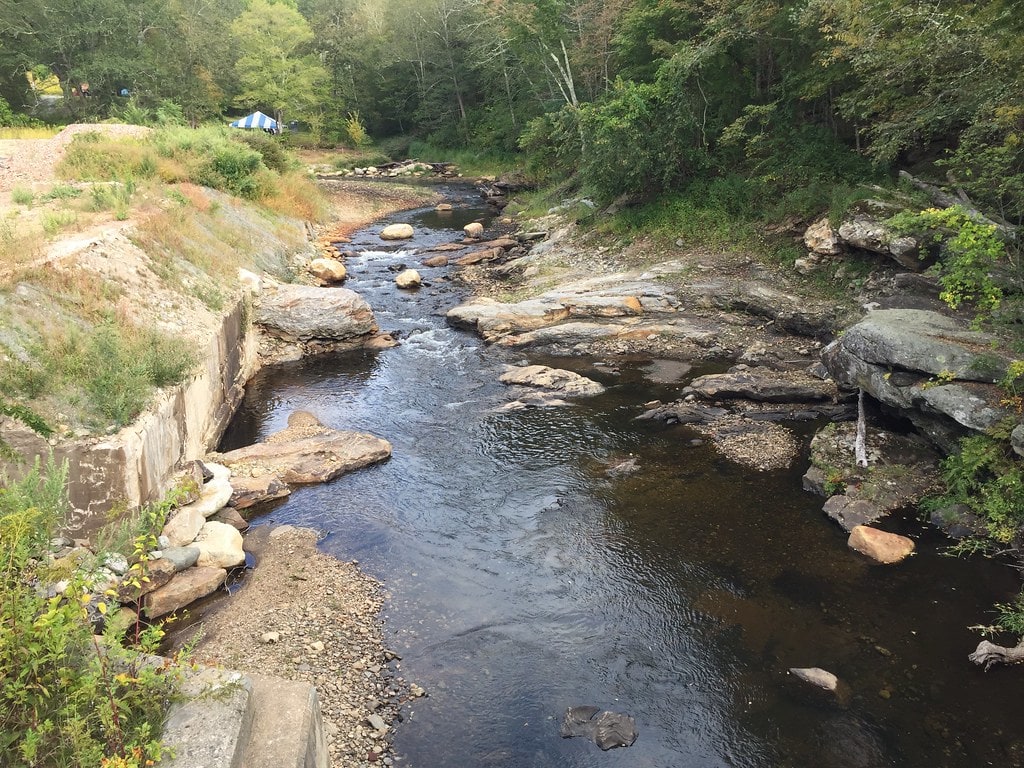
The Curtis Crossing Dam in Hanover and Pembroke, Massachusetts, is not long for this world. In June 2021, Stantec Consulting Services delivered a site reconnaissance and conceptual design for its removal to the Massachusetts Division of Ecological Restoration. The document included sections on sediment management, construction sequencing, and adjacent infrastructure constraints—a blueprint not for keeping water back, but for letting it go. [9][9]
That's the quiet heresy of reversible infrastructure: designing a dam with its own death in mind. There are more than 76,000 dams at least six feet tall in the United States. [2] But a growing number of engineers now treat removal as a design constraint, not an afterthought. The logic is simple: if you know the dam will come down—because sediment will fill the reservoir, because fish can't pass, because repair costs will outstrip benefits—you build it so it can be dismantled without poisoning the river downstream. [2][7][2][7]
The Sediment Clock Is Always Ticking
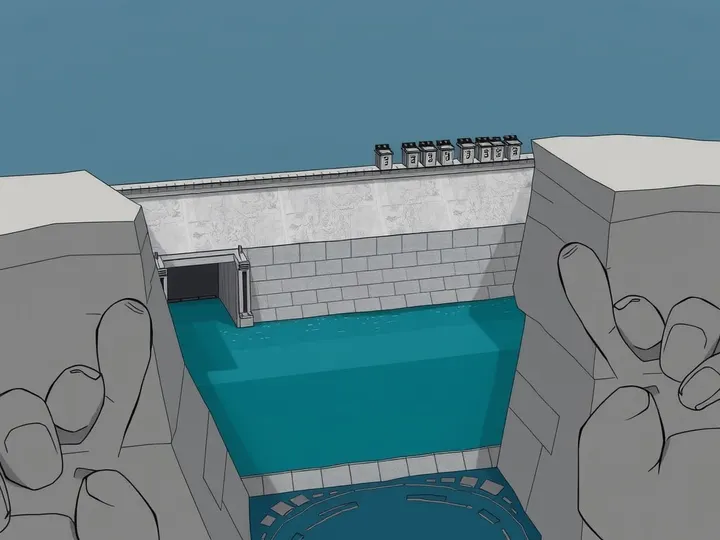
Every dam is a sediment trap. Rivers carry silt and sand; reservoirs slow the flow and drop the load, forming a delta that creeps toward the dam. Eventually, either the reservoir gets dredged or the dam gets removed. [8] That's not a failure of engineering—it's physics. According to the U.S. Bureau of Reclamation's Dam Removal Analysis Guidelines for Sediment, released in December 2017, planning a removal requires grappling with economics, hydraulics, sediment transport, and environmental effects all at once. [10][8][10]
The guidelines were developed under the Subcommittee on Sedimentation, a body formed in 1939 that reports to the Federal Advisory Committee on Water Information under the U.S. Department of the Interior. Technical experts from federal and state agencies, universities, and consultants hashed out the framework at workshops in 2008 and 2009—including a field trip to Oregon's Sandy River, where Marmot Dam had already been removed. [10][10]
For a dam built with removal in mind, sediment release isn't an emergency; it's a scheduled event. The notch-and-release approach cuts openings into the dam so trapped sediment flows downstream at a fixed rate, giving the ecosystem time to adjust. [7] The alternative—rapid release—is the quickest and cheapest way to remove a dam, but it can cause severe flooding and erosion downstream. [7] The dig-and-dewater method empties the reservoir entirely, lets the sediment dry, and trucks it to a safe disposal site. [7] Each approach carries different costs, risks, and ecological consequences, and the choice often hinges on whether the sediment is clean or contaminated. [11][7][11]
The quality and quantity of sediment trapped above the dam often determines the method for dam removal and can significantly impact the cost.
Why Removal Is Harder Than Permanence
Building a dam to last is a well-worn path. Building one to die well is not. According to the Huron River Watershed Council, removal projects usually require years of preparation: topographic and bathymetric surveys, sediment sampling and probing, habitat assessments for threatened and endangered species, land surveys to determine ownership of bottom lands, and geotechnical data collection. [11] That's before anyone touches the structure.[11]
The demolition itself is an exercise in patience. According to the Huron River Watershed Council, dam removal is intended to be slow and incremental—water released at most six inches per day—with the structure dismantled piece by piece from top to bottom over weeks or months. [11] No explosives. No sudden wall of water. The goal is to let the river reacquaint itself with its own channel without washing away everything downstream.[11]
The obstacles aren't just technical. According to the U.S. Bureau of Reclamation, dam decommissioning can be driven by economics, dam safety and security, legal and financial liability, ecosystem restoration, site restoration, or recreation. [2] When a dam has significantly deteriorated, repair costs may exceed expected benefits, and removal may be cheaper. [2] If fish can't pass upstream, the cost of adequate fish passage facilities might exceed project benefits, making removal the less expensive alternative. [2] The Aspen Institute has recommended that the option of dam removal be included in policy and decision-making affecting U.S. dams and rivers. [2][2]
But not every dam can be removed. Mine tailings dams generally continue to serve a useful purpose in perpetuity—containing consolidated tailings or providing water cover over submerged tailings—and therefore may not be decommissioned. [3] Where a mine closure plan has been approved and implemented and there are no further maintenance requirements, the tailings dam may be approved for decommissioning under the Lakes and Rivers Improvement Act. [3] The point is that reversibility isn't universal; it's a design choice contingent on what the dam is holding back.[3]
The Klamath and the Long Game
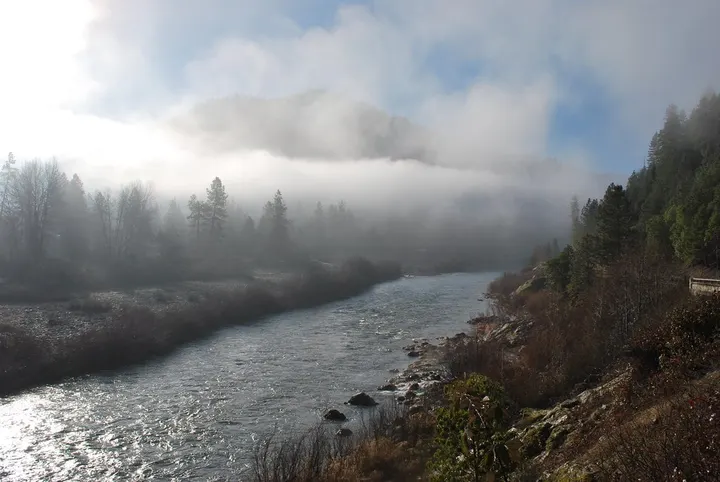
The Klamath River, on the California-Oregon border, offers a large-scale test. Four dams are being removed there, and their reservoirs have been accumulating sediment for more than 100 years, according to American Rivers. [13] One of the primary concerns in planning that removal is the impact of sediment transport on water quality, river health, and the communities that depend on healthy rivers. [13] The degree of downstream sedimentation depends on sediment volume, the management plan—phased removal, passive release, or dredging—the river's geomorphology, and the sediment's composition. [13][13]
Other high-profile removals have used passive sediment release. Condit Dam on Washington State's White Salmon River is one; the 2018 Bloede Dam removal on Maryland's Patapsco River is another. [13] These projects are watched closely because they test whether the slow, incremental approach actually works at scale—and what happens when it doesn't.[13]
The stakes are not just ecological. Dams starve downstream reaches of sediment, which can lead to increased bank erosion. [13] Managers of highly regulated rivers—often sediment-starved because of dams—are advised to stage short floods to refresh bed material and rebuild bars. [8] This matters for fish and other organisms that depend on sediment movement for habitat. [8] In the Grand Canyon of the Colorado River, staged floods are used to rebuild shoreline habitats that also serve as campsites. [8][8][13]
What Reversible Dams Teach Us About Everything Else
The logic of reversible infrastructure extends far beyond dams. According to a paper from Lawrence Technological University, buildings are not permanent, yet the current lack of life-cycle design and the expectation that buildings last indefinitely leads to a loss of 'technical nutrient' potential. [1] Materials and components are often connected in ways that permanently alter, consume, or degrade their quality—welding, adhering, and chemically combining have become commonplace. [1] The construction and demolition industries generated over 600 million tons of construction waste in 2018, filling U.S. landfills with approximately 145 million tons of material. [1][1]
The barriers to change are cultural as much as technical. According to the same paper, a lack of reversible and circular practice in the U.S. exists due to social, cultural, and economic factors including focus on tradition, risk aversion, and bountiful space for new development. [1] Permanently-intentioned buildings are produced without plans for deconstruction because of the desire to quickly produce buildings for profit—material responsibility traded away for fast construction. [1] Initial reversible architecture in the U.S. will not be made of newly developed components, but primarily of existing standardized materials joined in newly reversible methods. [1][1]
That last point is the quiet lesson of reversible dams. You don't need exotic materials or sci-fi engineering. You need to think about the end at the beginning—to design joints that can be unjoined, sediment that can be released, and structures that can be removed without leaving a wound. The dams being built to die well are not failures of ambition. They are prototypes for a world where permanence is no longer the default assumption.[1][7][11]
Sources
- [PDF] Passing Permanence: Reversible Building Practices in the U.S. — ltu.edu
- Dam Decommissioning and Sediment Management — usbr.gov
- Dam decommissioning and removal | ontario.ca — ontario.ca
- Practitioner's Guide to Hydropower Dam Removal — americanrivers.org
- Dam Removal and River Restoration — research.fs.usda.gov
- USA Dam Removal Experience and Planning — damtoolbox.org
- Wikipedia: Dam removal — en.wikipedia.org
- Wikipedia: Sediment transport — en.wikipedia.org
- Site Reconnaissance and Conceptual Design for Dam ... — nsrwa.s3.us-east-2.amazonaws.com
- Dam Removal Analysis Guidelines for Sediment — usbr.gov
- How To Remove a Dam - Huron River Watershed Council — hrwc.org
- Strategies — hydropower.org
- Sedimentation and Dam Removal: Bringing a River Back to Life | American Rivers — americanrivers.org
Reported with AI assistance using internet sources.