The Verification Desk: Inside the Room Where Someone Actually Checks
As AI floods the feed, the least glamorous job in journalism has become a growth industry — and its method is one you can steal.
The number arrived in a tweet, got screenshotted into a group chat, and by lunchtime it was a talking point. Fifty thousand predators online at any given moment. That figure was broadcast by Chris Hansen on Dateline NBC in November 2005; he credited a law-enforcement estimate. There was no estimate. Ken Lanning, the expert behind it, later admitted he made up the number because no solid data existed, according to Wikipedia's account of misinformation. Nobody in the chain of retweets asked where it came from. That is the entire problem in one anecdote: a number with no parent, dressed as a fact.[10]
Fact-checking is the process of verifying the factual accuracy of questioned reporting and statements, and it can happen before or after publication. Internal checking is done in-house to stop errors reaching print; when a third party does it, it's called external fact-checking. The first version — the magazine kind — is barely a century old. TIME hired Nancy Ford in 1923 for its research department, the first person officially employed as a fact-checker, or researcher, as the role was then called. Before that, in the yellow-journalism era, checking was women's work: the first checkers were given free rein to question, challenge and stand up to their all-male writing and editing colleagues, according to Melbourne Theatre Company's history of the practice.[1][2]
From 400 Websites to a Meta Subsidy
The trade has scaled fast. In 2023, researchers at Duke University identified over 400 fact-checking websites worldwide — double the 2016 count, according to the House of Commons Library. A major driver was money: direct funding from Meta to check content on Facebook and Instagram. The International Fact-Checking Network estimated that almost half the industry's income in 2022 came from Meta's third-party fact-checking programme. That is a strange place for a watchdog to stand — leashed, in part, by one of the companies whose platforms it audits.[4]
The demand curve isn't hard to explain. A 2018 study of Twitter found false information spread significantly faster, further, deeper and more broadly than accurate information; a separate study of Facebook found misinformation was more likely to be clicked than factual content, per Wikipedia's misinformation entry. In January 2024, the World Economic Forum ranked misinformation and disinformation as the most severe global risks in the short term.[10]
The Four Moves (and Why 'Sounds Plausible' Is the Enemy)
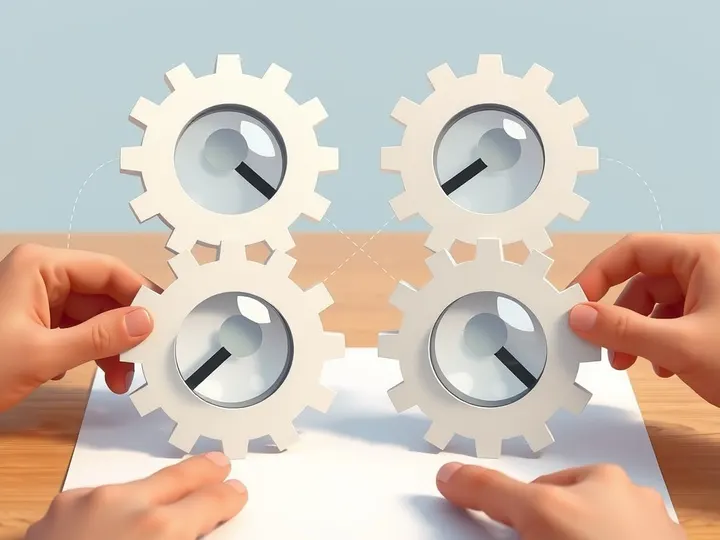
Professional checkers don't start by asking whether a claim feels right. They ask who is behind the information, what the evidence is, and what other sources say about the author or organisation. Then they run four moves, as set out in a University of Pittsburgh research guide: check for previous work, go upstream to the source, read laterally, and circle back. Going upstream means finding the original source so you're not relying on someone else's interpretation. Reading laterally means reading what others say about the source — the truth is in the network.[5]
PolitiFact's process is a useful template. Its research generally begins by contacting the source of a claim, then reaching out to that person's office for clarification, data or a source to back it up. Off-record sources are prohibited, writers are pushed toward nonpartisan data, and every article publishes its source list, according to Ballotpedia's methodology roundup. The organisation also examines memes and viral images circulating on social media — a beat that barely existed when it launched.[12]
Statistics, definitions, quotations and dates can often be verified, whereas conjecture and opinion cannot.
Why is 'sounds plausible' treated as a failure mode rather than a shortcut? Because the brain is a poor judge. Familiarity bias means that if we hear something often enough, we want to believe it's true — social media runs on a high-volume-equals-believability principle. Availability bias means the easiest memories feel the most credible, which is why sensational stories travel. Confirmation bias means we seek out what we already believe. And the desire to connect often overwhelms the desire for truth, which is where unverified sharing starts, according to a UC Irvine misinformation guide.[7]
There's a name for the default assumption that information is true: the truth bias. There's also the illusory truth effect, whereby repetition increases perceived truthfulness — though in low-credibility environments, both diminish or even reverse, according to Oxford's Internet Institute. One finding from Dr Jennifer Allen's research is worth pinning above a desk: lying has a large effect on downstream feelings and opinions, but no larger than the effect of biased presentation of accurate facts. The enemy isn't only the lie. It's the selective emphasis around a true number.[9]
Tools of the Trade: Reverse Search, Geolocation, Lateral Reading
The toolkit is more mundane than the mythology. Reverse image search checks whether a photo has been used out of context or altered, and TinEye offers a browser extension with results sortable by oldest or most recent appearance, according to Authentic8's OSINT guide. Geolocation determines where an image was captured; chronolocation determines when. Analysts use reverse image search, metadata review and visual pattern analysis to pin down both.[11][16]
When the exact image isn't indexed anywhere, the work shifts from matching to reasoning. A location-focused workflow looks at grass tone, road markings, sky colour and surrounding environment to infer a country from clues inside the frame. Tools like GeoSolver check road markings, vegetation, architecture, soil, signs, vehicles and bollards, returning a likely place, a confidence level and an explanation you can verify manually, according to reverseimagelocation.com. The OSINT Newsletter's tool library notes these systems are built for geolocation rather than matching, useful when no duplicate exists — but warns that outputs should be independently verified before being used as investigative findings, and that ambiguous, indoor, cropped or edited scenes may produce weak hypotheses.[14][15]
The Checklist You Can Actually Use
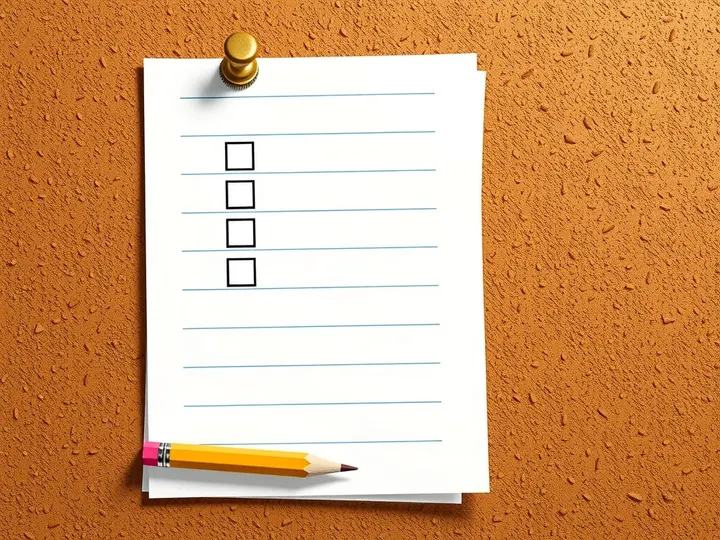
Here is the repeatable version, assembled from the guides checkers themselves use. One: check whether someone has already fact-checked it — FactCheck.org, PolitiFact, Snopes, AP Fact Check and the Washington Post Fact Checker all maintain searchable archives. Two: trace the claim back to the original study, report or data source. Three: confirm it against at least two reliable sources. Four: run a reverse image search on any photo. Five: evaluate whether the evidence is credible data, research or expert analysis — not vibes. Six: check your own emotions, because strong feeling overrides the ability to reason, and a claim that triggers it is exactly the one to slow down on.[5][11]
The limits deserve equal billing. Corrective messages and fact-checking efforts often fail to mitigate the effects or persistence of misinformation, according to research in Frontiers in Psychology, which roots that persistence in motivational and cognitive biases. Some parents' belief in an MMR vaccine–autism link outlived the 1998 Lancet paper's 2010 retraction and its 2011 debunking. Corrections can decay over time or be drowned out by cues from elites promoting less accurate claims. Political fact-checking is sometimes criticised as opinion journalism. And in countries with limited freedom of speech, the whole apparatus is constrained.[1][8]
The frontier is automation. A study analysing 137 articles on automated fact-checking from 2015 to 2022 found journalists welcome the tools for labour and for combating misinformation — but draw a line to protect their autonomy and authority on things like natural language processing and algorithmic accountability. The same research predicts automated checking will become a more integral part of how readers experience the immediacy of deciphering fact from fiction. Which is either reassuring or a warning, depending on how much you trust the machine doing the checking.[3]
So what's the takeaway? The verification desk is not a moral高地 — it's a process, and processes can be copied. The next time a number with no parent lands in your feed, do what Nancy Ford did in 1923: ask who said it, find the original, and read what everyone else says about the source. Plausibility is not evidence. It's just the feeling you get right before you hit share.[2][5]
Sources
- Fact-checking — en.wikipedia.org
- On the nature of truth, and the history of fact checking | Melbourne Theatre Company — mtc.com.au
- Automated Fact-Checking the Future of Journalism's Authority — epublications.marquette.edu
- How to check facts - House of Commons Library — commonslibrary.parliament.uk
- Evaluating Information: Fact-Checking - Research Guides — libguides.pittcc.edu
- Step 1: Use Fact-Checking Sites - Media Literacy and Fact-Checking - Research Guides at Wright State University — guides.libraries.wright.edu
- Cognitive Biases - Misinformation - Get the Facts - Research Guides at University of California Irvine — guides.lib.uci.edu
- Frontiers | Processing of misinformation as motivational and cognitive biases — frontiersin.org
- OII | Beyond Misinformation: Understanding Cognitive Bias in Complex Media Landscapes — oii.ox.ac.uk
- Wikipedia: Misinformation — en.wikipedia.org
- How to Verify Information - Fake and Misleading News: How to Identify and Evaluate It - LibGuides at Garrett College — garrettcollege.libguides.com
- The methodologies of fact-checking — ballotpedia.org
- 2. Fact-Checking As Part of the Editorial Process — thetijproject.ca
- Reverse Image Search for Location | Find Where a Photo Was Taken | GeoSolver — reverseimagelocation.com
- Reverse Image Location (GeoSolver) | OSINT Tools Library — tools.osintnewsletter.com
- Geolocation 101: image-based OSINT tips and inspiration from unlikely places | Authentic8 — authentic8.com
Reported with AI assistance using internet sources.