The Baker Who Started at Sixty-Five and Was Still Failing at Seventy
Everyone loves a late-bloomer story. Here is the part nobody puts in the profile: seven years of dense, unsold loaves and a customer list shorter than the shopping list.
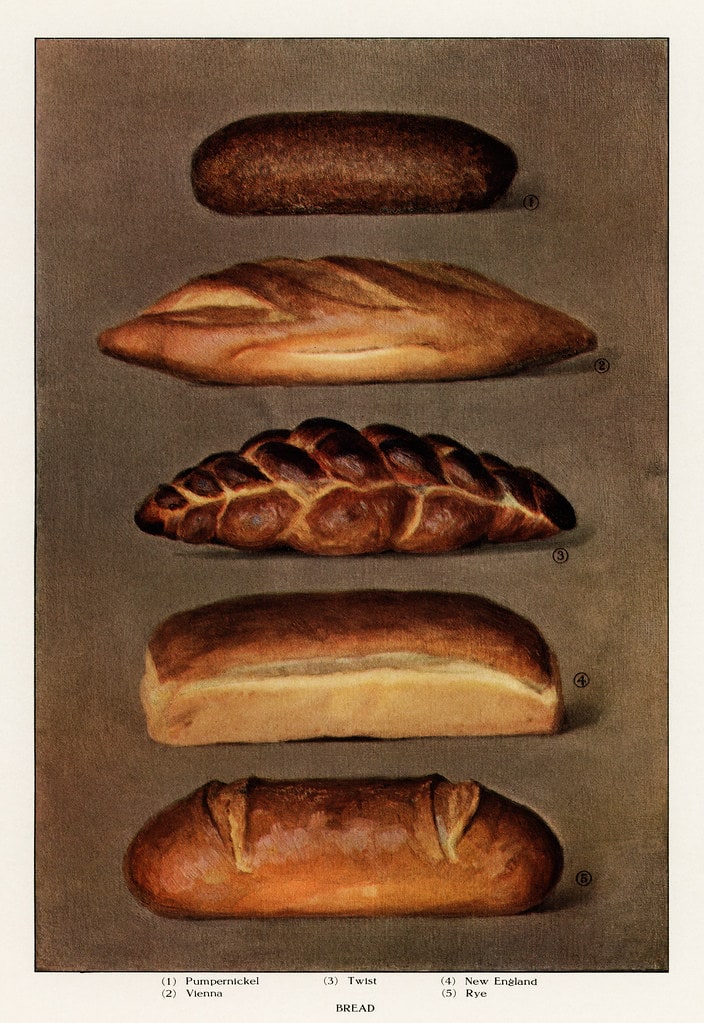
The bread was fine. That is the first thing to understand about the second-act bakery, and the least useful thing. According to kimecopak.ca, a packaging supplier that writes about bakery economics, many bakeries don't fail because the product is bad — they fail because small operational and financial issues quietly compound until margins disappear and cash runs out. A sixty-five-year-old with a good sourdough starter and a lifetime of Sunday loaves has solved the easy problem. The next seven years are spent on the hard ones.[1]
Year Two: The Fridge Full of Unsold Proof
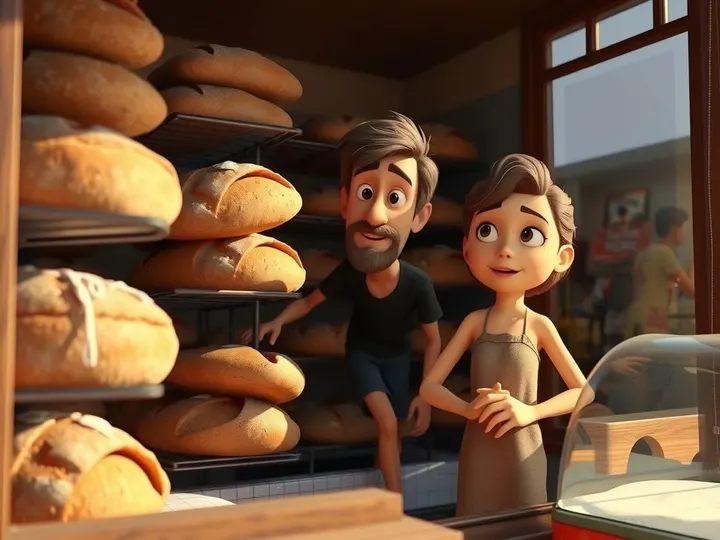
The cash-flow shape of a bakery is brutal in a way that surprises almost everyone who enters it. Bakeries pay for ingredients, labour, rent, utilities and packaging upfront, while revenue depends on selling perishable products quickly; without sufficient runway, even small disruptions can be fatal, per kimecopak.ca. A home baker's version is smaller and just as unforgiving. According to bakingsubs.com, the majority of home bakers who start taking orders stop within 12 to 18 months, and the failure usually looks like a slow fade rather than a dramatic crash. There is no closing notice. There is a Tuesday in March with eleven unsold loaves and a text from a regular who has moved to a supermarket croissant.[1][2]
What specifically keeps failing, year after year, is rarely the crumb. It is the arithmetic. Bakingsubs.com reports that underpricing is the single most common reason home bakeries fail financially — a typical custom cake order with a true cost of $146 is commonly priced at $65 by new home bakers, an $81 loss on every order. Kimecopak.ca lists the costs bakers most often leave out of their pricing: labour prep time, waste and spoilage, packaging per unit, and delivery remakes. Waste itself has a short, boring list of causes — overproduction, improper cooling, packaging that doesn't protect freshness, handling damage in transport. None of it is romantic. All of it is the business.[1][2]
Then there is the rhythm. Most home bakers operate in a feast-or-famine cycle: a rush around holidays, then crickets for weeks. Bakingsubs.com calls this a systems problem, not a demand problem. The baker at seventy who is still failing has usually spent five years treating it as a demand problem — chasing more customers instead of fixing the calendar, the price list, the par bake. A home baker working 25 hours a week at underpriced rates can easily net less than minimum wage after ingredients and overhead, the same source notes. At sixty-eight, that is not a side hustle. That is a job that pays worse than the one you retired from.[2]
"Home bakery failure usually looks like a slow fade, not a dramatic crash." — bakingsubs.com
The Industry's Own Numbers Are Worse Than the Myth
The triumph narrative has a statistical problem. Research by Tian Luo and Philip Stark, analysing two decades of Bureau of Labor Statistics data on 81,000 full-service restaurants in the western United States, found that 17 percent of independent startups closed in year one. H.G. Parsa and colleagues, counting any change of ownership in Columbus, Ohio, landed closer to a quarter. In Parsa's permit data, the subs-and-bakeries segment had a three-year ownership turnover of about 77 percent — second only to Mexican restaurants. That is the base rate against which any second-act bakery is measured, and it does not care how much you love the work.[3]
Parsa's team also interviewed twenty full-service restaurant owners who had kept their doors open five years and twenty who had closed one. The failed owners all offered high-quality foods, the authors wrote, but that did not make them successful. The two groups showed few differences in having a well-defined strategy, and considerable differences in how clear the concept was. Read that again if you are the baker at seventy: the survivors were not the ones with the better plan on paper. They were the ones whose customers could say, in one sentence, what the place was for.[3]
What Actually Changed
The observable shift, when it comes, tends to be unglamorous and plural. Skill tightens — fewer variables, more repeatable loaves. The product narrows, because a clear concept outsells a broad menu, per the Parsa findings. Pricing gets rebuilt from true cost rather than from what the neighbours charge, which is the fix bakingsubs.com and kimecopak.ca both point at. Location and daypart get matched to the actual buyer: high foot traffic doesn't guarantee high conversion if the demographic, daypart demand or price sensitivity doesn't fit the offering, according to kimecopak.ca. And expectations get recalibrated, which may be the largest change of all.[1][2][3]

The late-start timeline is distorted by the stories we retell. Colonel Sanders went on the road in 1956 to sign franchisees in his sixties, but his story is often presented as sudden success after retirement when in reality it grew from years of cooking, serving customers and running a business, per vicblogs.com. Ray Kroc was 52 when he visited the McDonald brothers' restaurant in 1954. Laura Ingalls Wilder's first novel appeared in 1932, when she was 65 — and she had started writing earlier. The pattern is not late ignition. It is long, unphotographed preparation meeting a market that finally fits.[4]
The research on encore careers gives a more honest ramp. A 2011 Penn Schoen Berland study found that people in encore careers had on average started thinking about them at age 50 and took about 18 months to make the transition — and nearly 67 percent experienced reduced or no income during it, per Wikipedia's summary of that work. Eighteen months is the transition, not the success. For a bakery, where the product is perishable and the margins are thin, the ramp is longer than the career-change average, not shorter.[10]
Persistence, Stubbornness, and the Bill
The financial and personal cost of a multi-year near-miss at 65-plus is real, and it is usually paid out of retirement savings and household patience. What makes it survivable is rarely heroism; it is a pension, a spouse's salary, a paid-off building, or a smaller operation that never had to carry a lease. The sunk-cost literature explains why quitting is so hard. The phenomenon was first introduced by Nobel laureate Richard Thaler, and the fallacy is driven by negative feelings at the prospect of having invested significantly without success; a study by Dr. Hal R. Arkes and Catherine Blumer found it motivated by "not to waste." Commitment bias means the more time, money or energy put in, the harder it is to walk away, per nvestadvisors.com.[7][8][9]
But the counter-case deserves air. Cademix.org argues that an overemphasis on avoiding the sunk-cost fallacy can lead to premature abandonment of worthwhile projects, and that the cost of quitting extends beyond money to reputation, relationships and personal growth. The same piece notes that persistence in the face of rising costs can sometimes yield significant returns. Wikipedia's entry on sunk cost adds a useful nuance: only prospective costs are relevant to a rational decision — past mistakes are irrelevant — but it may be rational to persist with a project for personal reasons even if it does not benefit a company. A seventy-year-old baker is not a company. The question is whether the next twelve months of bread would be better than the next twelve months of not baking. That is a forward-looking question, and it is answerable.[6][9]
The Reframe Is Not a Consolation Prize
When the late starter stops measuring by year-one benchmarks — revenue, follower counts, the fantasy of a queue on a Saturday — something changes in the operation. The concept gets clearer because it is no longer being designed to impress. The pricing gets honest because the baker has stopped apologising for charging. Whether that reframing causes the improvement or merely accompanies it is not settled by any study in these notes, and it would be dishonest to claim otherwise. What can be said is that the reframe and the fixes tend to arrive together, and both are forward-looking.[3][6]
The so-what is narrower than the motivational posters. Late-career founders are not a charity case: research on 2,903 solo founders in Germany from 2008 to 2017 found that entrepreneurs around 50 and above were more likely than younger founders to introduce products or services new to the market, and that older founders drawing on personal financial resources and prior managerial experience were most likely to do so, per ScienceDirect. But that is a finding about innovation, not about speed. The baker at seventy is not late to the party. The baker at seventy is early in a business that has finally been priced, narrowed and staffed correctly. The failure was never the bread. It was the calendar, the margin and the mirror.[11]
Sources
- Why Do Bakery Businesses Fail? 10 Common Reasons & How to Avoid Them – KimEcopak — kimecopak.ca
- Why Most Home Bakeries Fail (5 Gaps to Fix Now) — bakingsubs.com
- Why Do Small Bakeries Fail? 5 Overlooked Reasons — strategyforbakeries.com
- Famous Late Bloomer Success Stories: 15 Inspiring Lives — vicblogs.com
- Late bloomer - Wikipedia — en.wikipedia.org
- Rethinking the Sunk Cost Fallacy : Why Perseverance Pays Off | Cademix — cademix.org
- Understanding the Sunk Cost Fallacy: Why It Matters in Financial Decision-Making - — nvestadvisors.com
- How to overcome the sunk cost fallacy in your business | Escalon — escalon.services
- Wikipedia: Sunk cost — en.wikipedia.org
- Wikipedia: Encore career — en.wikipedia.org
- How does late-career entrepreneurship relate to innovation? — sciencedirect.com
- New research busts the myth of the 20-something start-up founder — cnbc.com
- How Older Entrepreneurs Turn Experience Into Innovation — aarp.org
- Bakery Business Case Studies — prometai.app
- Case Studies | REBREAD — rebread.com
- Food Waste and the Problem of Bakery Product Loss | BBM Magazine — magazinebbm.com
Reported with AI assistance using internet sources.