The Rise of the 'Climate Oasis': How Tucson Became a Model for Water-Scarce Futures
A desert city's radical water management offers a blueprint for a hotter, drier world.
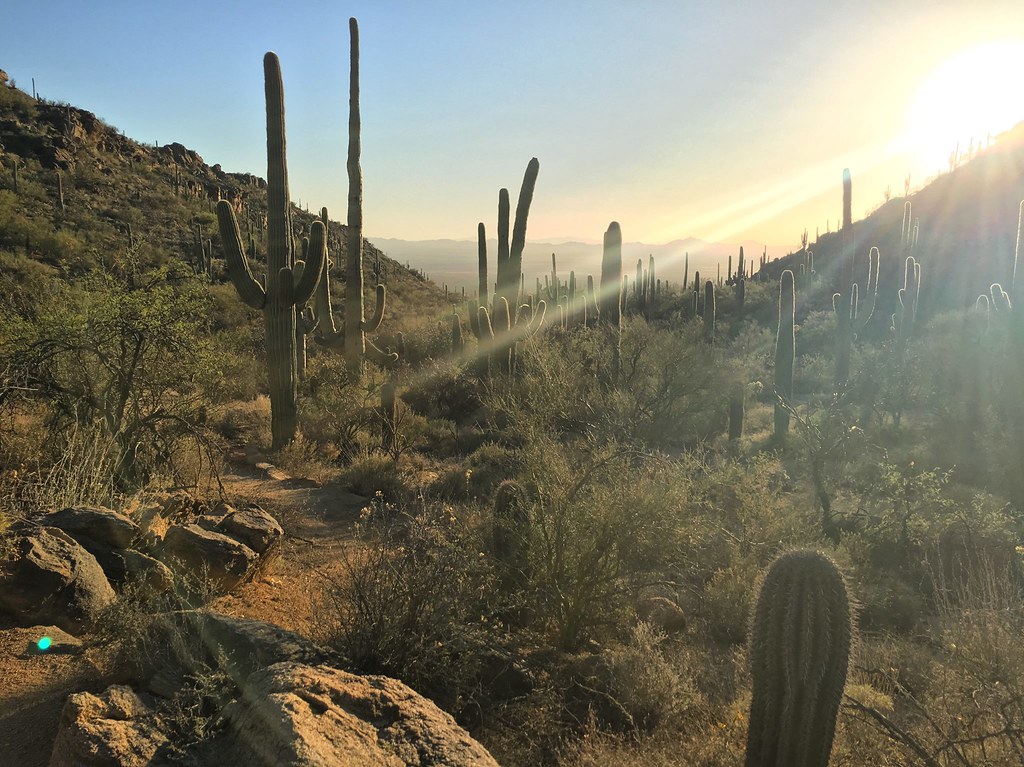
In the heart of the Sonoran Desert, Tucson, Arizona, has pulled off a quiet miracle: its aquifers are rising, its residents use less water per capita than almost any other Southwestern city, and it has built a surplus of Colorado River water stored underground for a rainy day. The average Tucsonan uses 74 gallons of water a day, compared to Phoenix's 94 and Arizona's statewide average of 146, according to the Sustainable Tucson website. But this transformation didn't happen by accident—it was forged through decades of policy, public pressure, and a willingness to rethink what water means in a desert.[9]
From Groundwater Pumping to a Diverse Portfolio

For most of the 20th century, Tucson was the largest metropolitan area in the United States completely dependent on groundwater, according to the Tucson One Water website. That changed with the completion of the Central Arizona Project (CAP) aqueduct in 1993, which brought Colorado River water to the city. But the transition was rocky: early CAP water was corrosive and caused pipe problems, leading to public backlash. Tucson Water adapted, using the river water to recharge the aquifer and then recovering it later, turning local groundwater into a 'savings account' for dry years, as described by Tucson Water's own history pages.[4][13][2]
Key turning points include the 1977 'Beat the Peak' conservation campaign, the 1984 launch of a large-scale recycled wastewater system for irrigation, and the retirement of farmland in Avra Valley to stop groundwater pumping, per Tucson Water's 'Proud of Heritage' page. By the early 2000s, recovered Colorado River water was supplying the vast majority of drinking water, and the city had diversified into reclaimed water, stormwater harvesting, and even direct potable reuse planning.[2][4]
The Policy Toolkit: Rebates, Ordinances, and One Water
Tucson's approach is a layered set of policies, not a single silver bullet. The city offers rebates for high-efficiency toilets, clothes washers, rainwater harvesting systems, and gray water systems, according to the City of Tucson's rebate page. It also provides free water audits and low-income conservation programs. Since 2013, the water department has invested $2.4 million in rebates for some 2,000 customers who installed rain-collecting cisterns or 'earthworks' like vegetated basins and rain gardens, according to the Lincoln Institute of Land Policy.[6][2][12]
A 2005 ordinance required stormwater harvesting to supplement irrigation in commercial developments, and the city's Green Stormwater Infrastructure policy uses street-side curb cuts to direct runoff into catchment basins that nourish native trees, as reported by Sustainable Tucson. At the utility level, Tucson Water has implemented a One Water approach that treats surface water, groundwater, recycled water, and stormwater as equally important resources, according to the Tucson One Water website. This holistic planning is embodied in the One Water 2100 Plan, which includes future outcomes like reducing reliance on the Colorado River and expanding onsite water recycling.[10][9][4][8]
The Project Blue Backlash and New Rules for Big Users
Tucson's latest policy innovation came after a public firestorm over Project Blue, a secretive data center proposal that could have used hundreds of millions of gallons of water annually, according to AZ Luminaria. Public outrage over the secrecy and water use pushed the city council to reject the annexation in August, and in response, the council unanimously passed an ordinance requiring any large water user to apply to the city and demonstrate conservation efforts before gaining access to Tucson's water system. The ordinance also requires council approval of the initial application and makes all materials public records, as reported by AZ Luminaria. It stops short of Marana, a nearby town that in 2024 amended its zoning code to prohibit providing potable water to data centers for cooling, but it sets a new bar for transparency.[1]
Because our consumption levels are low, we save a third of our Colorado River water allotment every year.
Measurable Outcomes: Aquifer Recovery and Low Per Capita Use
The results are tangible. Since the city stopped heavy groundwater pumping, aquifers near downtown have risen more than 100 feet, according to Sustainable Tucson. A U.S. Geological Survey study of the Santa Cruz River from 2019 to 2022 found that groundwater-level declines beginning in the 1950s have reversed to some extent, partly due to decreased pumping and managed aquifer recharge along the river. The Heritage Project, which releases treated effluent into the river channel near downtown, has created consistent flow and recharged the aquifer, though preliminary data show storage increases only near the outfall site, with potential clogging layers downstream, per the USGS.[9][5]
Tucson's overall water consumption has decreased even as its population has grown, according to a study by the Udall Center at the University of Arizona. The city's per capita use is among the lowest in the Southwest, and it saves a third of its Colorado River allocation every year, according to the One Water website. Most golf courses and parks now rely on the reclaimed water system, known as 'purple pipes,' which has grown to one of the largest in the country, per Tucson Water.[11][4][2]
Challenges and Criticisms: Drought, Data Centers, and the Colorado River
No strategy is without its critics. The Project Blue controversy highlighted the tension between economic development and water conservation, and some argue the new ordinance doesn't go far enough compared to Marana's outright ban on potable water for data center cooling, according to AZ Luminaria. The city also faces long-term risks from climate change: hotter temperatures and persistent drought are shrinking the Colorado River's flow, and proposed post-2026 operating guidelines could cut Arizona's allocation by 27%, according to AZPM. Tucson Water has a Drought Preparedness and Response plan, but stakeholders caution that even with a surplus, the future is uncertain.[1][13][4]
The Udall Center study notes that policy implementation must happen in parallel with management decisions at multiple levels—state, county, city, and utility—to be effective. Lessons from Tucson include the importance of institutional support, collaboration with other organizations, protecting ecosystem health, and leveraging existing efforts, according to the study.[11]
A Blueprint for the World?
Tucson's model is not a one-size-fits-all solution. Its success relies on a unique combination of geography, a proactive utility, and a community that has embraced conservation as a cultural value. But as cities from Cape Town to São Paulo grapple with water scarcity, Tucson offers a proof of concept: with the right mix of policy, technology, and public engagement, even the driest places can build resilience. The city's One Water 2100 Plan lays out a path forward, but the real lesson may be simpler: start early, involve the public, and treat every drop as precious.[8][11]
As the climate continues to change, Tucson's experiment will be watched closely. If it can maintain its surplus and continue to innovate, it may well become the model for a water-scarce future. And if it stumbles, it will still have provided a valuable case study in what works—and what doesn't—when the well runs dry.[13]
Sources
- After Project Blue outcry, Tucson adopts rules for large water users - AZ Luminaria — azluminaria.org
- Proud of Heritage of Desert Dwelling — tucsonwaterrunsdeep.org
- Tucson Water City of Tucson — tucsonaz.gov
- Our Water Story - Tucson One Water — tucsononewater.com
- Monitoring aquifer-storage change from artificial recharge with repeat microgravity along Santa Cruz River, Tucson, Arizona, 2019–22 — pubs.usgs.gov
- Residential Customer Rebates City of Tucson — tucsonaz.gov
- Wikipedia: Tucson, Arizona — en.wikipedia.org
- Why A Plan – Tucson One Water — tucsononewater.com
- Story of Tucson's Water — sustainabletucson.org
- Stormwater Management City of Tucson — tucsonaz.gov
- Water policies and their effects on water usage: The case of Tucson, Arizona | Udall Center for Studies in Public Policy — udallcenter.arizona.edu
- Water in the West | Lincoln Institute of Land Policy — lincolninst.edu
- The Future of Southern Arizona's Water: What Colorado River cuts could mean for Tucson’s water supply - AZPM — news.azpm.org
Reported with AI assistance using internet sources.