The Ozone Layer's Comeback: A Rare Global Win and What It Means for Climate
How the Montreal Protocol became the most successful environmental treaty—and why its lessons are hard to repeat.
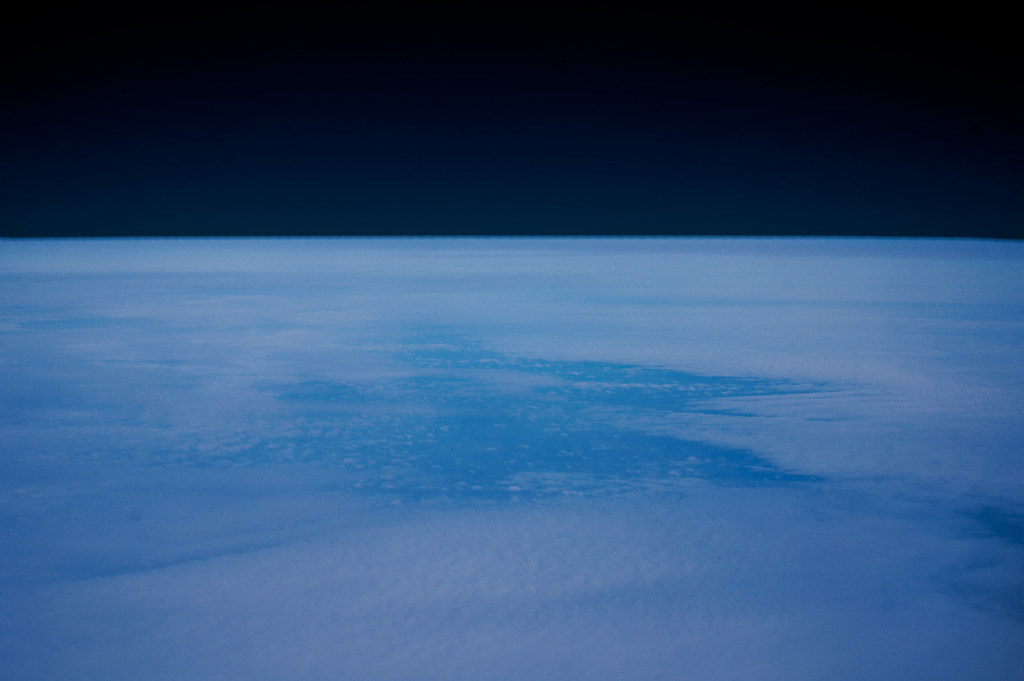
In September 2025, the World Meteorological Organization announced something that has become rare in environmental news: the ozone layer is on track for a full recovery, possibly as soon as mid-century [8]. The 2025 Antarctic ozone hole was relatively small and short-lived, confirming a long-term healing trend [7]. This is not a hypothetical or a model projection—it's the result of a treaty signed in 1987 that nearly every country on Earth eventually joined [8][1].[8][7][1]
A Treaty That Worked
The Montreal Protocol, adopted on 16 September 1987, was designed to phase out the production of substances responsible for ozone depletion [1]. It set a mandatory timetable for phasing out main ozone-depleting substances and provided money to developing countries to help them comply [3]. The treaty's clever design included a clause requiring regular review, allowing new evidence about other ozone-depleting substances to be included over time [4]. As a result, it has been ratified by 198 parties—the first universally ratified treaty in UN history [1].[1][3][4]
The protocol's success wasn't just about the treaty text. It was a global effort that involved scientists, diplomats, industry, and the public [2]. A group of countries, including Canada, Finland, Norway, Sweden, and the United States, led by example by implementing regulations before a global compromise was found, motivated by internal political pressure from citizens concerned about health risks [5]. Major producing companies, particularly DuPont, backed the phase-out after substitutes were found, because they were in a good market position to sell those substitutes [5].[2][5]
The protocol also included a Multilateral Fund, established in 1991, which has supported over 8,600 projects including industrial conversion, technical assistance, training, and capacity building worth over US$3.9 billion [15]. This financial mechanism helped developing countries comply with the phase-out, addressing a key equity concern [13][1].[15][13][1]
The Montreal Protocol is widely hailed as not only the world's 'most successful environmental agreement' but arguably the most successful international agreement, period.
The Proof Is in the Sky
The results are measurable. Since peaking around the year 2000, levels of ozone-depleting substances in the Antarctic stratosphere have declined by about a third relative to pre-ozone-hole levels [7]. An MIT-led study confirms that the Antarctic ozone layer is healing as a direct result of global efforts to reduce ozone-depleting substances, with high statistical confidence [9]. Satellite observations show that Antarctic ozone trends align more closely with a modeled human fingerprint as records extend, confirming that significant recovery is now detectable from space [9].[7][9]
The protocol has eliminated more than 95% of all ozone-depleting chemicals controlled by the treaty [14]. Nearly 99% of ozone-depleting substances are gone, and the ozone layer is on a path to recovery [16]. If current policies remain in place, the ozone layer is expected to recover to 1980 values by around 2066 over the Antarctic, by 2045 over the Arctic, and by 2040 for the rest of the world, according to the most recent assessment in 2022 [7]. Some projections suggest the ozone layer could completely regenerate by 2045, but this is one specific projection [10].[14][16][7][10]
The benefits extend beyond the ozone layer itself. The Montreal Protocol helped to avoid an estimated 135 gigatonnes of CO2 equivalent emissions from 1990 to 2010—five times larger than the annual emissions reduction target for the Kyoto Protocol from 2008 to 2012 [6]. By phasing out ozone-depleting substances, the protocol prevented up to 2.0°C of warming: 1.0°C from reduced emissions, and up to 1°C from protecting forests and other carbon sinks from increased ultraviolet radiation [16]. It has also provided at least USD 1.8 trillion in health benefits in the form of avoided cases of skin cancer and cataracts [6].[6][16]
Why It Worked—and Why Climate Is Harder
The Montreal Protocol's success stems from several key factors. It dealt with a limited number of chemicals, and it wasn't a complete transformation of all the levers of the economy [3]. The protocol employed a control measures mechanism that specified the maximum amount of ozone-depleting substances each party could produce or consume [13]. It also had a Non-Compliance Procedure with specific penalties and comprehensive dispute resolution processes, fostering accountability [11].[3][13][11]
The protocol's adaptive mechanisms were crucial. Initially, it implemented a 50% phasedown, rather than a phaseout, and only covered a limited subset of the most potent gases. As technological advances made replacements more cost-effective, the protocol was able to do even more [16]. The treaty also required that parties base their decisions on current scientific, environmental, technical, and economic information assessed through panels drawn from worldwide expert communities [1].[16][1]
But translating these lessons to climate change is not straightforward. The Montreal Protocol is very different from the Paris Agreement because it dealt with a limited number of chemicals and did not require a complete transformation of all the levers of the economy [3]. Climate change involves every sector, every country, and every individual. As one analysis notes, the protocol's success included developing nations in its regulatory framework, with Article 5 delaying compliance for developing countries and a Multilateral Fund supporting financial and technical assistance [11]. Public awareness initiatives under Article 9 enhanced citizen support—a crucial element missing in climate change efforts [11].[3][11]
The protocol also benefited from a dramatic focusing event: the discovery of the ozone hole in 1985, which was much larger than scientists had expected [5]. This created a sense of urgency that helped get the Montreal Protocol started [5]. Climate change lacks a single, visible, easy-to-grasp event of similar magnitude—or at least, it hasn't had one yet.[5]
Setbacks and the Road Ahead
The ozone layer's recovery hasn't been without hiccups. Recently, CFCs were not declining as rapidly as expected, traced to a source in China. After the Chinese government took action, it is back on track [4]. There have also been regional detections of non-compliance [1]. But the overall trend is clear: the protocol is a stunning success, having reduced the substances it was meant to manage by almost 100% [5].[4][1][5]
The Montreal Protocol has also been expanded to address hydrofluorocarbons (HFCs), which are powerful greenhouse gases. The 2016 Kigali Amendment added HFCs to the list of controlled substances, and with it, we are on track to avoid an extra 0.5°C of warming by 2100 [6]. This shows that the protocol's framework can adapt to new challenges, and it provides a model for climate action [4].[6][4]
What does the ozone layer's comeback teach us? First, that international cooperation can work when the problem is clearly defined and the solutions are feasible. Second, that science, industry, and public pressure can align to create change. And third, that even the most daunting environmental challenges can be tackled with the right mix of ambition, pragmatism, and money. As one analysis put it, the Montreal Protocol is 'the example we should follow in developing a new agreement to address global climate change' [14].[14]
Sources
- Montreal Protocol - Wikipedia — en.wikipedia.org
- Learning from Success: Lessons in Science and ... — sciencediplomacy.org
- What can we learn from the Montreal Protocol? | Earth Day — earthday.org
- Medium — medium.com
- The success and failure of the Montreal Protocol — existentialcrunch.substack.com
- Hope Lingers: Lessons from the Montreal Protocol — forourclimate.org
- Small and short-lived 2025 ozone hole confirms long-term recovery trend — wmo.int
- The Ozone Layer Is On Track for a Full Recovery, Thanks to Global Collaboration Since 1987 | Discover Magazine — discovermagazine.com
- Study: The ozone hole is healing, thanks to global reduction of CFCs | MIT News | Massachusetts Institute of Technology — news.mit.edu
- Wikipedia: Ozone depletion — en.wikipedia.org
- (DOC) What are the key factors that have made the Montreal Protocol successful? To what extent are these factors relevant for international efforts to address climate change? — academia.edu
- Is the Montreal Protocol the Most Successful Treaty? — tunley-environmental.com
- What Are the Key Mechanisms Used by the Montreal Protocol to Achieve ODS Reduction? → Learn — pollution.sustainability-directory.com
- Future of the Montreal Protocol: Lessons Learned and Applicability ... — 2001-2009.state.gov
- About Montreal Protocol — unep.org
- Building Upon the Montreal Protocol's Legacy of Collaboration — carboncontainmentlab.org
Reported with AI assistance using internet sources.