Why Your Brain Loves a Good Story: The Neuroscience of Narrative
From neural coupling to oxytocin spikes, science explains why stories stick—and how you can use that power.
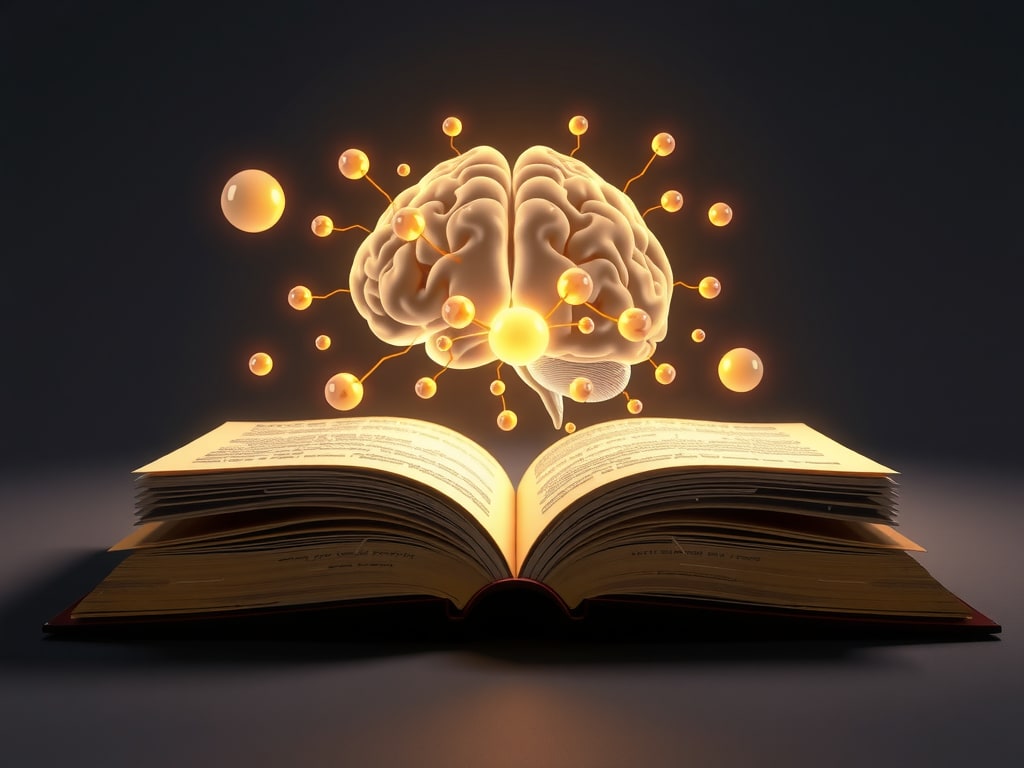
You’re at a company meeting. The CFO drones through a slide deck of quarterly numbers—bar charts, pivot tables, a sea of percentages. Your mind wanders. Then the CEO stands up and tells a story: how a customer service rep stayed on the phone for three hours with a frantic mother, tracked down a lost shipment, and turned a would-be refund into a lifelong fan. Suddenly, you’re leaning forward. Your brain is firing in sync with hers. That’s not just good speaking—it’s neuroscience.[1][8]
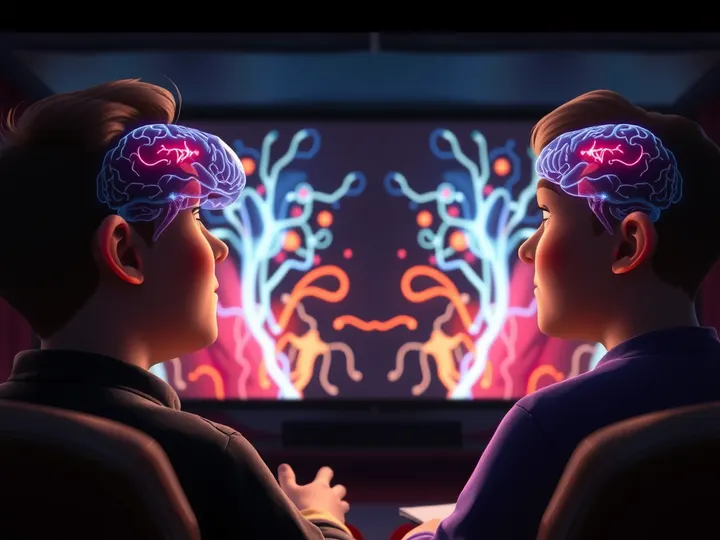
When you hear dry facts, only the language-processing centers of your brain light up. But a vivid story activates a sprawling network: motor cortices, sensory regions, even the emotional limbic system. As neuroscientist Uri Hasson’s research showed, listeners’ brain activity begins to mirror the storyteller’s—a phenomenon called neural coupling. This synchronization is a marker of shared understanding and trust, and it’s why a well-told tale can feel like a shared experience.[1][14][16]
The Chemistry of Engagement
Stories are not just cognitive—they’re chemical. When a narrative introduces a challenge or obstacle, your brain releases cortisol, sharpening attention. When the hero triumphs or a mystery resolves, dopamine floods in, enhancing focus and memory. And when you empathize with a character, oxytocin—the “cuddle hormone” produced in the hypothalamus—builds trust and connection. According to the Harvard Business Review, character-driven stories consistently trigger oxytocin synthesis, and the amount released predicts how willing people are to help others, such as donating to a charity linked to the narrative.[2][5][10]
“Facts are 20 times more likely to be remembered if they’re part of a story.” — Psychologist Jerome Bruner
The brain’s reward system is wired for narrative. Dopamine, the “reward chemical,” is released in response to surprise, novelty, and resolution—the very elements that structure a good story. This is why a suspenseful plot keeps you turning pages, and why a well-told anecdote at a dinner party holds the room. As one neuroscience blog put it, stories act as “compressed packets of logic, emotion, and meaning,” making them easier to remember and retell than a list of bullet points.[1][14]
Why Stories Stick—and How to Use Them
The memory advantage is staggering. A Stanford study found that facts are up to 20 times more likely to be remembered when conveyed through story rather than bullet points. This is because stories engage multiple brain regions simultaneously—visual, auditory, kinesthetic, and emotional—creating a rich network of associations. Learning from a well-told story is remembered more accurately and for far longer than learning derived from facts and figures.[8][14]
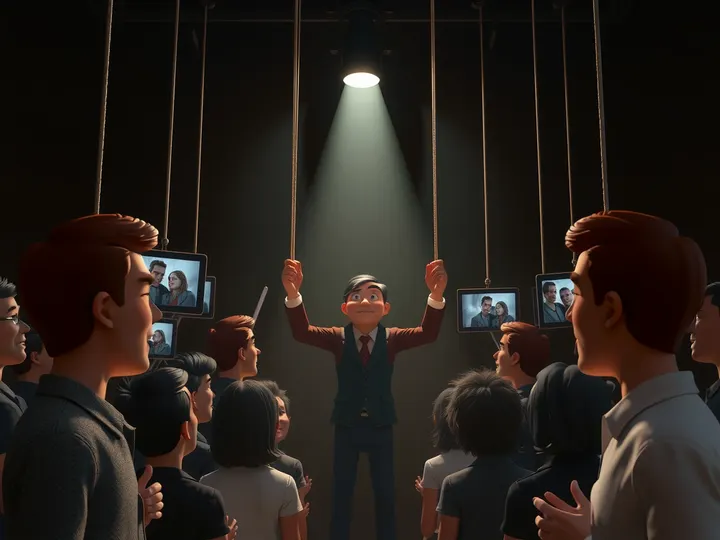
For communicators, the takeaway is clear: if you want to persuade or teach, wrap your data in narrative. The ABT framework—And, But, Therefore—is a simple structure: set the context, introduce a conflict, then resolve it. The “But” phase triggers cortisol to sharpen focus; the “Therefore” phase releases dopamine to seal the memory. For a more epic arc, the Hero’s Journey—where a protagonist faces a call to adventure, overcomes trials, and transforms—has been shown to predict donation behavior with 82% accuracy. When researchers saw spikes in ACTH and oxytocin, donations increased by 261%.[2]
Even in professional settings, storytelling can outperform standard presentations. According to Berkeley’s Greater Good Science Center, character-driven stories with emotional content lead to better understanding of key points and enable better recall weeks later—blowing the standard PowerPoint presentation “to bits.” And people are substantially more motivated by an organization’s transcendent purpose (how it improves lives) than by its transactional purpose (how it sells goods). Sharing your founding myth—why you started, what barriers you overcame—can provide daily guidance and motivation.[5]
The Dark Side of Narrative
But the brain’s affinity for stories has a downside. The same neural coupling that builds trust can make us vulnerable to misinformation. A compelling story—even a false one—can trigger oxytocin and dopamine, making it feel true. The herding effect, where listeners’ brain activity aligns with the speaker’s, can predict interpretation with about 85% accuracy, but it also means a skilled storyteller can manipulate emotions and beliefs. Compelling narratives can affect our attitudes, beliefs, and behaviors.[1][3]
Neuroscientists are still debating which specific brain regions are involved in narrative processing, and much of the research relies on small samples or correlational methods. But the core finding holds: stories are not just entertainment—they are a fundamental way the brain makes sense of the world. From the default mode network that activates during comprehension to the situation models that help us track characters and plots, our brains are built for narrative.[11][13][15]
The Bottom Line
So the next time you need to persuade, teach, or inspire, skip the bullet points. Tell a story. Set the scene, introduce a struggle, and show how it was overcome. Your audience’s brain will do the rest—releasing oxytocin to build trust, dopamine to sharpen focus, and cortisol to keep them on the edge of their seats. Just remember: with great narrative power comes great responsibility. Use it to connect, not to deceive.[1][2][5]
Sources
- The Neuroscience Behind Storytelling Influence | House of Birch — houseofbirch.co.uk
- 5 Storytelling Frameworks Backed by Neuroscience | BrandMultiplier.ai Blog — brandmultiplier.ai
- Why Inspiring Stories Make Us React: The Neuroscience of Narrative - PMC — pmc.ncbi.nlm.nih.gov
- Why the Brain Loves Stories — brainfacts.org
- Why Your Brain Loves Good Storytelling — hr.berkeley.edu
- The art of storytelling: the key to effective communication | Technologia — technologia.com
- Narrative strategies for professional communication: Unlocking the power of storytelling | Penn LPS Online — lpsonline.sas.upenn.edu
- What Makes Storytelling So Effective For Learning? - Harvard Business Impact — harvardbusiness.org
- Wikipedia: Narrative — en.wikipedia.org
- Wikipedia: Oxytocin — en.wikipedia.org
- Temporal constraints on the neural signatures of narrative processing — elifesciences.org
- The Narrative Mind: Why We Turn Life Into Stories GlobalRPH — globalrph.com
- Neural substrates of narrative comprehension and memory - PMC — pmc.ncbi.nlm.nih.gov
- The Psychology & Neuroscience Behind Storytelling – Joseph Griffiths – Sales Educator & Coach — blog.jgriffiths.org
- Neuroscience of Storytelling — neuroleadership.com
- The Neuroscience of Storytelling - Why It Matters Most — joeboyd.substack.com
Reported with AI assistance using internet sources.