The Passport Queue That Runs on Paper
When e-gates fail, the world's invisible border infrastructure collapses back to ink, stamps, and a very long line.
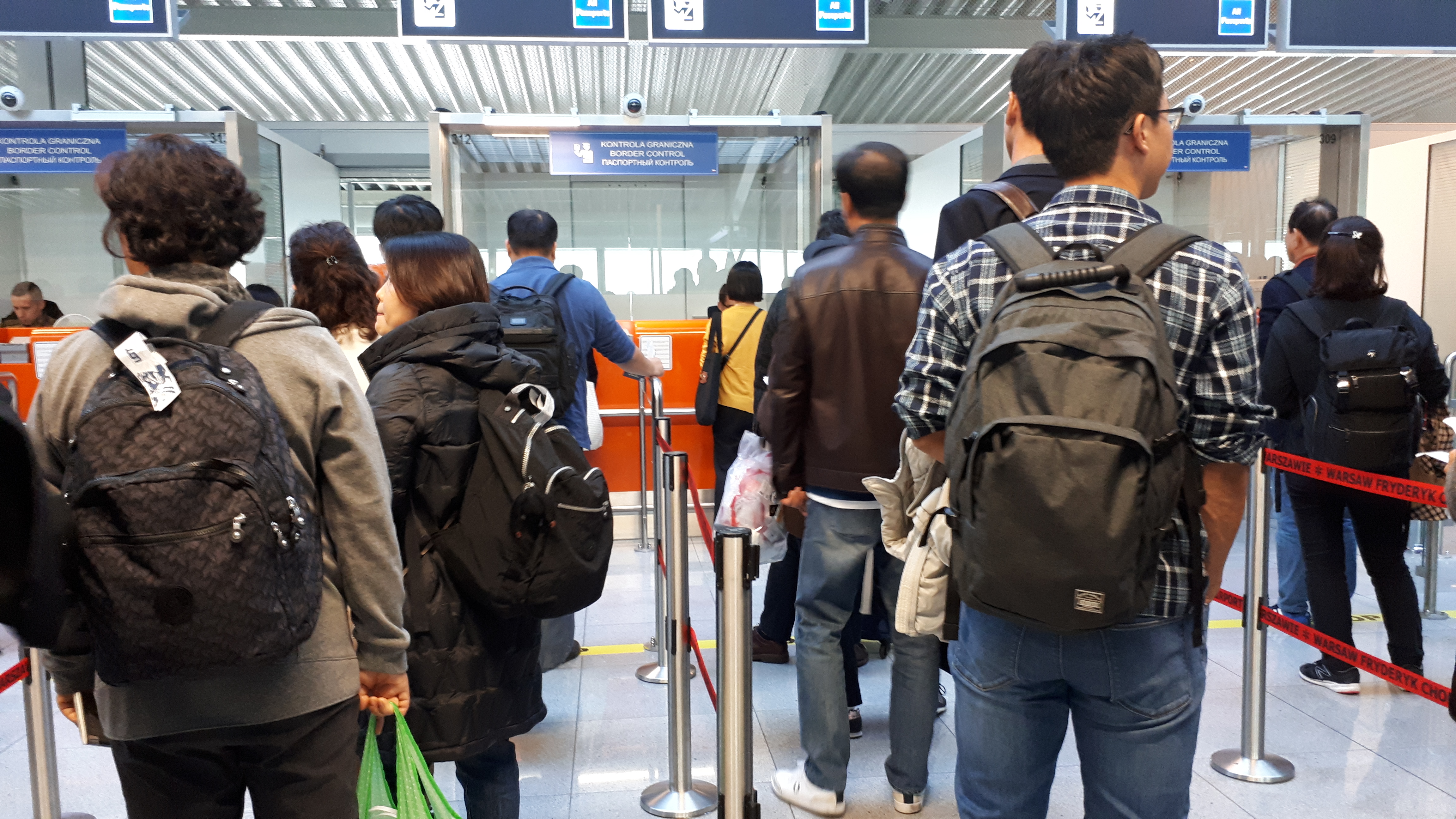
In April 2026, a software failure in the United Kingdom's central biometric matching system knocked out the country's entire network of biometric ePassport gates for more than six hours, according to ID Tech. Border Force officers at Heathrow, Gatwick, and airports across the country reverted to manual passport processing for every arriving passenger. It was the third such nationwide shutdown since 2021—the others in 2021 and May 2024—and it exposed a truth that travelers rarely consider: the modern border runs on a stack of technologies so interdependent that a single fault can turn a twenty-first-century checkpoint into a nineteenth-century one.[12]
How a Passport Is Actually Read
A passport is not just a booklet. It is a machine-readable document governed by standards set by the International Civil Aviation Organization (ICAO) in Doc 9303, currently in its eighth version. Every machine-readable passport has a booklet of TD3 size (125 x 88 mm) with at least eight pages, including a data page with seven mandatory zones. The two most important are the visual inspection zone (VIZ), which holds the holder's portrait and personal details, and the machine-readable zone (MRZ), a strip of text that encodes the same data—name, date of birth, nationality—interspersed with check digits to detect recognition errors or fraudulent alterations. When a border officer scans the document, optical character recognition (OCR) converts the MRZ into machine-readable data, and software compares it against the VIZ, flagging any inconsistencies.[5]
But the physical page is only half the story. A biometric passport contains an embedded electronic microprocessor chip that stores biometric information used to authenticate the holder's identity. That chip holds personal data, a facial image, document metadata, and cryptographic proof that the data was digitally signed by the issuing authority and has not been changed since issuance. The chip follows the ISO/IEC 14443 standard for contactless communication, and it is powered by the reader: the device creates an electromagnetic field with its antenna that powers the chip inside the document so it can communicate. The read range is tiny—1 to 10 centimeters—which is why you have to place the passport directly on or under the scanner.[1][10]
Security is layered. Basic Access Control (BAC) encrypts the communication channel between chip and reader, with the reader needing a key derived from the Machine Readable Zone. Passive Authentication (PA) uses a Document Security Object (SOD) containing hash values and a digital signature to detect any modification of chip data; using PA is mandatory. But in 2008, researcher Jeroen van Beek demonstrated that not all passport inspection systems check the cryptographic signature of a passport chip. To verify country signing keys, the ICAO Public Key Directory (PKD) exists—yet only 5 out of more than 60 countries were using this central database, according to Wikipedia. The comparison of biometric features is performed outside the chip by electronic border control systems, not by the passport itself.[10]
Why E-Gates Fail
E-gates—officially automated border control (ABC) systems—verify identity using biometrics. The process typically involves three levels: authenticating that the document is genuine, validating the citizen's authentic ePassport through biometrics, and validating that the holder has permission to enter the country. In the gate configuration, an incoming passenger places their passport data page on or under a scanner, looks at a camera that takes a live picture to compare to the picture in the passport, and walks through barriers that open if identity is verified. If identification fails or the system malfunctions, the gate does not open and an immigration officer meets the person.[4][6]
The April 2026 UK failure was attributed by the Home Office to a technical fault in the central biometric matching system; a cyberattack was ruled out. UK e-gates use facial biometric matching against ePassport chip data. When the central system goes down, every gate in the country goes down simultaneously—there is no graceful degradation. The same pattern played out in 2021 and May 2024, forcing manual processing. The Home Office has not indicated that its relationship with Fujitsu, a key contractor, is under review following the outage.[12]
A software failure in the United Kingdom's central biometric matching system knocked out the country's entire network of biometric ePassport gates for more than six hours.
The Paper Backup
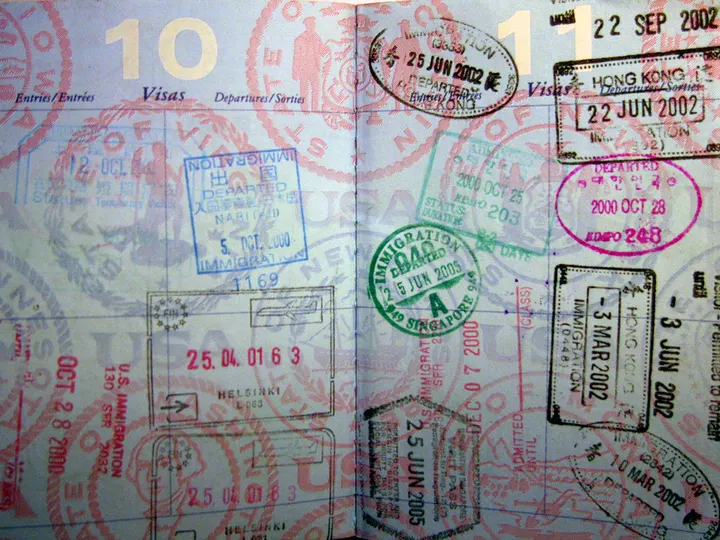
When e-gates fail, the backup is not a secret digital failover. It is paper. Border officers revert to manual passport processing—checking the VIZ, flipping through pages, comparing the photo to the traveler's face, and sometimes stamping the booklet. In the UK, officers rushed to check passports manually at Heathrow, Gatwick, Stansted, Manchester, and Edinburgh during a glitch that lasted up to four hours in one incident. Travelers were prevented from boarding flights. The manual system works because it relies on the same document but bypasses the chip, the network, and the central database. It is slower—far slower—but it is resilient in the sense that it does not depend on electricity or connectivity at the point of inspection.[6][12][13]
For cargo, the U.S. Customs and Border Protection (CBP) has a formal concept of "downtime"—alternative release processes authorized when a cybersecurity incident prevents electronic filing in the Automated Commercial Environment (ACE). Downtime and enforcement discretion may be authorized by CBP Headquarters on a case-by-case basis. CBP's Security Operations Center is staffed 24/7 and is the quickest way to get guidance following a cyberattack. Customs brokers must notify the SOC of any known breach within 72 hours. This is a paper-based fallback for trade, just as manual passport checks are for travelers.[7]
What Outages Reveal
These failures reveal that the invisible infrastructure of travel is not a single system but a chain of dependencies: chip, reader, network, central biometric database, and the software that ties them together. A fault anywhere breaks the whole chain. The UK's central biometric matching system is a single point of failure for the entire country's e-gates. When it fails, the fallback is human labor and paper. That fallback is not seamless—it causes delays, missed flights, and chaos—but it prevents a total shutdown of movement. The lesson for system design is that resilience requires not just backups but graceful degradation: the ability to keep moving at reduced capacity. The UK's repeated outages suggest that lesson has not yet been fully learned.[4][12][13]
Different countries manage outages differently. Some, like the U.S., have formal downtime procedures for cargo. Others rely on ad hoc manual processing. The EU is moving toward mandatory Advance Passenger Information (API) data collection on all flights entering the Schengen area, transmitted through a new router managed by eu-LISA that will only transmit and not store API data. The rules are expected to apply in full by 2028. But even with more data, the physical checkpoint still depends on the same fragile chain. The paper backup—the stamp, the manual check—remains the ultimate fallback. It is slow, it is labor-intensive, and it is the reason the world keeps moving when the screens go dark.[11]
Sources
- RFID Verification: What It Is and How It Works — regulaforensics.com
- How to scan your passport, ID card, or residence permit with NFC — help.withpersona.com
- Biometric Passport: Security, Data Protection & How They Work | Okta — okta.com
- How e-Gates Can Help Unlock Safety, Security, and Control | Embross | Passenger Self Service — embross.com
- Machine-Readable Passports: FAQ — regulaforensics.com
- Automated border control system - Wikipedia — en.wikipedia.org
- Cybersecurity Resiliency | U.S. Customs and Border Protection — cbp.gov
- Improving cyber security resilience through emergency preparedness planning (ITSM.10.014) - Canadian Centre for Cyber Security — cyber.gc.ca
- CBP Effort on Supply Chain Resilience Focuses First on Cybersecurity | Sandler, Travis & Rosenberg, P.A. — strtrade.com
- Wikipedia: Biometric passport — en.wikipedia.org
- Advance Passenger Information (API) data for external border management and internal security!!! — youtube.com
- Six-Hour UK E-Gate Failure Forces Manual Passport Checks Nationwide - ID Tech — idtechwire.com
- Biometric gate glitch causes chaos in major UK airports | Cybernews — cybernews.com
- Data center power failure causes Internet Archive outage - DCD — datacenterdynamics.com
Reported with AI assistance using internet sources.