The Census That Counted People Out
Every decade, statisticians draw lines around identity. Those lines become seats in Congress, dollars in budgets, and the raw material of who we think we are.

In 1890, the United States census counted 6,337,980 “negroes,” 956,989 “mulattoes,” 105,135 “quadroons,” and 69,936 “octoroons,” according to Harvard scholar Jennifer L. Hochschild. Four categories, each a fraction of ancestry, each a bureaucratic attempt to slice a population into ever-finer gradations. By 1930, the ambiguity had collapsed: anyone with any “Negro blood” was counted as a Negro, whites no longer had mixed parentage, and Indians were mainly identified by tribe rather than ancestry, Hochschild writes. The categories had not simply reflected reality; they had hardened it.[2]
The Invention of the Count

The first U.S. census in 1790 sorted people into “free white males,” “free white females,” “all other free persons,” and “slaves,” according to Pew Research Center. For most of American history, census enumerators chose a person’s race themselves. That changed only with the 1970 census, when Americans began identifying their own race—a shift driven by the Civil Rights Act of 1964 and the Voting Rights Act of 1965, which demanded more accurate data to enforce new protections, according to Wikipedia’s account. Since 2000, Americans have been allowed to mark more than one race.[1][11]
The power to define categories is not neutral. The Office of Management and Budget has set federal race and ethnicity definitions through Statistical Policy Directive No. 15 since 1977, Pew notes. The OMB defines the census concept of race as not “scientific or anthropological,” taking into account social and cultural characteristics as well as ancestry, according to Wikipedia. In other words, the categories are administrative tools, not biological facts. And they have determined whether a person could enter the United States, attain citizenship, own a laundry, marry a loved one, become a firefighter, enter a medical school, avoid an internment camp, vote, run for office, join a tribe, sell handicrafts, or open a casino, Hochschild writes. Official classification systems, she argues, can create as well as reflect social, economic, and political inequality.[1][11][2]
Official racial categories have determined whether a person may enter the United States, attain citizenship, own a laundry, marry a loved one, become a firefighter, enter a medical school, avoid an internment camp, vote, run for office, join a tribe, sell handicrafts, or open a casino.
Seats, Dollars, and the Price of a Miscount
The census is not an exercise in trivia. The U.S. Constitution mandates a decennial count and calls for Congress to use the results to apportion seats in the House of Representatives and the Electoral College, according to the Brennan Center for Justice. Census-derived statistics also guide the geographic allocation of federal and state funds. A substantial undercount, the Brennan Center notes, will misallocate congressional and electoral votes. If areas with many Black and Hispanic residents are undercounted while areas with white and Asian residents are overcounted, legislative seats within a state may be erroneously assigned.[8]
The stakes are not hypothetical. The Census Bureau estimates that in 1970 over six percent of African Americans went uncounted, versus about two percent of European Americans, according to Wikipedia. More recently, Detroit’s unsuccessful challenge to its 2020 housing count illustrates how a single number can ripple through a city’s budget and representation, as documented in the Russell Sage Foundation journal. The Constitution requires counting all persons residing in the United States, including citizens and noncitizens. A proposed rule—recently floated and open for comment—would restrict the count to citizens and permanent residents, prohibit questions on race, ethnicity, or sexual orientation, and change where people are counted by using a “census enumeration period” from January 3 to April 1 instead of usual residence, according to the National Low Income Housing Coalition. The decennial census, the coalition notes, is used for apportionment and has “important implications for the distribution of federal funding.”[10][8][9]
The Politics of the Checkbox
Census categories have long been contested from below. In the 1850s, census planners suppressed information about slavery due to pressure from Southern lawmakers, according to Wikipedia. The results of the 1920 census were ignored and no reapportionment took place because rural lawmakers feared losing power to urban areas. In the 1940s, census officials were involved in organizing Japanese-American internment. These episodes show that the census has never been a purely technical exercise; it is a political instrument that can be wielded to include or exclude.[10]
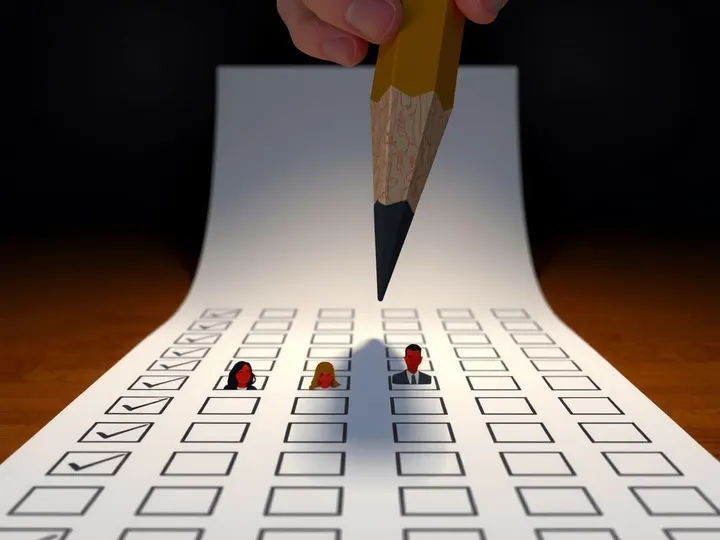
The politics of categorization is global. A book edited by David I. Kertzer and Dominique Arel, “Census and Identity,” argues that the census does much more than reflect social reality; it plays a key role in constructing that reality by dividing populations into racial, ethnic, linguistic, or religious categories. One chapter, by Melissa Nobles, examines racial categorization and censuses; another, by Alain Blum, documents resistance to identity categorization in France. The colonial state has been acknowledged to have had a major impact on shaping modern ethnic identities in Africa, according to a paper by Elliott Green of the London School of Economics. And anthropologists began moving away from a “primordial” understanding of ethnicity toward a more “constructivist” point of view in the late 1960s, Green notes.[5][6]
The OMB’s 2024 revisions to Directive No. 15 included a combined race and ethnicity question and a new Middle Eastern or North African category, while collecting additional detail to enable data disaggregation, according to Wikipedia. The Census Bureau plans to adopt a similar format for 2030, Pew reports. These changes are not merely technical; they reshape how groups see themselves and how governments see them.[11][1]
The census does much more than simply reflect social reality; rather, it plays a key role in the construction of that reality.
The Privacy-Accuracy Tug-of-War
For the 2020 census, the Census Bureau implemented differential privacy, a mathematical technique that quantifies the risk of data disclosure by infusing “noise” into published statistics, according to the California Department of Finance. The method protects privacy but introduces a trade-off: analysts noted significant distortions in counts and distributions for smaller geographic areas and for attributes such as race and ethnicity relative to original data. The Bureau set accuracy targets reflecting redistricting use cases—for example, the largest racial or ethnic group in any geographic entity of 500 or more people must be accurate within 5 percentage points at least 95 percent of the time. The production privacy-loss budget for 2020 redistricting data was set at 19.61, with 17.14 for person tables and 2.47 for housing tables, the Bureau announced. Stakeholders raised concerns about geographic bias and characteristic bias, and the Bureau’s Data Stewardship Executive Policy Committee approved changes to address them, including improvements for tribal geographies.[12][14]
Privacy is not the only tension. Disability advocates have pushed back against proposed changes to the American Community Survey’s disability questions. The Census Bureau proposed replacing the current six yes/no questions with the Washington Group Short Set, which would count only those answering “a lot of difficulty” or “cannot do it at all” to at least one question. Census Bureau testing found this would reduce the U.S. disability rate from 13.9 percent to 8.1 percent—a 40 percent reduction, according to the National Council on Disability. The NCD warns that disability data helps allocate resources for programs such as Medicaid, CHIP, and the Older Americans Act. A smaller count means fewer dollars and less visibility.[15]
The current census fights—over citizenship questions, prison gerrymandering, differential privacy, and mid-decade counts—are not new. They are the latest battles in a long war over who gets counted and how. The Prison Policy Initiative argues that counting prisoners as residents of prisons rather than their pre-incarceration addresses produces misleading racial and population data. And as the proposed rule from the National Low Income Housing Coalition shows, the very definition of who is a “person” for apportionment remains contested. In June, a Pew Research Center survey found that 46 percent of Americans said the federal government should ask about race in its surveys, while one-third said it should not. The numbers reveal a public ambivalent about the categories that shape its life.[10][9][1]
So what? The census is a mirror, but it is also a mold. The categories it creates become the building blocks of identity, the basis for claims on resources, and the map of political power. They are invented by statisticians, revised by bureaucrats, contested by activists, and lived by all of us. And every ten years, the count begins again—a reminder that who counts is never a neutral question.[5][2]
Sources
- How the US Census Measures Race and What Americans Think About It | Pew Research Center — pewresearch.org
- Policies of Racial Classification and the Politics of Racial Inequality | Jennifer L. Hochschild — jlhochschild.scholars.harvard.edu
- Understanding Racial and Ethnic Identity in Federal Data and Impacts for Health Disparities | KFF — kff.org
- Group Identifications: African and Global Categories in: Ethnicity and the Colonial State — brill.com
- Census and Identity — catdir.loc.gov
- Explaining African Ethnic Diversity Elliott Green — personal.lse.ac.uk
- The 2020 Census Population and Apportionment Data, Explained | Brennan Center for Justice — brennancenter.org
- How Census Undercount Became a Civil Rights Issue and Why It Is Increasingly Important | RSF: The Russell Sage Foundation Journal of the Social Sciences — rsfjournal.org
- Proposed Census Rule Would Jeopardize Accurate Congressional Apportionment, Impact Federal Funding; Comments Due November 2 | National Low Income Housing Coalition — nlihc.org
- Wikipedia: United States census — en.wikipedia.org
- Wikipedia: Race and ethnicity in the United States census — en.wikipedia.org
- Disclosure Avoidance Through Differential Privacy | California Department of Finance — dof.ca.gov
- Disclosure Avoidance and the 2020 Census — www2.census.gov
- Census Bureau Sets Key Parameters to Protect Privacy in 2020 Census Results — content.govdelivery.com
- National Council on Disability | NCD Letter to Census on proposed change to disability questions in American Community Survey — ncd.gov
Reported with AI assistance using internet sources.