The New Cold War in the Arctic: Why the World's Northernmost Waters Are Becoming a Global Flashpoint
As sea ice retreats, the Arctic is opening to shipping, resource extraction, and military posturing, turning the region into a new front of great-power rivalry.
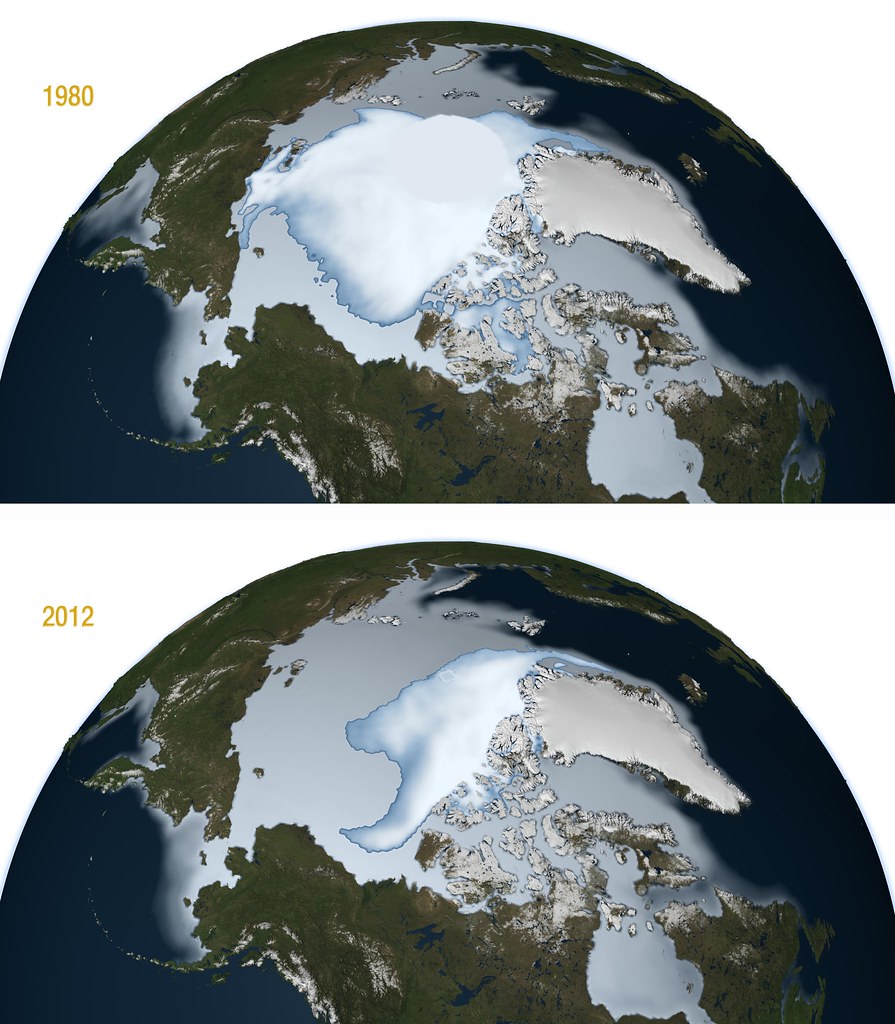
In August 2007, a Russian submarine descended to the seabed at 90° North and planted a titanium flag beneath the North Pole. The gesture was legally meaningless — the United States and Canada said so at the time — but it sent a signal that Moscow was staking a claim to the Arctic's riches. Russia has since modernized its military infrastructure and accelerated exercises, according to a U.S. Marine Corps University analysis, while the melting ice has opened new shipping lanes and resource frontiers that are turning the Arctic into a focal point of great-power competition.[1][4][14]
The Militarized North
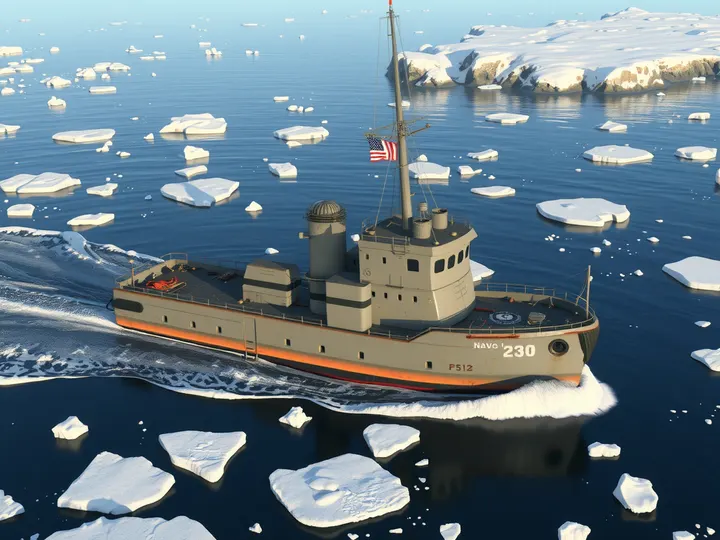
Russia holds the largest Arctic territory and the most developed regional military presence of all Arctic nations, per the Marine Corps University. It maintains a military presence with plans to expand, including strengthening its Border Guard and Coast Guard, according to Wikipedia's overview of Russia's Arctic policy. The United States, for its part, sees the region as critical to homeland defense. The 2019 Department of Defense Arctic Strategy outlined three objectives: defend the homeland, compete when necessary, and keep common domains free and open, according to Luftled, a defense analysis site. In March 2026, leaders from Canada and the Nordic countries met in Oslo and committed to deepen cooperation on Arctic security, emphasizing resilience and guarding against dangerous economic dependencies, per The Arctic Institute.[1][10][13][12]
The strategic stakes are clear. The Arctic already supplies about 10 percent of the world's oil and 25 percent of its natural gas, mostly from onshore sources, and is estimated to hold 22 percent of undiscovered reserves, according to the WWF Arctic program. As the ice shrinks, governments and industries are eyeing new opportunities — but also new vulnerabilities. The U.S. strategy, as outlined in the 2022 National Strategy for the Arctic Region, emphasizes investing in domain awareness, sensing, and communications operable in northern latitudes, according to Luftled.[8][13]
Russia has invested heavily in the Arctic region to 'boast the largest Arctic territory and the most developed regional military presence of all the Arctic nations.'
Melting Ice, Rising Stakes
Climate change is the accelerant. The Arctic is warming almost four times as fast as the global average, and the oldest, thickest multi-year sea ice has declined by more than 95 percent since the 1980s, according to The Arctic Institute. Between 2013 and 2025, the number of unique vessels operating in Arctic waters increased by roughly 40 percent, while the total distance traveled nearly doubled, per the same source. Arctic shipping routes can cut travel times by 30-40 percent compared to traditional passages like the Suez Canal, according to Ship Universe, a maritime industry site. Most of that traffic currently runs along the Northern Sea Route off Russia's coast, supported by Russian infrastructure and icebreakers, per Ship Universe.[8][12][15]
The environmental risks are severe. Offshore oil and gas activities in the Arctic pose risks to marine mammals and to Alaska Native communities that depend on them for subsistence and cultural purposes, according to the Marine Mammal Commission. The greatest risk is from oil spills, whether from drilling or ship-related accidents, and the difficulties of responding are heightened by the region's remoteness and lack of infrastructure, trained personnel, and equipment, the Commission notes. Major producers like the U.S., Canada, Russia, and Norway are expanding production, imperiling vulnerable Arctic ecosystems, according to the WWF.[9][8]
Legal Tug-of-War
The legal framework for Arctic claims rests on the United Nations Convention on the Law of the Sea (UNCLOS), which allows coastal states to claim extended continental shelves beyond 200 nautical miles if they can prove their shelf extends that far, according to the Peace Palace Library. Russia was the first to make a submission to the UN Commission on the Limits of the Continental Shelf in 2001, and Canada, the U.S., Norway, and Denmark have been gathering scientific evidence for over a decade to expand their claims, per the same source. The potential delimitation dispute between Canada, Russia, and Denmark focuses on the Lomonosov Ridge, a underwater mountain range that runs across the Arctic Ocean, according to the Peace Palace Library.[4]
The Ilulissat Declaration of 2008 reaffirmed the Arctic coastal states' commitment to work within international law, but recent actions have tested that commitment. Russia's flag-planting was one such act. More recently, China, though not an Arctic nation, has proclaimed itself a 'near-Arctic' state and is challenging the legitimacy of UNCLOS, the International Maritime Organization, and the Arctic Council, claiming they are flawed and must be reformed, according to the Marine Corps University analysis. The Arctic Council, the region's primary intergovernmental forum, has been strained since Russia's 2022 invasion of Ukraine, when the seven non-Russian members suspended cooperation on projects tied to Russian state authorities, per Wikipedia. That suspension has reduced access to Russian environmental data, undermining climate modelling and disaster preparedness, according to the Belfer Center.[6][1][11][2]
A Cold Peace?
The Arctic has become 'a unique environment for great power competition, resembling a new kind of Cold War in the twenty-first century,' according to the Marine Corps University. But some analysts argue that Cold War–style cooperation — limited, pragmatic, and insulated from high politics — offers a more realistic model than recent multilateral approaches, per the Belfer Center. Successful cooperation emerged when access to foreign data was more valuable than the risks of sharing, when experts retained autonomy, and when institutional arrangements were narrow and adaptable, the Center notes.[1][2]
The stakes are high. The region's future will depend on whether the Arctic states can balance their strategic interests with the need for cooperation — and whether the ice melts faster than diplomacy can keep up.[15][16]
Sources
- The Arctic in the New Geopolitical Context — usmcu.edu
- Arctic Technical Cooperation Amid Geopolitical Fragmentation: Lessons from the Cold War | The Belfer Center for Science and International Affairs — belfercenter.org
- THE ICE CURTAIN: RUSSIA'S ARCTIC MILITARY ... — csis.org
- Arctic Sovereignty: Icy Roads to the North Pole | Peace Palace Library — peacepalacelibrary.nl
- Territorial claims in the Arctic - Wikipedia — en.wikipedia.org
- The Arctic Ocean belongs to whom – Le cercle polaire — lecerclepolaire.com
- Environmental Impact Statement (EIS) on the Effects of Oil and Gas Activities in the Arctic Ocean | NOAA Fisheries — fisheries.noaa.gov
- Oil and gas - WWF Arctic — arcticwwf.org
- Energy Development in the Arctic - Marine Mammal Commission — mmc.gov
- Wikipedia: Arctic policy of Russia — en.wikipedia.org
- Wikipedia: Arctic Council — en.wikipedia.org
- Middle Power Deterrence: The Strategic Case for a Canada-Nordic Defence and Governance Alliance to Ensure a 21st Century Pax Arctica | The Arctic Institute – Center for Circumpolar Security Studies — thearcticinstitute.org
- U.S. Strategy in the Changing Arctic Region - Luftled — luftled.info
- How Climate Change Is Reshaping Arctic Geopolitics - The Wire — m.thewire.in
- Climate Change Opens New Frontiers: Expansion of Arctic Shipping Lanes – Ship Universe — shipuniverse.com
- Geopolitical Implications of Arctic Shipping Routes Expansion — prism.sustainability-directory.com
Reported with AI assistance using internet sources.