The Chore Coat Refuses to Retire
Born in 19th-century France to hide coal dust and carry tobacco tins, the bleu de travail now walks into boardrooms. Here's why a garment built for labour keeps outliving the trend cycle.

The chore coat was never designed to be looked at. It was designed to be leaned against a locomotive, wiped on, and worn over a set of overalls while its owner hauled something heavy. According to Heddels, the garment first appeared in late nineteenth-century France as a tough piece of outerwear cut from durable cotton drill or moleskin, dyed a rich blue. That blue gave the jacket its name: bleu de travail, which translates directly to 'blue work'.[2][4]
Nearly a century and a half later, the same silhouette is hanging in design studios, on runways and in the offices of people whose heaviest lifting is a laptop bag. The chore coat has about as much staying power as riveted jeans, as Denim Hunters put it — which is to say it never really left. It just keeps getting rehired.[5]
A Jacket Built by People Who Didn't Have Time for Bad Pockets
The chore coat emerged in the late nineteenth century during the rise of industrial labour, as work shifted from agriculture into factories, railroads and workshops, according to the Urahara Store blog. What those workers needed was specific, and the design answered it directly: a loose fit that slid easily over overalls, a straight button front, and large patch pockets sized for tools rather than aesthetics.[3][2]
The pockets were the point. Heddels notes they were roomy enough to hold everything a worker needed, from tobacco tins to tools. Paynter Jacket Co. describes the construction as functional to its bones — easy-button fastenings and oversized pockets that could store essential tools and objects. The quintessential design, per Paynter, is defined by a boxy silhouette with large patch pockets on the chest and hips. Nothing about that is decorative.[2][4]
By the 1920s, French brands such as Vetra, Le Laboureur and Mont Saint Michel had begun serial production of what had previously been a tailor-made affair, according to Analog:Shift. Across the Atlantic, Carhartt introduced its workwear coat in 1917 with the key characteristics of today's chore coat, then added a corduroy-lined collar, triple-stitched seams, copper-riveted pockets and a sturdier cut. By the 1930s the brand had added its signature corduroy collar and optional blanket lining, and in 1954 it introduced a by-swing back allowing for shoulder stretch. Triple-stitched seams, copper rivets and 'blood-proof' pockets for storing game became common on American chore coats.[1][9][4]
The chore coat also provides a convenient half-step between streetwear and 'business casual.' With its patch pockets and collar, one can more or less easily substitute a chore coat for a sport coat.
How Japan Rebuilt the Blue Collar
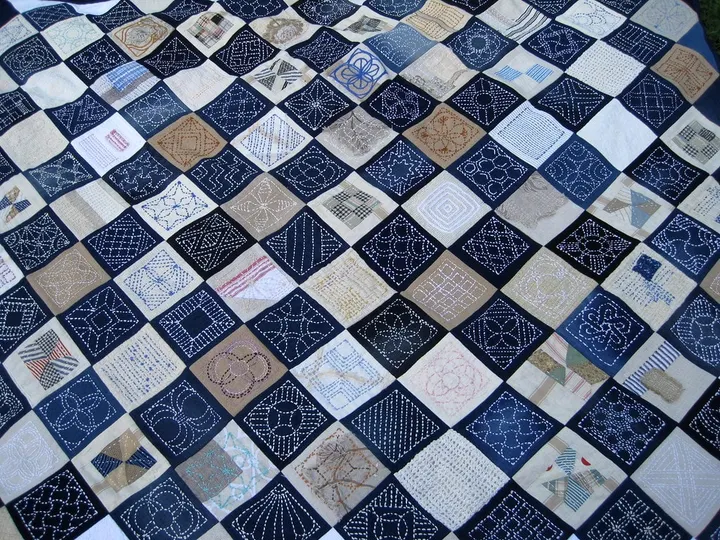
Japanese brands played a key role in the revival of the chore coat and coverall jacket from the 1980s onwards, according to the Urahara Store blog. Some, like TCB, focused on historical accuracy — studying original pieces and rebuilding them with precision. Others, like Post O'Alls, reinterpreted the coverall with new fabrics, fits and details. Japan had its own deep workwear lineage to draw on: workwear there developed during the early twentieth century from a synthesis of Japanese and European clothing, according to Wikipedia's workwear entry, with high-rise construction workers wearing jika-tabi boots and Nikkapokka pants stitched using Sashiko, a mending technique originally devised by farmers and fishermen to repair damaged garments.[3][10]
That combination — reverence for the original object plus a willingness to rebuild it — is why Japanese versions became the reference point for collectors. The core design didn't change. A loose silhouette, functional pockets and durable construction still define the garment, per Urahara Store. What changed was the rigour applied to reproducing it.[3]
From Runway to Open-Plan Office
The chore coat moved beyond manual labour by the mid twentieth century, adopted by artists for its practicality, and by the 1990s it had entered streetwear, according to Urahara Store. Wikipedia's chore jacket entry traces the same arc: the jacket transitioned into mainstream fashion during the 1990s, reinterpreted by J.Crew, Lands' End, Burberry and Ralph Lauren as a preppy wardrobe essential, and in the 2000s gained popularity as smart casual attire among creative professionals. In the early twenty-first century it entered high fashion, appearing on the runways of Valentino, Balenciaga, Loewe, Fendi and Prada, with modern iterations including cropped silhouettes, exaggerated pockets and luxury fabrics.[3][9]
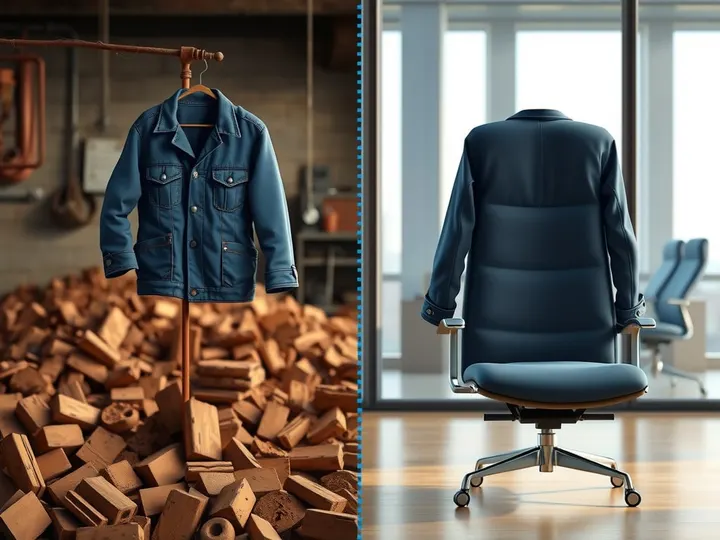
The office appeal is structural, not sentimental. Analog:Shift notes that the chore coat provides a convenient half-step between streetwear and business casual — with its patch pockets and collar, it can more or less easily substitute for a sport coat. Vogue Arabia's recent utility-fashion report makes a related point about the broader category: utility style puts the onus on practicality, incorporating loose fitting clothing that feels comfortable and never restrictive, and many utility pieces use belts, pockets and straps as part of their functional appeal.[1][6]
There is historical precedent for this, too. Britain's Utility Clothing Scheme ran from 1941 to 1952, born of necessity when raw materials were severely rationed, per the Modern Sewing Co. Designers including Hardy Amies and Norman Hartnell were commissioned to create garments that were stylish, varied and beautifully made, but within strict limits on fabric and labour. Fancy trimmings, unnecessary buttons, extra stitching, pleats or pockets beyond what was essential to function were forbidden. American Vogue's 15 January 1942 issue described utility clothing as the 'Uniform of 1942', designed for the demands of daily life, according to Vogue Arabia. The lesson was not that utility is austere. It is that constraint forces good decisions.[7][8]
What the Details Are Telling You
A chore coat's specifications are a reading list. Start with the fabric: the classic French jackets were made from durable cotton drill or moleskin, locally known as Toile de Chine, according to Paynter. The traditional colour was a rich blue selected to mask dirt and stains, which is why the dye fades and wears so beautifully with each wear, per the Modern Sewing Co. Indigo bonded well with cotton and concealed dirt, grease and wear, according to Urahara Store — a functional choice that happens to age well.[4][7][3]
Then the cut. Traditionally, French chore coats were cut short and wide, originally designed to be worn over 'proper' clothes, per Denim Hunters. That boxy fit is not a styling quirk; it is a layering solution. The American variant, the barn jacket, shares the boxy cut, multiple front pockets and durable fabrics but is generally warmer, heavier and more structured, often with a waxed or weatherproof finish. Its most recognizable feature is the corduroy or leather collar — a detail absent from traditional French chore coats.[5][9]
And then the pockets, which deserve more scrutiny than most shoppers give them. Business Insider reports that new suits may have pockets sewn shut for purely aesthetic reasons — sewing them shut keeps suits looking fresh, because trying on clothes and stuffing hands in pockets can alter the fabric's shape. That is a useful diagnostic. Functional pockets are usually sewn shut with a single thread; if you cut it and tug, it should unravel easily. If the stitching is hard to remove, it is probably not a real pocket. There are also 'pockets' that are purely decoration — remove the stitching from those and you'll just end up with a hole. On a chore coat, the patch pockets are the entire thesis. If they don't work, neither does the jacket.[12]
The So-What
The chore coat's longevity is not nostalgia. It is a demonstration of a simple principle: garments that solve real problems don't need to be revived, because they were never abandoned. The details that made it useful in 1890 — the boxy cut, the oversized patch pockets, the dye that hides what work does to cloth — are the same details that make it useful now. Paynter's account of the jacket's origins is blunt about this: it was designed for laborers, railroad workers and farmers, with roomy pockets originally for tools and tobacco tins and button cuffs to allow easy rolling of the sleeves. None of that is obsolete. The work just changed.[9]
So the next time you pick up a chore coat — or any piece of utility clothing — read the details rather than the label. Check whether the pockets are real. Check whether the seams are reinforced. Check whether the cut allows you to move. If the answers are yes, you are probably holding something that will outlast whatever the trend cycle is currently selling. The chore coat has been proving that point for well over a century.[12][3]
Sources
- The Chore Coat: A Brief History of a Workwear Classic – Analog:Shift — analogshift.com
- History of the Chore Coat - Outerwear That's Put to Task — heddels.com
- Chore Coat vs Coverall: History, Fabrics and Modern Workwear - URAHARA STORE — blog.urahara-store.com
- The Story of an Icon - The Chore Jacket — Paynter Jacket Co. — paynter.co.uk
- The Best Denim Chore Coats from Heritage Brands — denimhunters.com
- How To Pull Off the Utility Style Aesthetic: Functional with Heritage Meets Modern - Primer — primermagazine.com
- The Modern Sewing Co. | A Love Letter To Utility Fashion — modernsewingco.com
- Utility Fashion is the Biggest Trend of Summer 2026 – Here’s How to Wear it | Vogue Arabia — voguearabia.com
- Wikipedia: Chore jacket — en.wikipedia.org
- Wikipedia: Workwear — en.wikipedia.org
- 1940s French Indigo Corduroy Chore Coat | Work Jacket | Time Catcher – Time Catcher Clothing — timecatcherco.com
- Why Are Some Pockets Sewn Shut? - Business Insider — businessinsider.com
- Signs Your Clothes Don't Fit You Well, According to Experts - Business Insider — businessinsider.com
Reported with AI assistance using internet sources.