The Jet Stream Is Wobbling — And Your Flight Time Is Paying For It
Airlines quietly bake jet-stream shifts into schedules, but few travellers understand why some routes now take an hour longer than a decade ago.
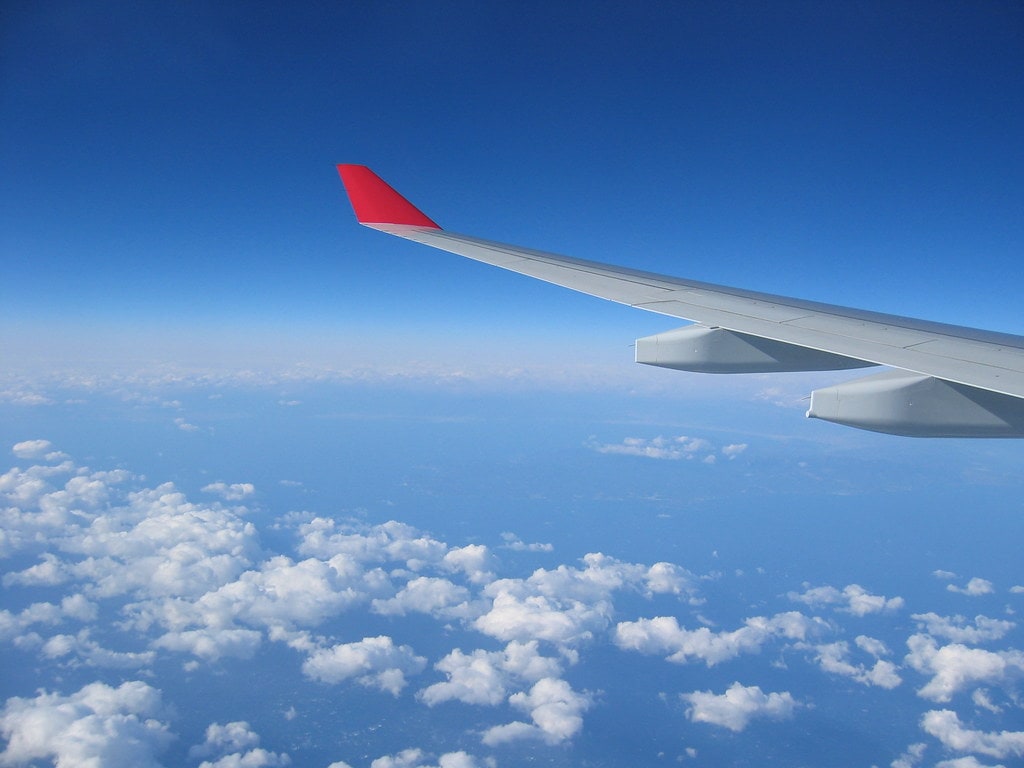
Book a flight from New York to London and the eastbound leg often lands early. Book the return and you may sit on the tarmac wondering why the same distance takes an hour longer. The culprit is a river of wind 30,000 feet overhead: the polar jet stream. It can shave 30 to 45 minutes off a transatlantic crossing from North America to Europe, according to the Arctic Council, and it is changing.[11]
A River of Wind, Born From a Temperature Fight
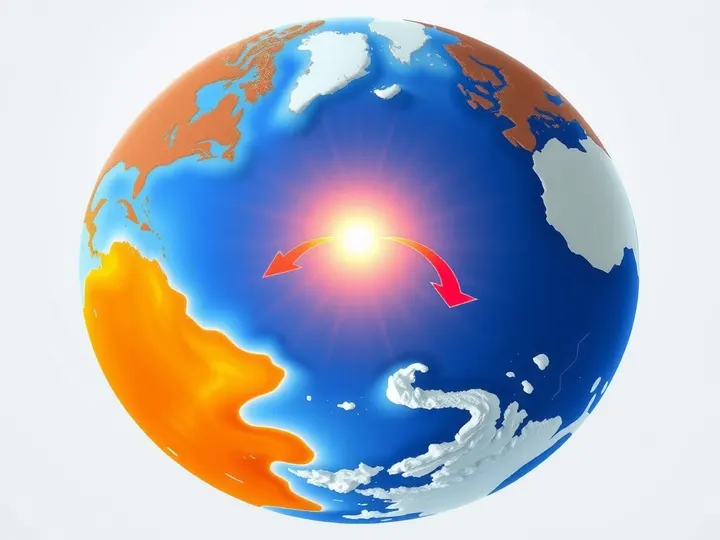
The polar jet stream sits in the troposphere, a belt of wind blowing west to east at speeds up to a couple of hundred miles per hour, according to MIT's Climate Portal. It forms at the boundary where cold polar air and warm mid-latitude air try to mix. Because the Earth rotates, the resulting eddies bend eastward in a bow-like shape. The stronger the temperature contrast between the Arctic and mid-latitudes, the stronger the jet — which is why it is usually fastest in winter.[2]
That temperature contrast is the engine. The polar front jet is a thermal wind that arises from the strong temperature difference between cold polar air and warm tropical air, and the stronger the gradient, the stronger the jet, according to a Skybrary aviation safety explainer. In the northern hemisphere, the jet tends to sit further south in winter and further north in summer, due to the tilt of the Earth. Its altitude is generally at the 250–300 hPa level — roughly 30,000 to 40,000 feet, typical of cruising aircraft.[3][13][4]
The jet stream forms at the boundary where cold polar air and warm mid-latitude air try to mix. The larger the temperature difference, the stronger the jet — which is why it is usually fastest in winter.
The Arctic Is Warming, and the Engine Is Sputtering
The Arctic region has warmed more than twice as fast as the global average — a phenomenon known as Arctic amplification, according to a review published via the Alfred Wegener Institute. That amplification is strongest in autumn and winter. As the Arctic warms, the temperature difference between North and South shrinks, and so does the speed of the jet stream's westerly winds, according to the Arctic Council. A slower jet stream is more likely to bend north and south, and if it bends far enough, Arctic air can plunge as far south as Mexico, MIT's Climate Portal notes.[5][11][2]
In February 2021, Texas endured over a week of freezing temperatures that caused power outages and killed hundreds, while much of northern Eurasia also saw extreme cold. That event is often cited as an example of a wavy jet stream allowing cold air to spill south. But the science is not settled. A 2015 paper by Jennifer Francis and Stephen Vavrus, published in Environmental Research Letters, presented evidence for a wavier jet stream in response to rapid Arctic warming. The authors are affiliated with Rutgers University and the University of Wisconsin-Madison. Yet a review in the journal PMC notes that large uncertainties remain regarding the magnitude of Arctic amplification's influence on mid-latitude weather, because of incomplete knowledge, sparse data records, and imperfect models.[2][9][10][5]
The debate is lively. The effects of rapid Arctic warming on Northern Hemisphere weather patterns are a topic of active research and high societal impact, according to the PMC review. Arctic amplification itself only emerged in the last 10–20 years, which makes it hard to identify statistically robust atmospheric responses from observations alone. Several recent studies have proposed new mechanisms, but the picture remains incomplete.[10]
How Airlines Turn Wind Into Time and Fuel
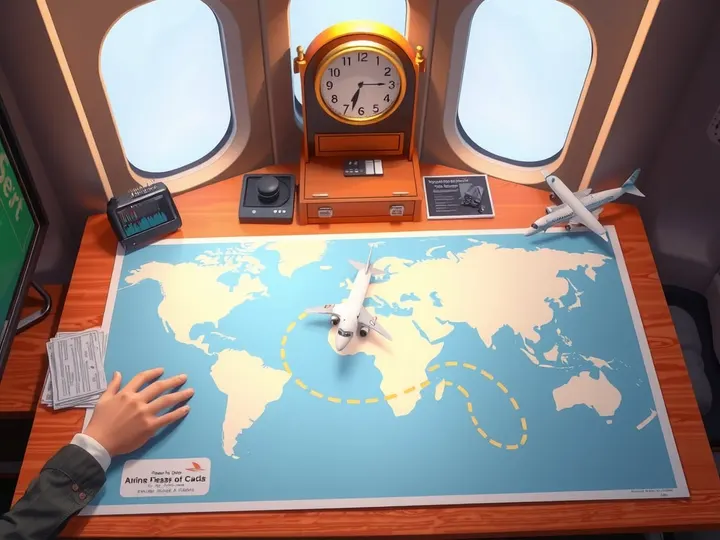
Airlines do not fight the jet stream; they surf it. Flying from west to east often takes less time because of tailwinds, while westbound flights might face headwinds that slow them down, according to FlyUSA. Aircraft flying west-to-east try to exploit the jet stream to increase ground speed, while aircraft flying east-to-west plan to avoid it, according to SKYbrary. Fuel is a major part of an airline's operating costs, sometimes over 30%, and flying with tailwinds can save thousands of kilograms of fuel on a single long-haul route, according to an.aero. Artificial intelligence now allows airlines to analyze weather systems, jet streams, and airspace congestion, integrating live weather data to predict how winds will change throughout a flight and adjust the route accordingly.[6][13][12]
Flight planners use SIGMET charts, which display the forecast location and strength of jet streams, the level of the tropopause, and areas of clear-air turbulence, according to SKYbrary. If winds change mid-flight, systems can suggest a new path. The result is that schedules are not fixed; they are negotiated with the atmosphere every day. But the underlying wind patterns are shifting, and that has consequences for how long you sit in a seat.[13][12]
The Bumpier Ride
Clear-air turbulence is the turbulent movement of air masses in the absence of any visual clues such as clouds, caused when bodies of air moving at widely different speeds meet. It is most frequently encountered in the regions of jet streams, and it is strongest on the cold, low-pressure side of the jet — the north side in the northern hemisphere — next to and just underneath the axis, according to SKYbrary. The atmospheric region most susceptible is the high troposphere at altitudes of around 7,000–12,000 metres as it meets the tropopause. Pilots often cannot see and anticipate such turbulence, and a sudden encounter can impart significant stress to the airframe. On 28 December 1997, United Airlines Flight 826 hit clear-air turbulence; one person died and 17 others were seriously injured.[8][13]
Climate change is expected to make this worse. Clear-air turbulence in the jet stream is expected to become stronger and more frequent, with transatlantic wintertime CAT increasing by 60% for light turbulence, 95% for moderate, and 150% for severe by the time of CO2 doubling, according to Wikipedia's summary of the research. That is a projection, not a guarantee, but it points in one direction: a wobblier jet stream means a bumpier ride.[8]
Reading the Map in Your Seatback
You do not need a meteorology degree to see the jet stream. On a basic weather map, look for the tightly packed lines of temperature or pressure — the frontal zones where horizontal temperature gradients are concentrated. The jet stream snakes to the north and south of these systems, and its meanders propagate eastward. If you can spot a deep trough, you are looking at a buckle in the flow. As the Arctic Council puts it, you can look at the location of the jet stream and get a pretty good idea of how your weather will behave in the near future. For a traveller, that means: a strong, straight jet overhead means a fast eastbound flight and a slow westbound one. A wavy, weak jet means a longer, bumpier ride — and a schedule that may not hold.[1][7][11]
Sources
- [PDF] Tropospheric Circulation and Jet Streams | Mountain Scholar — mountainscholar.org
- The Polar Jet Stream and Polar Vortex | MIT Climate Portal — climate.mit.edu
- What is the jet stream and how does it affect the weather? — youtube.com
- Chapter 15 - The jet stream and climate change — met.reading.ac.uk
- Recent Arctic amplification and extreme mid-latitude weather — epic.awi.de
- Why Is It Faster To Fly West To East: Understanding The Influence of Jet Streams - Private jet charter flights by FlyUSA — flyusa.com
- Wikipedia: Jet stream — en.wikipedia.org
- Wikipedia: Clear-air turbulence — en.wikipedia.org
- Evidence for a wavier jet stream in response to rapid Arctic warming - IOPscience — iopscience.iop.org
- Evidence linking rapid Arctic warming to mid-latitude weather patterns — pmc.ncbi.nlm.nih.gov
- Shifting Winds: How a wavier polar jet stream causes ... — arctic-council.org
- Airlines Flight Routes for Fuel Efficiency: How They Work? — an.aero
- Jet Stream | SKYbrary Aviation Safety — skybrary.aero
- What is the jet stream and how does it affect aviation? — aerospaceglobalnews.com
Reported with AI assistance using internet sources.