The Peace That Was Signed by Telegram: How the First Wire-Brokered Treaty Changed Diplomacy Forever
In the 1850s, the electric telegraph let negotiators in different capitals sign an armistice without ever meeting—and created the modern expectation that peace can be brokered in real time.

The Congress of Paris convened in 1856 to end the Crimean War, nearly three years after the fighting began. The Congress was a series of diplomatic meetings held in Paris to negotiate peace. According to the Office of the Historian, European foreign ministries first used telegraphy in the early 1850s, and by the time the Congress met, the wire had become an indispensable tool of statecraft. The delegates—from France, Britain, Russia, Austria, Prussia, the Ottoman Empire, and Piedmont-Sardinia—sat around a table presided over by France’s foreign minister.[2][4]
The Wire That Brokered a War’s End
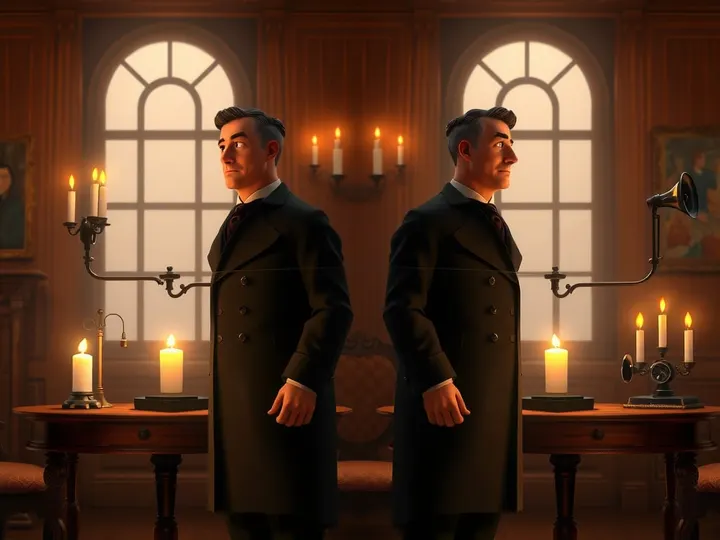
The Congress of Paris marked the moment when telegraphy became central to European diplomacy. The historical record does not preserve a neat sequence of messages for the Crimean armistice, but the broader pattern is clear: by the mid-1850s, foreign ministries were using the wire to coordinate positions, relay instructions, and react to battlefield news in hours rather than weeks. According to the Office of the Historian, the telegraph’s speed let policymakers respond rapidly to far-off crises, but it also placed new time pressures on leaders—especially since telegraphy could inform newspapers and an expectant public just as swiftly.[4]
Before the telegraph, British diplomats in Japan waited over four months for letters to cross from Japan to Britain and back, according to research published in New Voices in Japanese Studies. That isolation ended at a stroke in 1870, when Japan was connected to the globe-spanning telegraph network, and by 1871 wires ran unbroken from London to Nagasaki, letting the Foreign Office transmit instructions almost instantaneously. The same article argues that the introduction of the electric telegraph did more to change the practice of international diplomacy than any other innovation in modern history. The Crimean peace was an early taste of that change.[5]
The Ambassador’s Diminished Power
Telegraphy circumscribed the independence of diplomats and diminished the prestige and power of diplomatic representatives, according to the Office of the Historian. Before the wire, an ambassador on the ground had wide latitude to negotiate, improvise, and strike deals without waiting for instructions from home. After the wire, the ambassador became a relay—a highly trained one, but a relay nonetheless. As the historian’s account puts it, diplomats were now prized in part for their inefficiency, providing an extra layer of expertise and slowing policymaking to reduce the chances of a catastrophic error. The wire centralized negotiation power in the foreign ministry, and the plenipotentiary’s pen counted for less than the cipher clerk’s key.[4]
“The long pauses caused by relatively slow communication had previously allowed tempers to cool, provided time for careful, methodical diplomacy.” — Office of the Historian
The Limits of the Wire
The telegraph was neither instantaneous nor infallible; messages would often be garbled or delayed, according to the New Voices article. Foreign ministries made more frequent use of codes in an often fruitless effort to keep the contents of their telegrams secret from spies, and diplomats wrote more concisely to reduce telegraph expenses. State control of lines was another constraint: semaphore systems had been controlled by national governments, and the electric telegraph inherited that political baggage. By the end of the 1860s, the British Government had installed private lines directly to the Foreign Office in Whitehall, but secrecy remained elusive. The wire was fast, but it was not secure.[4][5][12]
The technical limits were real. Electrical telegraphy was the first electrical telecommunications system, used primarily from the 1840s until the late 20th century, and submarine cables beginning in 1850 allowed the first rapid communication between people on different continents. But the system was fragile: cables could break, operators could misread, and codes could be broken. The telegraph’s nearly-instant transmission of messages across continents had widespread social and economic impacts, but it also created a new kind of vulnerability—dependence on a network that could fail at the worst possible moment.[8]

From Telegram to Hotline
The telegraph-era practice of real-time crisis communication evolved into the modern hotline after the Cuban Missile Crisis. During the crisis, encrypted messages had to be relayed by telegraph or radioed between the Kremlin and the Pentagon, and official diplomatic messages typically took six hours to deliver; the United States took nearly twelve hours to receive and decode Nikita Khrushchev’s 3,000-word initial settlement message, according to Wikipedia. The hotline was established in 1963 to help reduce the risk of war occurring by accident or miscalculation, and it was agreed that the line would be used only in emergencies, not for routine governmental exchanges. The first implementation used Teletype equipment, shifted to fax machines in 1986, and since 2008 has been a secure computer link exchanging messages by a secure form of email. The hotline was never a telephone line, and no red phones were used.[6][7]
Under the 1963 system, Kennedy would relay a message to the Pentagon by phone, where operators typed it into a teletype machine, encrypted it, and fed it into a transmitter. The first generation used two full-time duplex telegraph circuits, with the primary routed from Washington via London, Copenhagen, Stockholm, and Helsinki to Moscow, and a secondary radio line via Tangier for back-up. In 1967, Lyndon B. Johnson became the first U.S. president to use the system, during the Six Day War. The hotline was intended for text only because speech might be misinterpreted; leaders wrote in their native language and messages were translated at the receiving end. The telegraph had become the hotline, and the hotline had become a text channel.[6][7]
Faster, but More Fragile
Real-time brokering makes ceasefires faster but potentially more fragile. The Office of the Historian notes that the long pauses caused by relatively slow communication had previously allowed tempers to cool, provided time for careful, methodical diplomacy, and given leaders an opportunity to conceive creative solutions. Telegraphy’s acceleration of disputes challenged foreign ministries that used delay as a tool. When messages fly back and forth in minutes, the space for reflection shrinks, and the pressure to respond immediately can lead to miscalculation. The historical evidence links speed of communication to a trade-off: faster deals may be reached, but they may also be less durable because they are forged under pressure rather than after deliberation.[4]
The 1850s precedent compares with modern ceasefire negotiations conducted via video calls, WhatsApp, and mediator shuttling in one key respect: the expectation of immediacy. Today’s digital channels are faster and more informal, but they carry the same risk of misinterpretation and the same pressure to respond in real time. The telegraph did more to change international diplomacy than any other modern innovation, according to the New Voices article, and the hotline was its direct descendant. The peace that was signed by telegram was not the last word, but it was the first draft of the way we negotiate now.[5][7]
“This mode of instantaneous communication must inevitably become an instrument of immense power, to be wielded for good or for evil.” — Samuel Morse, 1838
The so-what is simple: the wire did not just make diplomacy faster; it changed the kind of diplomacy we do. The telegraph severed the connection between communication and transportation, according to the Engineering and Technology History Wiki, and in doing so it severed the connection between patience and peace. Today’s ceasefires, brokered over WhatsApp and video calls, are the latest iteration of a practice that began when the first cable carried a coded message between capitals. The peace that was signed by telegram was faster, but it was also more fragile—and that fragility is the price of immediacy.[12][4]
Sources
- The telegraph: How it changed diplomacy - Diplo — diplomacy.edu
- Congress of Paris (1856) - Wikipedia — en.wikipedia.org
- Behind the Myth: The Representation of the Crimean War in Nineteenth-century British Newspapers, Government Archives & Contemporary Records — journals.openedition.org
- Milestones in the History of U.S. Foreign Relations - Office of the Historian — history.state.gov
- The Impact of the Telegraph on Anglo-Japanese Diplomacy during the Nineteenth Century – New Voices in Japanese Studies — newvoices.org.au
- Hotline established between Washington and Moscow | August 30, 1963 | HISTORY — history.com
- Moscow–Washington hotline - Wikipedia — en.wikipedia.org
- Wikipedia: Electrical telegraph — en.wikipedia.org
- 1830s – 1860s: Telegraph | Imagining the Internet | Elon University — elon.edu
- Morse Code & Telegraph: Invention & Samuel Morse - HISTORY | HISTORY — history.com
- [PDF] The Practice of Diplomacy - rexresearch1 — rexresearch1.com
- Telegraph - Engineering and Technology History Wiki — ethw.org
- Under the Wire: How the telegraph changed diplomacy - Diplo Resource — diplomacy.edu
Reported with AI assistance using internet sources.