The Great British Sewage Crisis: How Privatization Turned Rivers into Toilets
Thirty-five years after Margaret Thatcher sold off England's water, shareholders have pocketed billions while raw sewage flows into rivers and seas—a cautionary tale of privatized essentials.
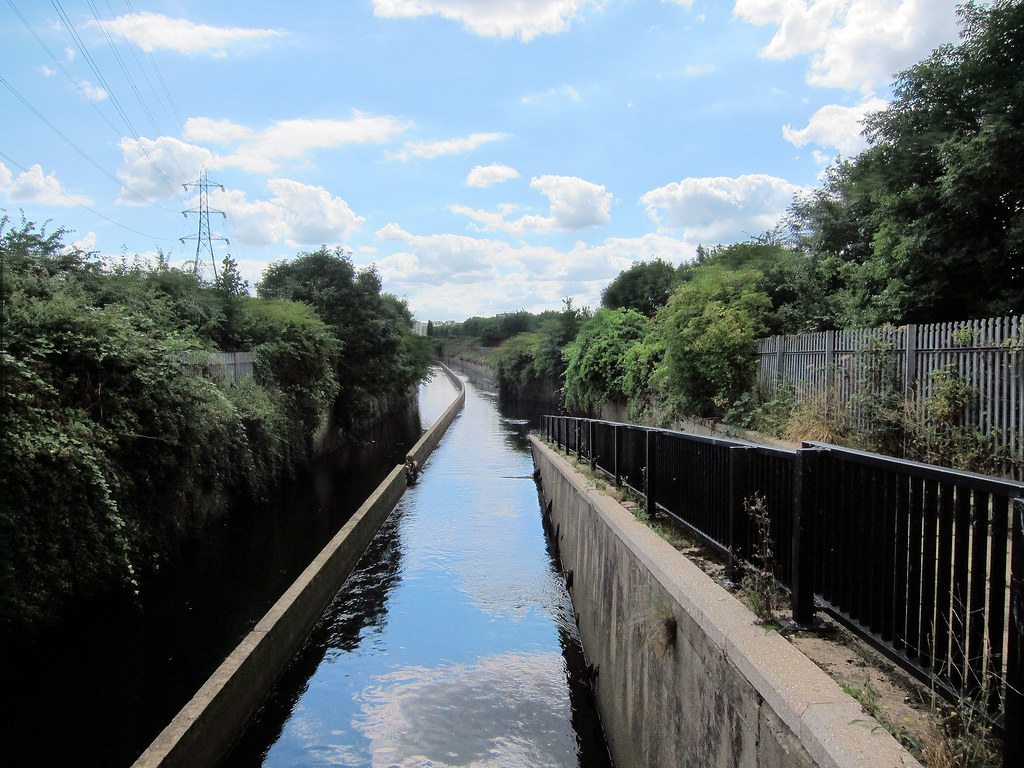
On a dry summer's day in August 2024, lifeguards at Exmouth beach on England's south-west coast shut the water and raised red flags. A catastrophic burst of the main pipe pumping sewage to the town's Maer Lane treatment works led to beach closures. Within days, a swimmer was hospitalized with sepsis from an E. coli infection. It was a small, human snapshot of a national scandal: across England and Wales, water companies dumped raw sewage into rivers and seas over 450,000 times in 2024, for a total of 3.6 million hours—the equivalent of 412 years of continuous discharge, according to data compiled by River Action and other campaign groups.[4][14]
A Privatization Promise, Broken
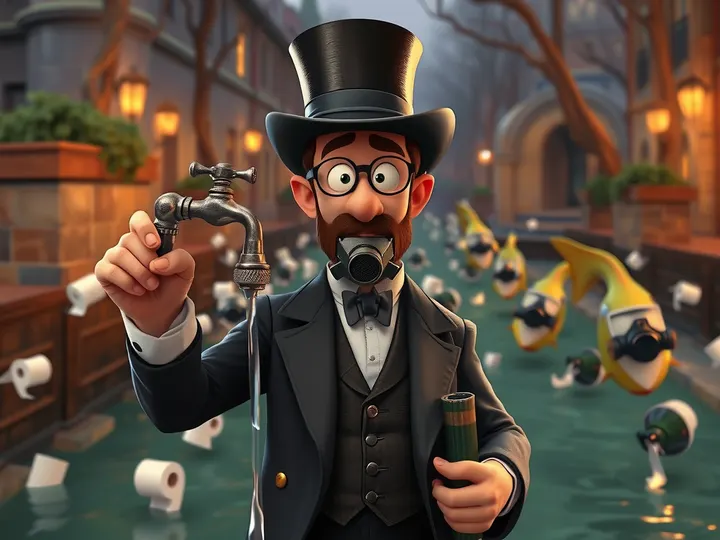
The roots of this crisis lie in 1989, when Prime Minister Margaret Thatcher privatized the ten regional water authorities of England and Wales. At the time, the government argued that private ownership would bring higher investment and better service. Instead, as a secret 2002 report warned ministers, the structure allowed private equity shareholders to load companies with debt and left the regulator, Ofwat, unable to control them. Today, England is the only country in Europe—and one of only two in the world, alongside Chile—where water is owned by private companies for profit, according to the Guardian.[1][14]
The financial engineering that followed has been staggering. Since privatization, shareholders have extracted over £85 billion from the water system, according to the campaign group We Own It. Water companies have built up a combined debt mountain of over £72 billion—a figure paid for by consumers through bills. Thames Water, the country's largest utility, stands as a case study: during the ten years Australian investment firm Macquarie was its biggest shareholder (2007–2017), debt rose from £2 billion to £11 billion, while investors injected no new cash. In five of those ten years, investors took out more money in dividends than the company made in profit. By 2024, Thames Water was on the brink of bankruptcy, rescued only by a £3 billion emergency loan.[2][15]
The Numbers Behind the Stench
The scale of sewage dumping is hard to overstate. In 2023, the Environment Agency recorded 3.6 million hours of spills—more than double the 1.7 million hours in 2022. In 2025, despite drought conditions across much of England, water companies discharged raw sewage for 1.9 million hours, a 48% drop from the previous year but still nearly 300,000 separate events. Campaigners point out that many of these discharges occur on dry days, when they are illegal, and that the impact is worse when river levels are low. Ofwat, the industry regulator, has admitted that some companies have been "routinely releasing sewage" outside heavy rainfall, a practice known as "dry spilling." In 2025, the Environment Agency began investigating 15,000 such incidents.[3][5][6]
“Far too many of these [discharges] will be happening on dry days and therefore be illegal. The impact of those discharges will be even worse when rivers are running low.” — Campaigners, quoted by the Guardian
The problem is not just the volume of spills; it's what's in the sewage. Raw sewage contains a cocktail of bacteria, viruses, harmful chemicals like PFAS, and microplastics—substances nearly impossible to remove once in the environment. Even treated sewage often still contains contaminants and microplastics, because treatment processes fail to remove harmful contaminants to safe levels, according to River Action. The ecological toll is severe: the Environment Agency attributes 40% of water quality failures to agriculture and 36% to the water industry. Only 19% of England's estuaries and 45% of coastal waters achieve "Good Ecological Status," with none meeting "good" chemical standards, and 75% of shellfish waters failing quality tests, according to the Marine Conservation Society.[4][7][11]
Who Pays? Consumers and the Environment
The costs of this crisis fall unevenly. Since privatization, water bills have consistently risen above inflation. Ofwat's 2025 survey found that 20% of customers struggle to pay their water bills, and nearly half report occasional difficulty. Research by the University of Greenwich in 2017 suggested consumers were paying £2.3 billion more each year than they would if the water companies had remained under state ownership. Meanwhile, water companies waste 3 billion liters of drinking water daily through leaky pipes—a figure that underscores the lack of investment in basic infrastructure.[1][2]
The environmental damage is equally unjust. In 2021, 1,651 storm overflows within 1 kilometer of Marine Protected Areas in England spilled untreated sewage for a total of 263,654 hours—over 30 years of continuous discharge. Health warnings have become routine at popular recreational beaches. And the human cost can be deadly: the Exmouth incident in 2024 was not isolated; a swimmer contracted sepsis from bacteria in the water. The UN special rapporteur on the human right to clean water, Prof Pedro Arrojo-Agudo, has singled out the English system for criticism, arguing that water should be managed as a publicly owned service, not run for shareholder benefit.[8][11][14]
Regulatory Failure and the Great Escape
Regulation has been, in the words of We Own It, "an abysmal failure." Despite nearly 1,200 criminal convictions for pollution and environmental offences accumulated by English water firms, not a single chief executive has been charged. Channel 4 News revealed that no water company has been prosecuted for a sewage spill in the last five years; instead, they have been allowed to "buy their way out" by paying fees to charities. Fines, when they do occur, are often minimal relative to profits—Southern Water was fined £90 million in 2021 and Thames Water £3.4 million in 2023 for illegal dumping, but these amounts are small compared to the billions extracted in dividends. The Environment Agency has launched criminal investigations into several companies, but enforcement remains weak.[2][8][12][14]
What Now? Reform or Reinvention
In response to public outrage, water companies are investing £104 billion between 2025 and 2030, funded by customer bills that will rise an average of 36% over five years. This investment, they say, will help reduce spills and secure supplies. But critics note that much of the recent reduction in spills is due to dry weather, not infrastructure improvements. The Environment Agency itself has said sustained maintenance and investment are needed for lasting change. Meanwhile, the government has launched an independent commission, led by former Bank of England Deputy Governor Sir Jon Cunliffe, to review the water sector, with options including the reform or abolition of Ofwat. The commission is due to report next June.[5][6][15]
Other countries offer alternatives. Singapore has some of the strictest water quality standards globally, with advanced treatment and reuse systems. In Europe, where England is the only fully privatized water sector, utilities are typically publicly owned or operate under stricter public oversight. The Rivers Trust and other campaigners argue that the current system of storm overflows—designed as a safety valve for extreme weather—has been abused as a cost-saving measure, with companies discharging even when it doesn't rain. They call for a ban on dry spills, mandatory investment in infrastructure, and a shift toward public ownership or non-profit models.[3][4][10]
The story of England's sewage crisis is a cautionary tale about the hidden costs of privatizing essential services. When water is treated as a commodity, the drive for profit can override the public interest and environmental health. The result: rivers that run with waste, beaches closed to swimmers, and bills that rise even as services deteriorate. As the independent commission deliberates, the question is not just how to fix the pipes, but whether the model itself is fit for purpose. For now, the sewage keeps flowing—and England's rivers pay the price.[1][14][15]
Sources
- Water privatisation in England and Wales - Wikipedia — en.wikipedia.org
- Water | We Own It — weownit.org.uk
- The UK sewage crisis and how other countries manage their wastewater - Thames21 — thames21.org.uk
- Sewage Pollution - River Action: River Rescue Kit — kit.riveractionuk.com
- Sewage released into England’s rivers and seas nearly 300,000 times last year | Water | The Guardian — theguardian.com
- How much sewage is spilled in rivers, lakes and the sea near you? — bbc.com
- Storm overflows | Water UK — water.org.uk
- Sewage discharge in the United Kingdom - Wikipedia — en.wikipedia.org
- Wikipedia: Sewage treatment — en.wikipedia.org
- Sewage Discharges: England and Wales’ 2025 Annual… | The Rivers Trust — theriverstrust.org
- Sewage and monitoring — mcsuk.org
- 68K views · 1.9K reactions | England - where raw sewage can flow through the streets, rivers and lakes. We can exclusively reveal that not a single water company has been prosecuted for a spill in th — facebook.com
- Understanding the Tijuana River Sewage Crisis – An Overview of Causes and Consequences | San Diego Coastkeeper — sdcoastkeeper.org
- Dirty water, death and decline: the inside story of a privatisation scandal | Water | The Guardian — theguardian.com
- The water industry is in crisis. Can it be fixed? — bbc.com
Reported with AI assistance using internet sources.