The Night the Whole Grid Was Restarted From a Single Hydro Plant
Every country keeps a secret plan for bringing electricity back from zero — and it depends on a handful of power stations that can wake up without help.
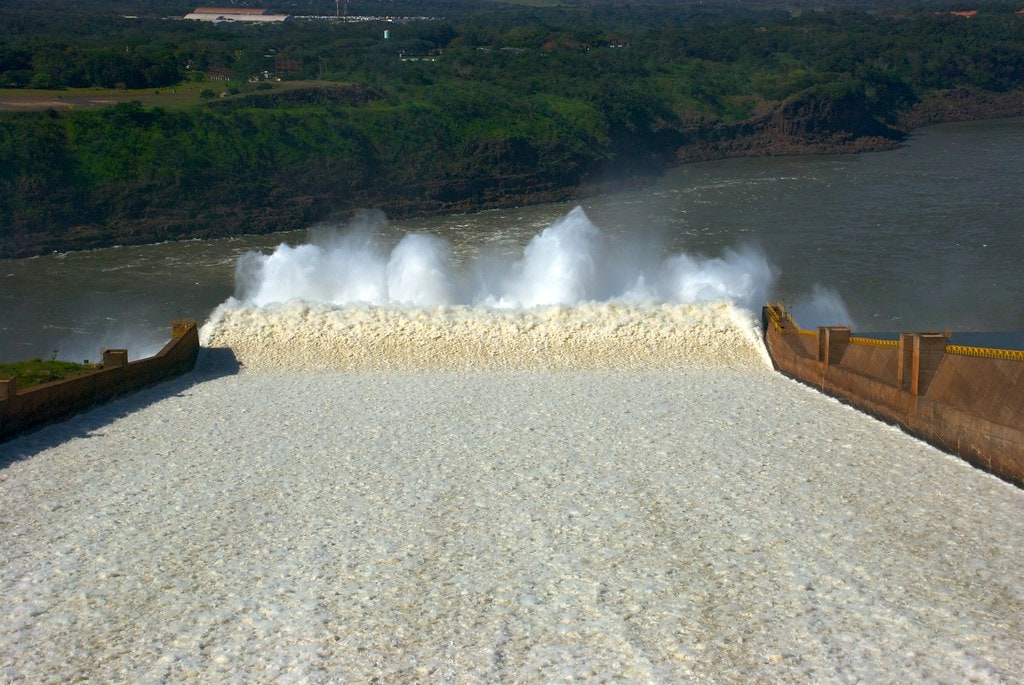
At 4:52 p.m. on August 9, 2019, a lightning strike hit a transmission circuit between Eaton Socon and Wymondley in England. Protection systems cleared the bolt in under 0.1 seconds, and the line returned to normal in about 20 seconds, according to National Grid ESO's incident report. But in that sliver of time, roughly 150 megawatts of small embedded generation disconnected, and the Hornsea offshore wind farm dropped 737 megawatts. Within minutes, about a million customers were dark.[12]
What a Black Start Actually Is
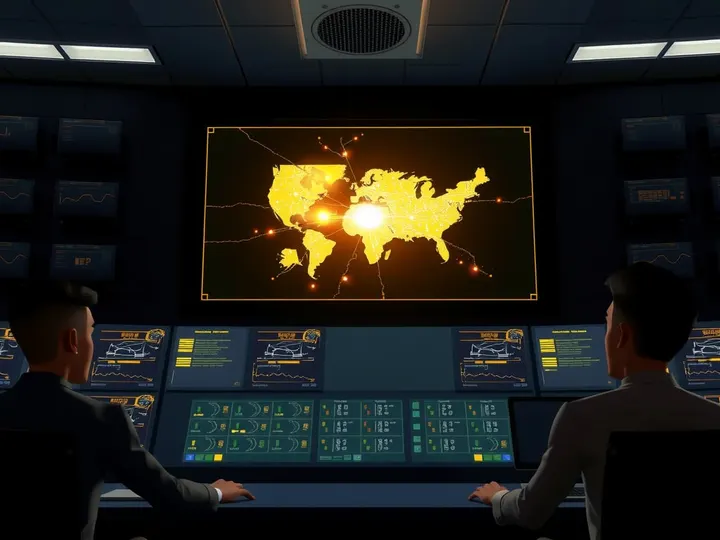
A black start is the process of restoring a power station, a piece of the grid, or an industrial plant to operation without relying on the external transmission network, according to Wikipedia's technical summary. The problem is circular: large thermal plants need electricity to run their pumps, fans, control systems, and turbines, but the grid that would supply that electricity is down. Black-start units break the circle by self-starting on on-site resources — diesel generators, batteries, or small hydro units — and then energizing larger generation assets.[3][10]
Hydroelectric dams are the gold standard, according to EcoFlow's guide, because gravity spins the turbines and only a trickle of battery power is needed to open the gates. Hydropower units can produce station service power simply by opening a valve to flow water into the generator, according to Pacific Northwest National Laboratory. Gas turbines are the other traditional choice, but they often need a cranking path: a small black-start unit sends power down a dedicated transmission line to jump-start a much larger facility, such as a 500-megawatt gas plant, which then energizes a section of the grid.[1][7]
Nine out of thirteen primary black start generators weren't operating consistently during the 2021 Texas winter storms.
The Choreography: Islands, Cranking Paths, and the 5% Rule
Restoration proceeds in four phases: sectionalization, generator recovery, load recovery, and synchronization, according to a University of Toronto control-engineering paper. The grid is first cut into multiple subsystems, each with one black-start unit, and restored in parallel. Operators then energize transmission lines along pre-approved cranking paths to reach larger plants. NERC Standard EOP-005-2 requires transmission operators to verify the real and reactive power capability of their black-start resources along those paths, and the current EOP-005-3 framework embeds them in an approved restoration plan that specifies switching requirements, voltage and frequency limits, and the loads needed to stabilize the system.[3][5][8]
Load pickup is where plans meet physics. When power returns, every appliance starts at once — a surge known as cold load pickup — and that spike can immediately trip the grid off again, according to EcoFlow. Operators commonly apply heuristic rules such as limiting load pick-ups to less than 5% of online generation capacity, per the Toronto paper. Reconnecting islands is equally delicate: if electrical frequency and phase are not perfectly matched, the connection can cause catastrophic equipment failure and physical explosions.[1][8]
That is why full restoration takes days or weeks, not hours. A blackout can leave a large area dark for days to months, according to CLOU Global. Starting the entire grid at once may be unfeasible — summer air-conditioning demand alone could exceed what the grid could supply, according to Wikipedia — so restoration happens gradually, island by island, until the last tie-line closes.[9][10]
When the Plan Met Reality
The 2003 Northeast blackout is the canonical stress test. A software bug in FirstEnergy's alarm system left operators unaware of the need to redistribute load, according to Wikipedia, and more than 508 generating units at 265 power plants shut down. The NYISO-managed system carried 28,700 megawatts before the event and dropped to 5,716 megawatts at the height — an 80% loss. Full power returned to New York City and parts of Toronto on August 16, three days later. But Orrville, Ohio, restored power within an hour by disconnecting its local utility from the larger grid and restarting its coal-fired generator — a reminder that the plan is not the only path home.[11]
Texas 2021 exposed a different failure mode. Nine of thirteen primary black-start generators were not operating consistently during the winter storms, according to FDE Hydro's account. The units existed on paper; the fuel and the weather did not cooperate. FERC and NERC have jointly flagged the need to diversify beyond single-fuel resources for black-start coverage, according to Neeraj Kumar Singal's technical review.[2][3]
The 2025 Iberian blackout — Spain and Portugal separated from the Continental Europe grid at 12:38 p.m. on April 28 — followed a cascading failure on the high-voltage system, according to JKempEnergy. Spain's nuclear stations shut down automatically as passive safety systems dropped control rods into the reactor cores. The final report by an Expert Panel under EU Regulation 2017/1485 includes a section on restoration sequences in the Spanish and Portuguese systems, and it addresses voice communication and remote-control problems during restoration — a reminder that the plan assumes the phones work.[14][16]
The Fragility the Plan Exposes
Black-start architecture is a map of what the grid cannot do without. Inverter-based renewables reduce system inertia and increase susceptibility to frequency deviations, according to the Toronto paper. Solar and wind generators do not ordinarily provide inertia and frequency control unless fitted with specialist equipment, which is rare, according to JKempEnergy. The 2019 UK event showed the flip side: around 30% of generation was from wind before the fault, and Hornsea's 737-megawatt drop was central to the cascade. India's Central Electricity Authority has moved early, mandating in its 2026 Technical Standards Amendment that all battery storage projects of 50 megawatts or more must have black-start capability and use grid-forming inverter technology, according to Singal's review.[3][8][12][14]
Hydro retrogrades are not plug-and-play. Plants not designed for black start have protections that prevent them from connecting to a dead bus, and those protections must be overridden in every retrofit case, according to an Idaho National Laboratory report. The DC system or excitation generator must be reliable enough to form and sustain the rotor's electromagnetic field, and these systems are typically undersized in plants not built for the job. A separate black-start mode should be established so operators can switch safely between modes.[4]
Who decides? In Great Britain, the grid operator holds commercial agreements with some generators to provide black-start capacity, according to Wikipedia. In the United States, the most common procurement is cost-of-service, used by CAISO, PJM, and NYISO. The plans themselves are not public in any operational detail — NERC's restoration plans are approved by transmission operators and treated as critical energy infrastructure information. The secrecy is not mystique; it is security.[5][10]
The 2025 Iberian report is careful to note it does not assign liability; it is a reconstruction, not a verdict. But it confirms what every system operator knows: the plan is a script, and the grid is an ensemble cast. When the lights go out, the restart is not a switch. It is a slow, careful, island-by-island negotiation with physics — and the margin between days and weeks is measured in megawatts picked up five percent at a time.[8][16]
Sources
- Ultimate Guide to Black Start of a Power Grid | EcoFlow US — energy.ecoflow.com
- The Black Start Blueprint: How Power Grids Come Back to Life — fdehydro.com
- BESS Black Start Capability: How Grid Recovery Works — neerajkumarsingal.com
- Hydropower Black Start [INL/RPT-24-82481] — inldigitallibrary.inl.gov
- BESS Black Start for Gas Turbines: Design and Sizing — greengasturbines.com
- Hydropower Plants as Black Start Resources — energy.gov
- Electric Grid Blackstart: Trends, Challenges, and ... — pnnl.gov
- Frequency Nadir-Constrained Power System Restoration ... — control.utoronto.ca
- The Challenges Of Electrical Power Grid Restoration | CLOU GLOBAL — clouglobal.com
- Wikipedia: Black start — en.wikipedia.org
- Wikipedia: Northeast blackout of 2003 — en.wikipedia.org
- National Grid ESO LFDD 09/08/2019 Incident Report — neso.energy
- Exploring the Concept of Black Start Testing ϟ P&I Group — pandigroup.co.uk
- Iberian Peninsula hit by mass blackout and attempts black start – JKempEnergy.com — jkempenergy.com
- 2025 Iberian Peninsula blackout - Wikipedia — en.wikipedia.org
- Grid Incident in Spain and Portugal on 28 April 2025 — eepublicdownloads.blob.core.windows.net
Reported with AI assistance using internet sources.