The Dream Machine: What Your Brain Is Actually Doing While You Sleep
Neuroscience is closing in on why we dream—and the answers are reshaping how we think about memory, emotion, and creativity.
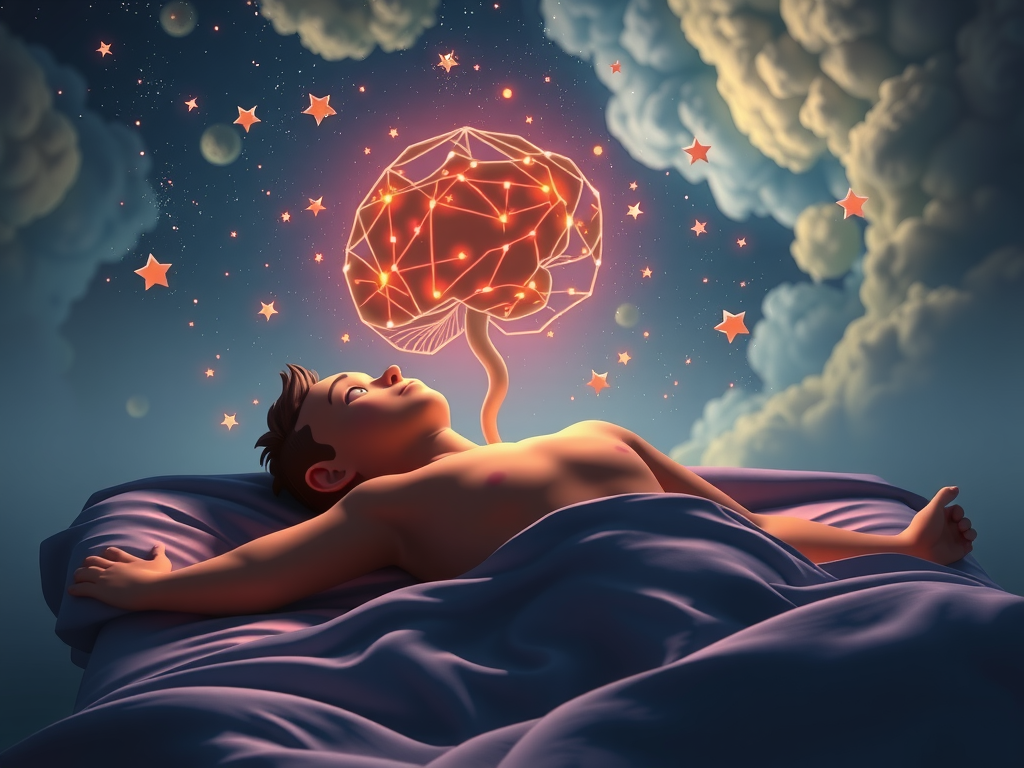
At 3 a.m., your eyes dart beneath closed lids, your body is paralyzed, and your brain—consuming as much energy as it does when you're awake—is running a private cinema. This is REM sleep, the stage where the most vivid dreams occur, and it happens about four times in a typical seven-hour night. For millennia, humans have wondered why we dream. Now, neuroscience is finally offering some answers, and they're more practical than you might think.[10][2]
“The most vivid dreams happen during rapid eye movement (REM) sleep, and these are the dreams that we're most likely to recall.”
From Freud to Brainstem Noise
Sigmund Freud was the first to argue that dreams have a scientific purpose, proposing that they are a form of wish-fulfillment, expressing unconscious desires. Carl Jung, his one-time disciple, countered that dreams are direct expressions of the mind, speaking in symbols and metaphors. But by the 1970s, psychiatrists Allan Hobson and Robert McCarley had swung the pendulum the other way. Their activation-synthesis theory held that dreams are meaningless—just the brain's attempt to stitch together random electrical signals from the brainstem. According to that view, the plot of your dream is no more significant than the crackle of a radio tuned to static.[2][13]
That debate hasn't fully settled. As G. William Domhoff, a psychologist at the University of California, Santa Cruz, writes, the scientific studies accumulated over the past 50 years do not support the specifics of Freud or Jung, but they do back the general notion that many dreams have meaning—they're coherent, correlate with psychological variables, and connect to waking thoughts. Domhoff also notes that the brainstem-reductionist view has been “shown to be false again and again since the 1960s.” Yet the question of why we dream remains open. As one overview in the journal Frontiers in Human Neuroscience puts it, “There's no single consensus about which dream theory best explains why we dream.”[13][12]
Memory: The Night Shift
One of the strongest theories is that dreams help consolidate memories. The idea is that during sleep, the brain replays the day's experiences, connecting recent events with older ones to make memories permanent and interconnected, as the American Psychological Association explains. This process appears to be rooted in specific brain activity. Researchers have found that adult-born neurons in the hippocampus—a region critical for memory—are responsible for memory consolidation during REM sleep. In that study, scientists exposed mice to a fear memory task and then recorded activity in these young neurons. They found that the neurons most active during REM sleep after the task were the same ones active during learning. When they silenced those neurons during sleep, the memory consolidation was impaired.[3][4]
The role of REM sleep in memory has been controversial because it's so hard to isolate neural activity during rapid eye movements. But a 2023 review in ScienceDirect notes that recent work using optogenetics—a technique to control neurons with light—demonstrated for the first time that activity specifically during REMs is required for spatial and contextual memory consolidation. The authors propose that both REM and non-REM sleep contribute to memory consolidation in the healthy brain, each playing a different role.[6]
Emotion: Facing Fears in Your Sleep
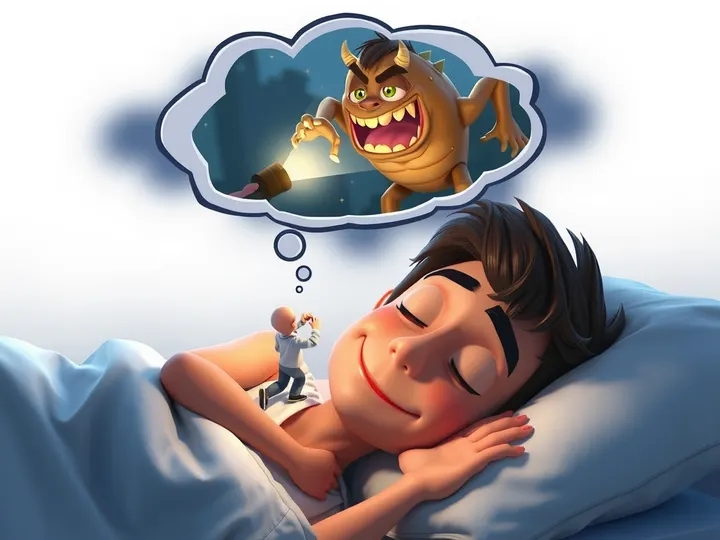
Dreams also appear to be a kind of overnight therapy. One theory, called fear reduction, holds that we dream of our fears in a way that diminishes them, much like exposure therapy. This idea gained support from Antti Revonsuo's research, which found that during REM sleep, the amygdala—the brain's fight-or-flight center—fires in patterns similar to those seen during a real threat. Revonsuo's threat simulation theory proposes that the primary function of negative dreams is rehearsal for real events, allowing us to practice overcoming threats in a safe environment.[3][2]
But the emotional picture is more nuanced. A study in Frontiers in Psychology found that while dream emotions are typically more negative than pre-sleep feelings, morning emotions are more positive, suggesting that emotional regulation occurs overnight. The study also found that dreamers tend to rate their dream emotions more positively than an independent judge would—a “positivity bias” that was the second strongest predictor of a positive morning mood. Meanwhile, a separate study by University of Kansas researcher Garrett Baber found that on a day-to-day basis, more fear in dreams was associated with worse mood the next morning. Yet when dreams contained both fear and joy, people were less likely to report negative mood. Baber suggests that while chronic nightmares are linked to mental and physical health problems, the average bad dream might actually be a sign of the brain's resilience.[7][8]
Creativity: The Dream Incubation Effect
Perhaps the most exciting recent research concerns creativity. A landmark study found that only participants who entered REM sleep during a nap showed a 40% improvement on a creative problem test later in the day. Psychologist Sara Mednick explains that “for new problems, only REM sleep enhances creativity” by letting the brain freely associate unrelated ideas. This aligns with the theory that dreams help the brain form novel connections.[15]
Even more striking, scientists have found ways to nudge dreams toward specific topics. In a 2020 study from Northwestern University, researchers played subtle sound cues during REM sleep to prompt people to dream about unsolved brain teasers they had struggled with earlier. An astonishing 75% of participants dreamed about the cued puzzles. Those who dreamed about a puzzle were far more likely to solve it after waking: they solved 42% of dream-related puzzles compared to 17% of others. The team used targeted memory reactivation to selectively replay soundtracks linked to half of the unsolved puzzles, and in 12 of 20 participants, dreams referred more often to the cued puzzles—and those same participants improved their success rate from 20% to 40%.[17]
What This Means for Your Sleep
So what can you do with this knowledge? First, don't skimp on REM sleep. Because REM occurs mainly in the later part of the night, cutting your sleep short can deprive you of the stage most linked to memory and creativity. Second, if you want to solve a problem, you might try a targeted nap: a study from MIT Media Lab found that guiding dreams during sleep onset—the hypnagogic state—can boost creativity on a specific topic. Participants who underwent a nap with targeted dream incubation performed more creatively than those who napped without intervention or stayed awake. The researchers found that dreaming of the topic during sleep onset was directly related to increased post-sleep creativity on that topic.[15][16]
The science of dreaming is still young, and many mysteries remain—where dreams originate, why some people remember them and others don't, and whether they have a single purpose. But the emerging picture is that dreams are not just noise. They are a vital part of how we process our days, regulate our emotions, and spark new ideas. As the American Psychological Association puts it, dreams are “a complex phenomenon that may serve various purposes.” The next time you wake from a strange dream, you might not know what it meant—but your brain was likely doing some heavy lifting.[3][11]
Sources
- Why Do We Dream? Understanding Dream Theory — verywellmind.com
- The Psychology of Dreams: Inside the Dream Mind – Brescia University – Owensboro, Kentucky — brescia.edu
- Why do we dream? — apa.org
- Memory consolidation during REM sleep | ScienceDaily — sciencedaily.com
- The REM Sleep–Memory Consolidation Hypothesis - PMC — pmc.ncbi.nlm.nih.gov
- REM sleep and memory — sciencedirect.com
- Frontiers | Dreamers’ evaluation of the emotional valence of their day-to-day dreams is indicative of some mood regulation function — frontiersin.org
- Featured news and headlines | KU News — news.ku.edu
- Dream Therapy: Accessing Complex Emotions Through Sleep | Psychology Today — psychologytoday.com
- Wikipedia: Rapid eye movement sleep — en.wikipedia.org
- Wikipedia: Dream — en.wikipedia.org
- Converging theories on dreaming: Between Freud, predictive processing, and psychedelic research — pmc.ncbi.nlm.nih.gov
- Domhoff: Beyond Freud and Jung — dreams.ucsc.edu
- cognitive psychology - What is the current "accepted" science behind dream interpretation? - Psychology & Neuroscience Stack Exchange — psychology.stackexchange.com
- The Neuroscience of Deep Sleep & Creativity – Harbor Springs Mattress Co. — harborspringsmattress.com
- Dreaming and Creativity — MIT Media Lab — media.mit.edu
- Scientists found a way to plant ideas in dreams to boost creativity | ScienceDaily — sciencedaily.com
Reported with AI assistance using internet sources.