How a Brain Implant Gave a Paralyzed Man the Ability to Feed Himself
Recent breakthroughs in brain-computer interfaces have allowed a paralyzed man to control a robotic arm with his thoughts, offering a glimpse into the future of neuroprosthetics.
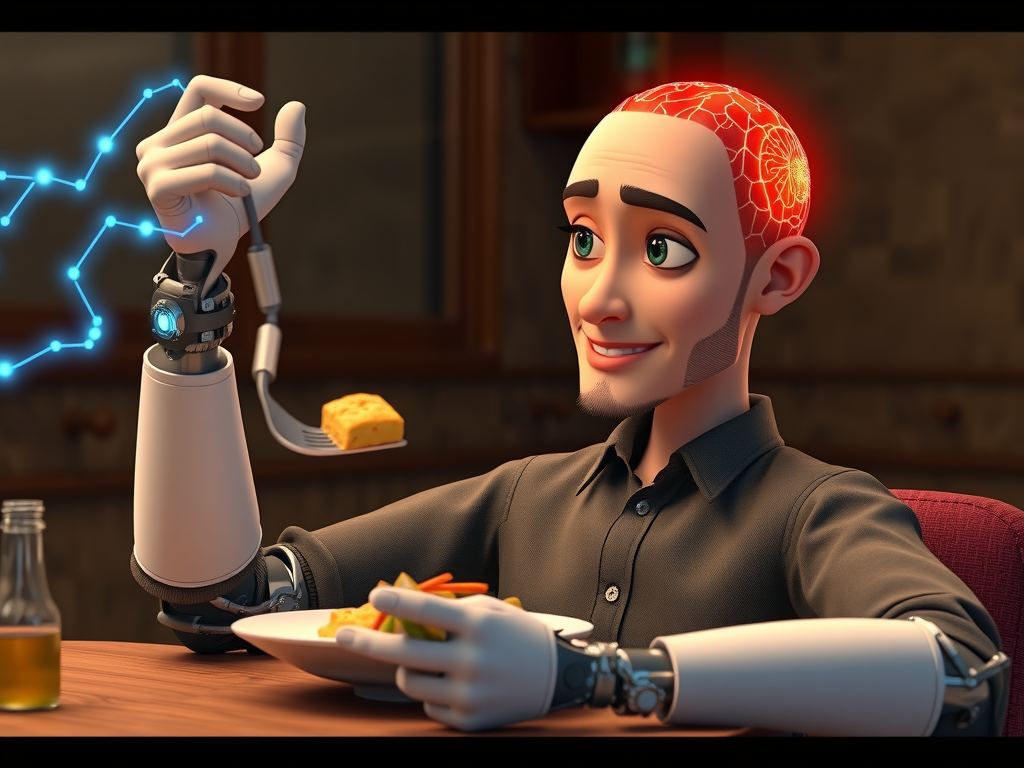
For people with severe paralysis, the simple act of feeding oneself can feel impossible. But recent advances in brain-computer interfaces (BCIs) are changing that. In a remarkable demonstration, a man with paralysis was able to use a robotic arm to bring food to his mouth, controlled purely by his thoughts. This achievement, rooted in decades of research, highlights the potential of neuroprosthetics to restore lost motor functions and improve quality of life.[1][2]
The Technology: Invasive Brain-Computer Interfaces
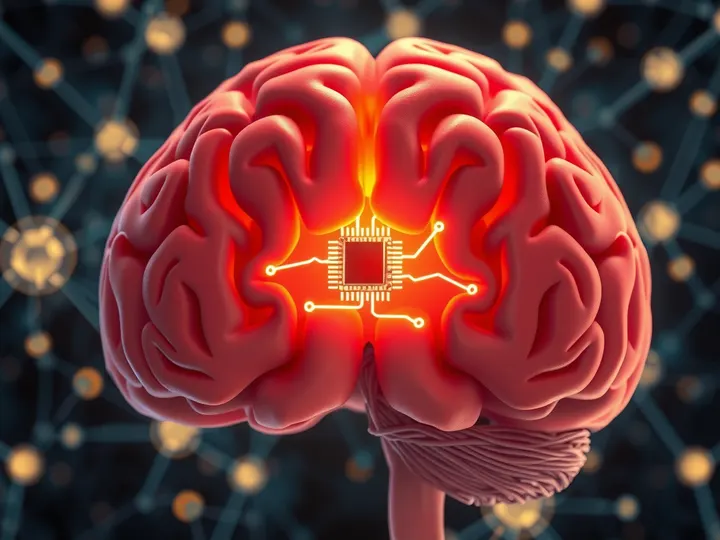
The system relied on an invasive BCI, which uses microelectrode arrays implanted directly into the brain tissue, according to Wikipedia. These arrays pick up electrical signals from neurons, allowing the device to decode the user's intended movements.[1]
"Due to the cortical plasticity of the brain, signals from implanted prostheses can, after adaptation, be handled by the brain like natural sensor or effector channels." — Wikipedia on BCI
The BCI is an "active" system, meaning it requires the user to consciously modulate neural activity to issue commands. In this case, the man imagined moving his own arm, and the implant translated those neural patterns into control signals for a robotic arm. Over time, with practice, the brain adapted to treat the prosthetic as a natural extension of the body—a phenomenon known as cortical plasticity.[1]
The Patient's Journey and Adaptation
Neuroprosthetics is a discipline focused on developing devices that can substitute a motor, sensory, or cognitive modality damaged by injury or disease, as noted by Wikipedia. This particular implant falls under that category, aiming to restore the ability to perform self-care tasks. The success of this demonstration suggests that even severe paralysis may not preclude independent feeding.[2]
Results: Improved Quality of Life and Feeding Ability
The primary outcome was the restoration of the patient's ability to feed himself using a robotic arm. This not only provided practical assistance but also enhanced his sense of autonomy and dignity. BCIs are often directed at repairing human cognitive or sensory-motor functions, and here the implant directly compensated for lost motor ability.[1]
Such neuroprostheses are intended to improve quality of life for those with disabilities, as stated in neuroprosthetics literature.[2]
Implications for Future Neuroprosthetics and BCI Applications
The ability to control a robotic arm for feeding is just one example of how BCIs could transform rehabilitation. Clinical and neuroprosthetic BCIs are widely developed to restore or compensate for lost motor or sensory abilities, such as providing communication for people with severe neuromuscular impairments or controlling prosthetic limbs.[1]
Moreover, the use of wireless communication and power transmission, as described in neuroprosthetics design, could make these implants less cumbersome. Current implants typically communicate wirelessly with external devices and receive power through the skin, reducing the risk of infection from wires. Miniaturization is also a priority, as smaller implants are less invasive and cause less tissue damage.[2]
Current Limitations and Challenges
Despite this success, the technology faces several hurdles. Signal quality and reliability remain concerns, as neural recordings can degrade over time due to tissue reaction or electrode failure. Ease of use and practicality are also challenges: the current system requires a bulky external processor and frequent calibration. Additionally, power consumption must be minimal to prevent tissue heating, which limits the complexity of onboard processing.[1][2]
Invasive surgery itself carries risks, and the long-term stability of implanted electrodes is still being studied. For widespread adoption, BCIs must become safer, more durable, and more intuitive.[1]
"BCIs are often directed at researching, mapping, assisting, augmenting, or repairing human cognitive or sensory-motor functions." — Wikipedia on BCI
Looking ahead, the convergence of improved materials, machine learning, and neural decoding algorithms could overcome these limitations. The vision is a fully implanted, wireless system that allows seamless control of multiple prosthetic devices, restoring independence to those with paralysis. This recent breakthrough is a powerful step in that direction.[1][2]
Sources
- Wikipedia: Brain–computer interface — en.wikipedia.org
- Wikipedia: Neuroprosthetics — en.wikipedia.org
Reported with AI assistance using internet sources.