The Rise of 'Flight Shame': How a Swedish Movement Is Changing Global Travel
A Swedish concept that began with a few journalists is now reshaping how the world thinks about flying—and how it books its holidays.
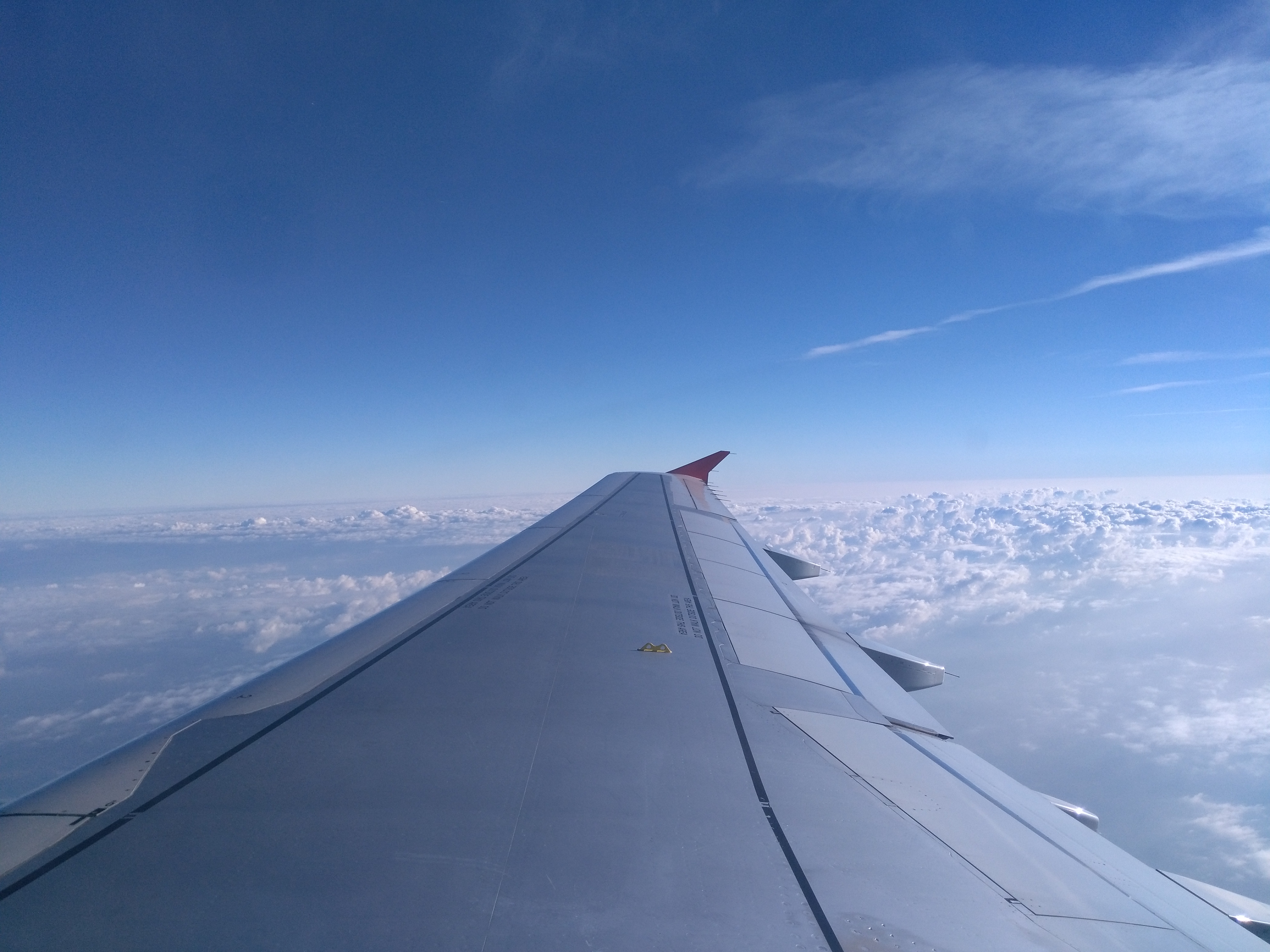
In the spring of 2018, a handful of Swedish journalists wrote about a private discomfort: the guilt of boarding a plane while knowing its climate cost. The word they used, flygskam, or flight shame, had existed in Swedish before, but it was those columns that turned a personal feeling into a national debate. By the end of the year, a movement had taken off—one that has since nudged airlines, governments, and millions of travellers to reconsider the simple act of booking a flight.[1][8]
The math behind the shame is stark. A round-trip flight from Stockholm to Thailand creates a climate impact corresponding to two tons of carbon dioxide, according to research cited by nordics.info. That is a quarter of the eight tons per person that the average Swede emitted in 2023—and half of the four-ton target that scientists say is needed by 2030 to meet climate goals. For many, the arithmetic made flying feel less like a convenience and more like a luxury the planet could no longer afford.[1]
From Stockholm to the World
The movement's origins are often traced to Swedish biathlete Björn Ferry, who publicly gave up flying after estimating his annual emissions at 16 tons of CO2, according to reports. But it was the 2018 media wave, followed by Greta Thunberg's school strikes and her family's own flight-free lifestyle, that pushed flygskam into the mainstream. By 2019, the term had spread across northern Europe, and the airline industry was taking notice: at the annual International Air Transport Association meeting in Seoul that year, combating flygskam was a formal agenda item, according to Wikipedia.[9][8]
The movement's early impact was measurable. In Sweden, SJ, the state railway, sold 1.5 million more tickets in 2018 than the year before, while domestic air travel fell 9%, according to Swedavia, as cited by Wikipedia. A survey cited by nordics.info found that the share of Swedes who had reduced their climate impact in holiday travel choices rose from 37% in 2015 to 62% in 2021. The shift was not just about guilt—many who gave up flying described the decision as a liberation, not a sacrifice, according to research highlighted in The Conversation.[8][1][11]
A round-trip from Stockholm to Thailand creates a climate impact corresponding to two tons of carbon dioxide—a quarter of the average Swede's annual emissions.
The Real Cost of a Flight
Aviation's share of global carbon emissions is often quoted at around 2.5%, but the full picture is more complex. According to the Aviation Benefits Beyond Borders website, air transport generated 882 million tonnes of CO2 in 2023, about 2.05% of the 57.1 gigatonnes from human activities. But planes also emit nitrogen oxides, water vapour, and particulates at high altitudes, where their warming effect is amplified. Wikipedia notes that aviation is responsible for about 4% of human-induced climate change when these non-CO2 effects are included.[4][8][2]
The industry has made efficiency gains—jet airliners became about 70% more fuel efficient between 1967 and 2007, and CO2 emissions per revenue ton-kilometer in 2018 were 47% of 1990 levels, according to Wikipedia. But overall emissions have risen because people fly more. By 2020, aviation emissions were 70% higher than in 2005, and they could grow by 300% by 2050, the same source warns. For context, road transport contributes 11% of human-induced CO2 emissions, and the power industry is the largest source at 26%, per aviationbenefits.org.[3][4]
The Train Alternative—and Its Price Problem
For travellers looking to avoid the shame, the obvious alternative in Europe is the train. The continent's rail network is extensive, and trains often go city-centre to city-centre, avoiding the long schlepp to airports. A study by Greenpeace Europe, reported by Le Monde, found that train travel can emit up to 96.5% less CO2 per passenger-kilometre than flying. The same study noted that a Barcelona-London trip emits 47 times more carbon by air than by rail.[6][5]
But there is a catch: the train is often more expensive. Greenpeace's analysis of 100 European routes found that nearly 60% were cheaper by plane, and the price gap can be extreme. On the Barcelona-London route, the train cost up to 26 times more than the plane on the same date—€389 versus €14.99, according to Le Monde. That price gap pushes consumers to fly, even when they'd rather not. The study's authors argue that governments need to step in to make rail competitive, for example by taxing aviation fuel or lowering VAT on train tickets.[5]
Still, the train offers more than just lower emissions. Trains generally have more legroom, freedom to move around, and the ability to work or sleep comfortably, as Flightright notes. Night trains are making a comeback, providing a practical way to cover long distances. And when you factor in the time spent getting to the airport, security checks, and potential delays, the train can sometimes be faster door-to-door—a point made by both Flightright and travellers on the Rick Steves forum.[6][7]
Critics and Limits
Flygskam is not without its critics. Some argue it focuses narrowly on aviation while ignoring other polluting sectors, and that it favours countries with strong public transport, as noted by Live Well Travel Far. Others question its effectiveness: a study in ScienceDirect found that more than 90% of respondents overestimate aviation's share of global carbon emissions, and 98% underestimate the industry's efficiency gains—suggesting that shame may be based on misinformation. There are also economic concerns, particularly for regions that depend on tourism or for people who cannot afford the time or money that train travel often requires.[12][10]
The movement's practical impact has also been uneven. France's 2023 ban on short-haul domestic flights where a high-speed rail alternative exists under 2.5 hours affected only three routes, according to Wikipedia. And despite flygskam's rise, aviation continues to expand—Heathrow's third runway plans, for instance, were still moving forward as of the Medium essay's writing. The airline industry has responded with promises of net-zero emissions by 2050 and investments in more efficient engines and sustainable fuels, but these are long-term bets.[8][9][2]
A Shift in the Seatbelt Sign
Flygskam may not have grounded the global fleet, but it has changed the conversation. Airlines now talk about sustainability in their annual reports; governments in Europe are debating rail investments and flight taxes; and a growing number of travellers, at least in Sweden, are choosing the train. The movement's greatest achievement may be simpler: it made people ask whether a flight is worth the cost—not just in money, but in carbon. As the research in The Conversation suggests, for those who have given up flying, the decision often feels less like a sacrifice and more like a step toward a less stressful, more deliberate way of seeing the world.[11][2][3]
Sources
- Flygskam / Flight shame — nordics.info
- Environmental impact of aviation | Environmental Sciences | Research Starters | EBSCO Research — ebsco.com
- Environmental impact of aviation - Wikipedia — en.wikipedia.org
- Quantifying aviation's climate impact : Aviation: Benefits Beyond Borders — aviationbenefits.org
- In Europe, train travel remains significantly more expensive than flying — lemonde.fr
- Train vs Plane: Efficient & Eco-friendly Travel [Guide] - Flightright — flightright.com
- Train vs Flying in Europe, Pro's & Con's - Rick Steves Travel Forum — community.ricksteves.com
- Wikipedia: Flight shame — en.wikipedia.org
- Medium — tabitha-whiting.medium.com
- Where does flygskam come from? The role of citizens’ lack of knowledge of the environmental impact of air transport in explaining the development of flight shame — sciencedirect.com
- Flight shaming: how to spread the campaign that made Swedes give up flying for good — theconversation.com
- Why I Don't Believe In Flygskam — Live Well Travel Far — livewelltravelfar.com
Reported with AI assistance using internet sources.