The Crimson Ledger: Inside the World's Most Expensive Spice
Saffron is worth more than gold, yet its journey from hand-picked Iranian fields to your paella is a story of labor, fraud, and ancient trade routes.
In the cool dawn of an Iranian autumn, workers fan out across purple-blossomed fields in the Khorasan region. Each flower must be picked by hand, its three crimson stigmas plucked and dried within hours. By the time the sun is high, the day's harvest is already on its way to becoming the world's most expensive spice. To produce a single pound of saffron, it takes 75,000 flowers, according to Britannica. That's roughly the area of a football pitch under cultivation, per Wikipedia. The result: a wholesale price tag as high as $10,000 per pound, making saffron the single most expensive food on earth, as TASTE magazine reports.[1][8][3]
Why So Pricey? The Math of Manual Labor
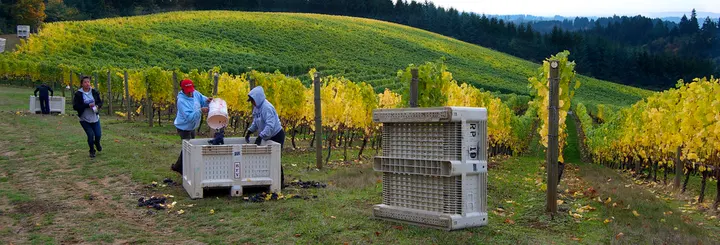
The cost isn't about growing difficulty—saffron crocuses are actually hardy. It's the labor and timing, as JSTOR Daily explains. The flowers bloom for only a few hours a day, and each yields just three threads. Workers must remove the stigmas by hand, a task that demands precision and speed. According to JSTOR Daily, it takes between 70,000 and 200,000 flowers to produce one kilogram of dried saffron, and roughly 370–470 hours of work per kilogram.[2][3]
Saffron is expensive not because it's difficult to grow, but because of the labor and tedious timing necessary to extract it from the flower.
The economics are stark when you compare saffron to gold. Some sources claim that high-quality saffron can cost between three to five times as much as gold per kilogram, according to Rowhani Saffron, an Iranian exporter. However, other data suggest that while gold trades at roughly $55,000 to $60,000 per kilogram, premium saffron ranges from $2,000 to $10,000 per kilogram—making the spice occasionally pricier than the metal, as Wikipedia notes. Yet unlike gold, saffron's value is tied to its fleeting nature and the human hands that coax it from the ground.[9][8]
A History Written in Threads
Saffron's story spans more than 3,500 years, as documented in palace frescoes of Minoan Crete that show young girls and monkeys picking the flowers, according to the EPFL history page. The spice was likely first domesticated in Greece around 1700 BCE, per JSTOR Daily, and later spread through Asia via conquest and trade. It reached Spain in 921 CE, where it became a cornerstone of paella. The ancient Persians used it as medicine, an offering to the gods, and even as currency, as Sativus.com recounts. The Egyptians prized it as a flavoring and aphrodisiac; the Greeks dyed their hair yellow with it.[12][2][13]
But this history is also one of conflict. Saffron's high value has made it subject to price fluctuations due to political turmoil or droughts in major producing regions like Iran, as Golden Saffron explains. In 2019, Iran produced 430 tons—by far the world's largest share—and despite sanctions that cut off direct sales to the US, exports rebounded by year's end, according to Wikipedia. The COVID-19 pandemic then slashed production in 2020/21, because harvesting is so labor-intensive that social distancing crippled the workforce.[10][8]
The Adulteration Epidemic
With prices that high, fraud is inevitable. Saffron is routinely cut with turmeric, safflower, paprika, and even synthetic dyes, as Target Analysis reports. Europol recently supported Spanish authorities in cracking down on organized crime trafficking adulterated saffron, uncovering fraud valued at 10 million euros across more than 500 shipments. The official ISO 3632-2 testing method, which uses UV-vis spectroscopy and liquid chromatography, can't detect certain adulterants like safflower or turmeric when they're added below 20% by weight, according to the same source.[4]

A survey of market samples found that only 40% met ISO Category I standards, with the remaining samples averaging 36.25% adulteration, according to Frontiers in Pharmacology. Categories II and III saffron are the most vulnerable, as fraudsters target lower grades where fillers are harder to spot. The good news? Researchers are fighting back. A team described a low-cost method using a foldable microscope and machine learning to distinguish genuine saffron from fake, as detailed in the same Frontiers paper. Another study used DNA barcoding and chromatography to identify adulterants in commercial samples, per the Canadian Science Publishing paper.[5][6]
To get the good stuff, always buy whole saffron, not ground, which is usually adulterated with fillers, and look for thin, wavy threads with yellow dots at one end.
From Field to Paella: The Quality Divide
For the consumer, the journey ends in a pinch of threads dropped into simmering broth. Saffron is essential to Spanish paella, French bouillabaisse, Moroccan tagines, and Persian dishes like chelow and khoresh-e fesenjan, according to Britannica and Wikipedia. But not all saffron is equal. The ISO 3632 standard grades saffron by its concentrations of crocin (color), picrocrocin (taste), and safranal (aroma), measured via spectrophotometry, as Wikipedia explains. Premium grades come from a higher ratio of dark red stigmas to yellow styles—the red parts are where the flavor and color live.[1][7]
Iran dominates production, but Kashmir saffron is also globally renowned, used in cosmetics and medicine, per Wikipedia. The quality varies with harvest conditions, processing, and storage. A good batch will have a deep, hay-like aroma and a golden-yellow hue that stains the dish evenly. A bad one—or a fake one—might be odorless, dull, or leave a suspicious red tint.[8][7]
The Human Cost of Luxury
Behind every gram of saffron is a story of labor and livelihood. In Iran, saffron is a highly remunerative cash crop, as Frontiers notes, providing income for thousands of rural workers, many of them women. The COVID-19 pandemic hit hard, with production declining in 2020/21 because the work-intensive harvest couldn't adapt to social distancing, according to Wikipedia. Yet the spice's value persists, buoyed by global demand that sees prices react to weather and political instability—rising sharply when crises hit, and falling only slightly in good years, per Golden Saffron.[5][8][10]
Saffron is more than a spice; it's a thread connecting ancient Crete to modern Tehran, a luxury that carries the weight of human hands. As you sprinkle it over your next paella, consider the 370 hours of work that went into that tiny jar. It's a reminder that some things are expensive not because they're rare, but because they're human.[2]
Sources
- Why Is Saffron So Expensive? — britannica.com
- Saffron: The Story of the World’s Most Expensive Spice - JSTOR Daily — daily.jstor.org
- Why Is Saffron So Expensive? | TASTE — tastecooking.com
- Chromatography-free Screening and Quantitation of ... — targetanalysis.gr
- Frontiers | The menace of saffron adulteration: Low-cost rapid identification of fake look-alike saffron using Foldscope and machine learning technology — frontiersin.org
- Identification of adulteration in the market samples of saffron using morphology, HPLC, HPTLC, and DNA barcoding methods — cdnsciencepub.com
- Wikipedia: Saffron — en.wikipedia.org
- Wikipedia: Saffron trade — en.wikipedia.org
- Iranian Saffron supplier and exporter - Saffron Price vs Gold: How Much is Saffron Per Kg? — rowhanisaffron.com
- Price of Saffron vs Gold – The Shocking 2026 Comparison — goldensaffron.com
- History of saffron - Wikipedia — en.wikipedia.org
- History of saffron — dlab.epfl.ch
- The History of Saffron | Origins & Cultural Significance of Crocus Sativus – Sativus.com — sativus.com
Reported with AI assistance using internet sources.