From a Valley of Walnut Trees to the Nobel Stage: Aziz Sancar's Long Climb
He grew up in a Turkish family where shoes were luxuries and farm work was loathed. Then he mapped how cells repair DNA and won the 2015 Nobel Prize in Chemistry.
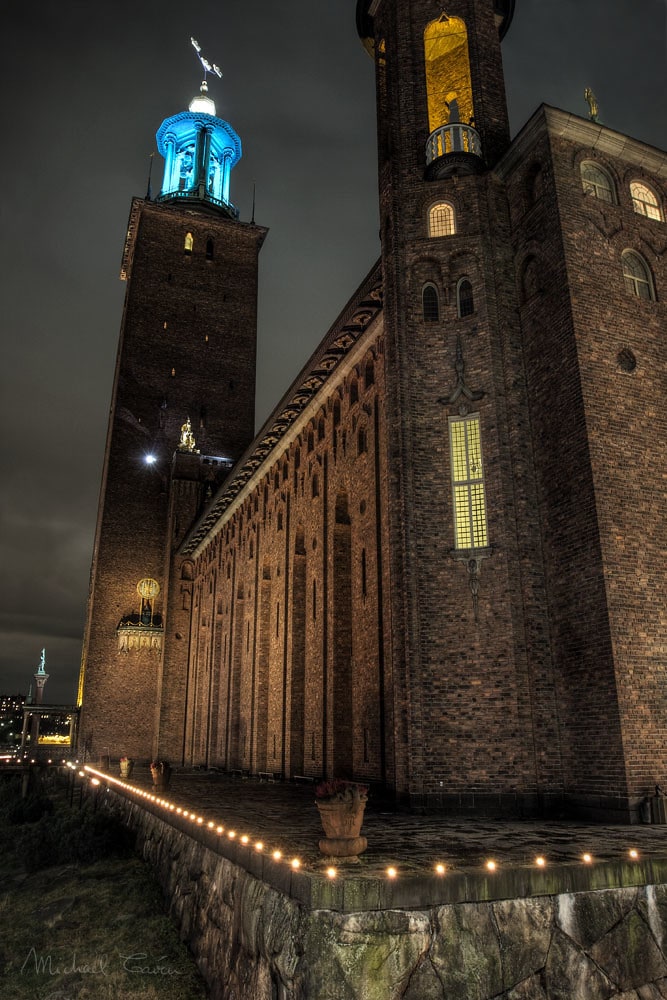
Aziz Sancar was born on September 8, 1946, in Savur, a small town in Mardin Province in southeastern Turkey, the seventh of eight children of Abdulgani and Meryem Sancar. His father was a farmer; his mother kept the house and the children. By the standards of the day, the family was lower middle-class. Shoes were luxuries, and until the seventh grade the children wore them only when they went to school.[1]
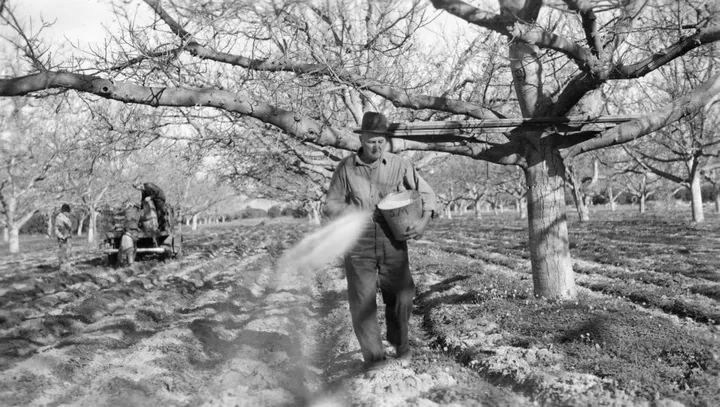
Much of his early youth was spent in the valley below the family house, tending fruit and nut trees and a vegetable garden that provided nourishment and income. He did not enjoy it. “Overall, I did not like farm work,” he wrote in his Nobel biography, a line that might be the most relatable sentence ever published by a laureate.[1]
The Illiterate Mother Who Saw the Future
Neither of his parents could read or write, but they stressed education. His mother, the daughter of an Imam from a small village near Savur, was described by Sancar as the most intelligent woman he had known and very progressive. He was taught by idealistic teachers trained in Turkey's Village Institutes, a rural education program he later called a great inspiration.[1][2][7]
His first career ambition was not biochemistry. It was to become a soccer star for the Turkish national team. In his senior year of high school, he gave up that dream and went to Istanbul for higher education, enrolling in the Faculty of Medicine at Istanbul University in 1963.[4][12]
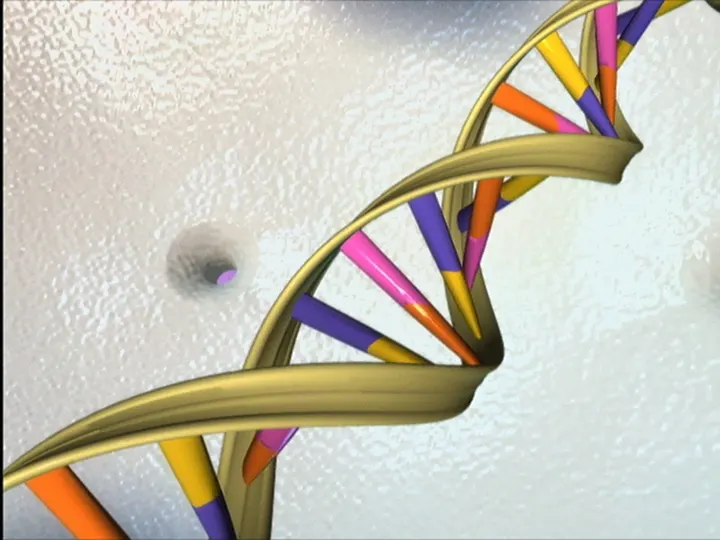
He had wanted to study chemistry, but was persuaded into medicine after five classmates also got into medical school. The pivot stuck: he graduated in 1969 at the top of his class of 625 students. The decisive turn came in his second year, when a biochemistry class introduced him to the DNA double helix. He decided then to become a research biochemist.[2][5][7]
A NATO Fellowship, a False Start, and a Lab in Texas
After graduating, Sancar practised medicine near his hometown for about two years. He then won a NATO fellowship to study at Johns Hopkins University in 1971. The move did not take. After roughly 18 months, he returned to Savur as a doctor, citing social difficulties and an inability to adapt to American life.[2][3][5]
The second attempt worked. In 1973 he joined Claud Stanley Rupert's laboratory at the University of Texas at Dallas, studying photolyase and photoreactivation. Rupert suggested he try to clone the gene for photolyase, a blue-light-powered enzyme that repairs UV-induced DNA damage.[4][7][9]
Sancar cloned the photolyase gene in 1975. He earned his PhD in 1977.
The post-PhD road was not smooth. Sancar had three rejected applications for postdoctoral positions. He took a job at Yale University as a laboratory technician, and it was there that he began the work on nucleotide excision repair that would eventually change the field.[2]
The Repair Manual for DNA
In 2015, Sancar shared the Nobel Prize in Chemistry with Tomas Lindahl and Paul Modrich for mechanistic studies of DNA repair. The three were honoured for mapping, at a molecular level, how cells repair damaged DNA and safeguard genetic information.[2][4][5]
Sancar's contribution was to map nucleotide excision repair, the process in which proteins cut out damaged DNA segments and replace them with new ones. His findings explained how cells protect and repair themselves after damage from ultraviolet radiation in sunlight. He discovered that the human system removes damage by cutting out a stretch of one strand of the double helix, and that human cells require 15 proteins for the job while E. coli needs only three.[3][9]
His lab was the first to reconstitute the excision nuclease in a defined system. Later, his team discovered cryptochrome, a flavoprotein closely related to photolyase. Unlike photolyase, which repairs DNA, cryptochromes regulate the body's 24-hour circadian clock. He named the protein and showed it is a vital component of the molecular clock that sets our daily rhythm.[3][8][9]
Mentors, Borders, and the Opportunity Gap
Sancar's path ran through teachers and mentors at every stage: Mutahhar Yenson and Muzaffer Aksoy during medical school in Istanbul, and Claud Stanley Rupert at UT Dallas, who guided his Nobel-winning research on DNA repair. International fellowships — NATO, TÜBİTAK — were the bridges that carried him from Mardin to Baltimore and then to Texas.[4][5]
He has since trained more than 35 students and more than 55 postdocs over 40 years. His lab at UNC has hosted scientists from Germany, England, France, Italy, Japan, Korea, China, and Türkiye. He is the Sarah Graham Kenan Distinguished Professor of Biochemistry and Biophysics at UNC-Chapel Hill and a member of the UNC Lineberger Comprehensive Cancer Center. In 2016, the Carnegie Corporation named him Immigrant of the Year.[8][9]
The lesson is not that talent is evenly distributed — it is that opportunity is not. Sancar's curiosity was kindled in a place with no electricity, but it took a scholarship, a mentor, and a laboratory to turn it into a Nobel Prize. For every Sancar who finds a way out, there are countless others whose potential never gets a chance to be tested.[1][3][4]
Sources
- Aziz Sancar – Biographical - NobelPrize.org — nobelprize.org
- Aziz Sancar - Wikipedia — en.wikipedia.org
- Aziz Sancar, MD, PhD | The Vallee Foundation — thevalleefoundation.org
- A Nobel Partnership - UT Dallas Magazine — magazine.utdallas.edu
- A Nobel-Winning Scientist: Aziz Sancar and the Impact of his Work on the Molecular Pathology of Neoplastic Diseases - Turkish Journal of Pathology — turkjpath.org
- A Nobel-Winning Scientist: Aziz Sancar and the Impact of his ... — pmc.ncbi.nlm.nih.gov
- Aziz Sancar -Nobel Laureate – History of Islam — historyofislam.com
- Aziz Sancar - UNC Lineberger Comprehensive Cancer Center — unclineberger.org
- The enduring legacy of Dr. Aziz Sancar - UNC Giving — giving.unc.edu
- The Big Data Revolution — twas.org
- Peter Singer - Co-founder, Profit for Good — linkedin.com
- Who is Prof. Dr. Aziz Sancar? Life & Achievements — uskudar.edu.tr
Reported with AI assistance using internet sources.