The Night One Man Stopped World War III
In 1983, Soviet officer Stanislav Petrov trusted his gut over a nuclear warning system and prevented a catastrophic war.
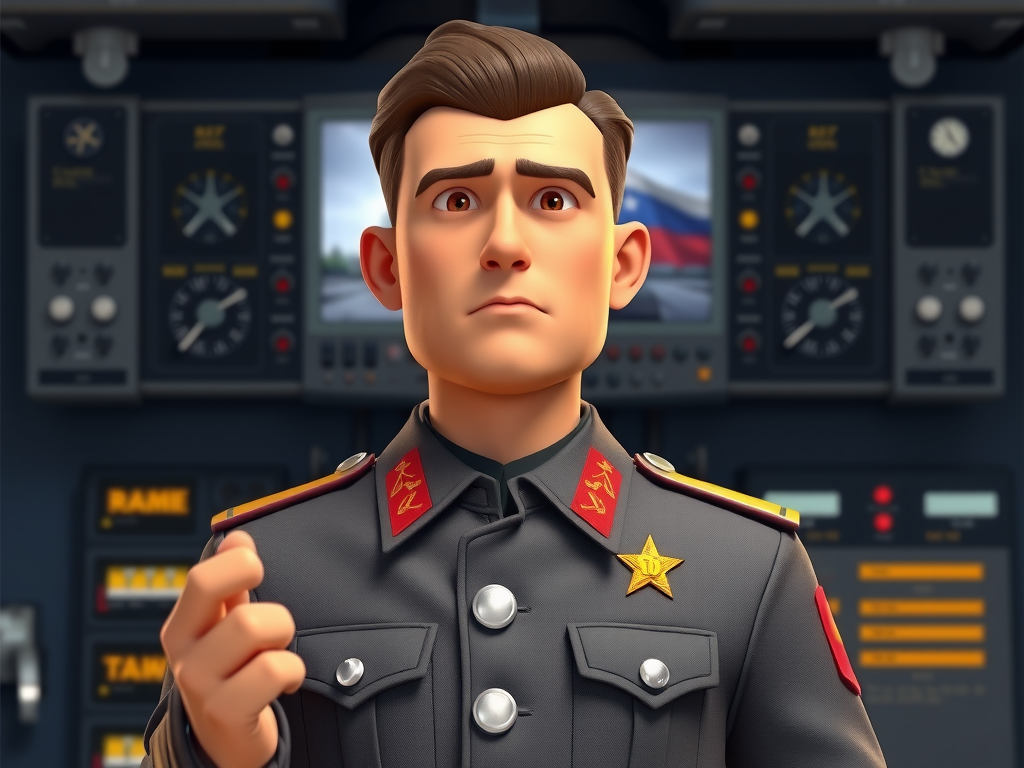
Shortly after midnight on September 26, 1983, a siren blared at the Serpukhov-15 command center, a bunker outside Moscow. A nondescript wall panel flashed angry red letters: 'LAUNCH.' The Soviet Union’s new Oko early-warning satellite system had detected an American intercontinental ballistic missile heading toward the country. Then a second, third, fourth, and fifth missile. The status upgraded to 'Missile Strike.' The protocol was clear: report the attack to superiors, who would almost certainly order a retaliatory strike. But the duty officer that night, 44-year-old Lieutenant Colonel Stanislav Petrov, did not reach for the phone. He later recalled, 'I felt like I was sitting on a hot frying pan.'[4][5]
A Quiet Engineer’s Instinct

Petrov’s background was atypical for a Soviet officer. He was an engineer, trained at the Kiev Higher Engineering Radio-Technical College, and his day job was troubleshooting the main computer. Unlike his colleagues—professional soldiers conditioned to follow orders—Petrov had a civilian mindset that questioned automated systems. 'My colleagues were all professional soldiers, they were taught to give and obey orders,' he told the BBC. He was not trained to accept a computer’s assessment as final. When the Oko system screamed attack, Petrov’s instinct was to doubt. The logic didn’t add up: a U.S. first strike would involve hundreds of simultaneous launches, not five. Ground telescopes and radar showed nothing. The system itself was new and known to be unreliable. He called the duty officer in the Soviet army’s headquarters and reported a system malfunction, not a missile strike.[1][7][12]
“I knew perfectly well that nobody would be able to correct my mistake if I had made one.”
Petrov later admitted he was never entirely sure the alarm was false. 'I had obviously never imagined that I would ever face that situation,' he said in a 2013 interview. But he trusted his training and his gut. The investigation later confirmed the Oko system had malfunctioned: sunlight reflecting off high-altitude clouds had triggered the sensors. The error was corrected by cross-referencing a geostationary satellite, but only after the incident exposed a critical flaw. Petrov’s decision, according to the Stanley Center for Peace and Security, illustrates the importance of human decision-making in the machine age of warfare—a lesson that remains urgent today.[1][2][8]
Praise, Then a Reprimand
Petrov’s actions are widely credited with preventing a retaliatory nuclear strike that would have triggered full-scale nuclear war, likely killing hundreds of millions. But the immediate aftermath was mixed. General Yuri Votintsev initially praised him and promised a reward. Yet days later, Petrov received an official reprimand—not for his decision, but for mistakes in the military logbook. He was neither rewarded nor punished, he said. Instead, he was reassigned to a less sensitive post, took early retirement, and suffered a nervous breakdown. The story remained secret for 10 years, until it was reported in the press.[1][2][12]
Decades later, recognition came. In 2006, Petrov traveled to the United Nations, where he received a World Citizen Award. He became known as 'the man who saved the world.' But he never saw himself as a hero. 'That was my job,' he told the BBC. 'But they were lucky it was me on shift that night.' His humility underscores a deeper truth: the Cold War’s safety net hung on the judgment of a single officer who refused to be a cog in the machine.[4][7][12]
Lessons for a High-Tech Age
Petrov’s story is not just history; it’s a warning. Nuclear command-and-control systems still rely on human operators, but automation bias—the overreliance on machines—can erode critical thinking. The Bulletin of the Atomic Scientists notes that Petrov’s 'atypical background' allowed him to rise above checklists and protocols. Today, as countries modernize their arsenals and deploy AI for threat detection, the same vulnerability persists. The 1983 incident led to fixes—cross-referencing satellites—but the human element remains the last line of defense. According to the Permanent Mission of the Russian Federation to the UN, nuclear retaliation requires multiple sources confirm an attack. But systems can still fail, and the weight of a split-second decision can mean global annihilation.[1][7][8]
For individuals facing high-pressure decisions today, Petrov’s example offers a quiet blueprint: question the data, trust your training, and resist the urge to act on incomplete information. Calmness and reason, as a Reddit analysis of his story put it, were the keys. 'One person's bravery and conviction can shape the course of history,' wrote a Vocal Media piece. Petrov died in 2017 at age 77, but his legacy endures—a reminder that in the age of machines, the most important circuit is still the human conscience.[10][11]
Sources
- Stanislav Petrov - Wikipedia — en.wikipedia.org
- 1983 Soviet nuclear false alarm incident - Wikipedia — en.wikipedia.org
- 1983 Nuclear False Alarm — large.stanford.edu
- The Man Who Helped Avert Nuclear Armageddon — history.com
- Stanislav Petrov: The Man Who Saved the World from Nuclear War — historyhit.com
- Stanislav Petrov: The Soviet Soldier Who Prevented Nuclear War | HistoryExtra — historyextra.com
- My time with Stanislav Petrov: No cog in the machine - Bulletin of the Atomic Scientists — thebulletin.org
- The Critical Human Element in the Machine Age of Warfare | Stanley Center for Peace and Security — stanleycenter.org
- #OTD in 1983, Lt-Col Stanislav... - U.S. Naval Institute — facebook.com
- The true story of Stanislav Petrov and why sensationalism hides the real lesson behind it. — reddit.com
- The Man Who Saved the World | Wander — vocal.media
- Stanislav Petrov: The man who may have saved the world — bbc.com
Reported with AI assistance using internet sources.