The Danube's Slow Death: How Drought Is Reshaping Europe's Lifeline
Record-low water levels on Europe's second-longest river are exposing WWII wrecks, shutting down nuclear reactors, and threatening trade and ecosystems—a stark warning of climate-driven water stress.
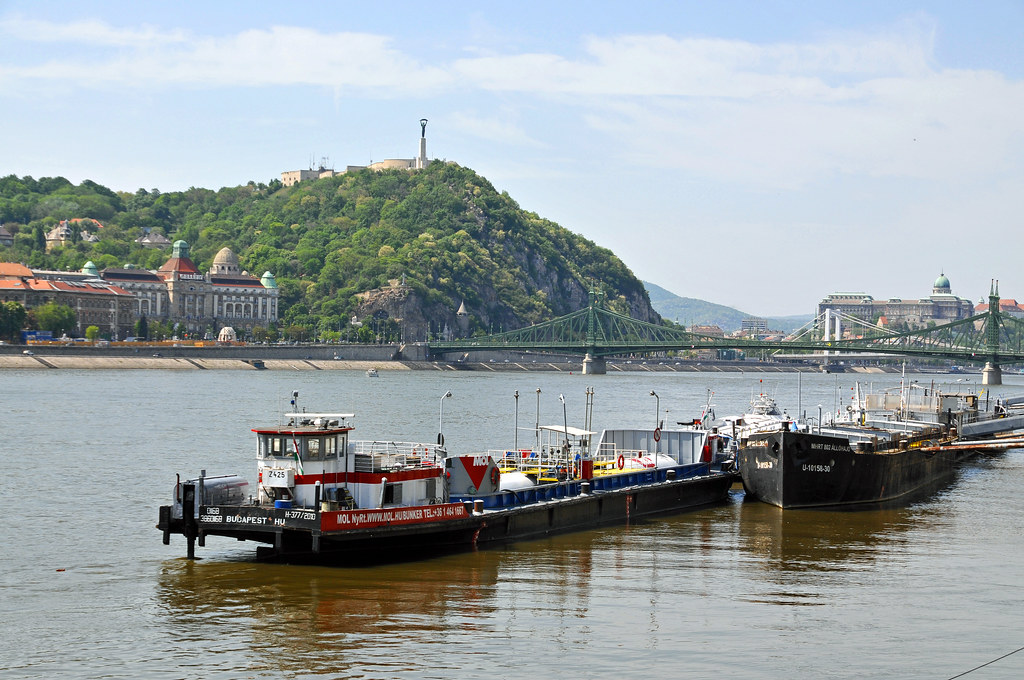
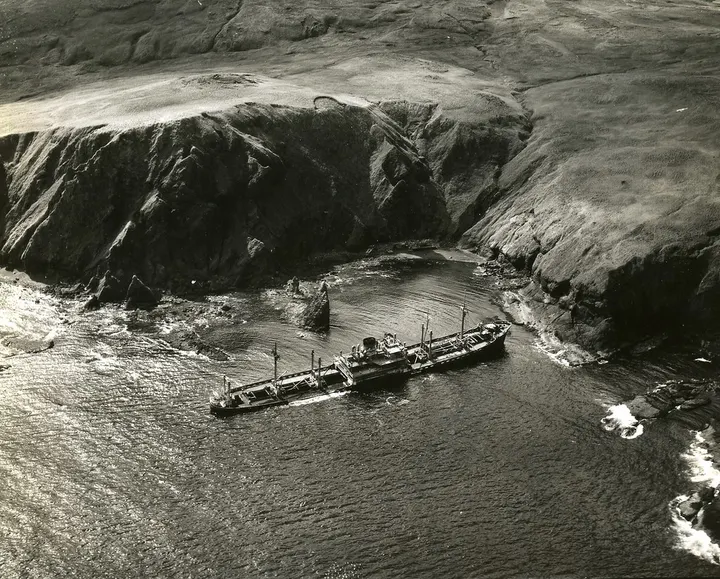
In the Serbian village of Prahovo, the Danube has retreated so far that the rusting hulls of German warships—deliberately sunk by the Nazis as they fled in 1944—now break the surface like the ribs of a drowned fleet. Farther downstream, in Ruse, Bulgaria, the receding waters have revealed mammoth bones and tusks from the Ice Age. And in Budapest, a wartime bomb was exposed at the base of the Margaret Bridge, forcing authorities to close it. This is not a scene from a post-apocalyptic film; it is the Danube in 2024, a river that has become a barometer of Europe's climate crisis.[10][14][12]
Record Lows and a River in Retreat
The numbers are stark. At Baziaș, where the Danube enters Romania, the flow in July 2024 stood at 1,700 cubic meters per second—against a July average of 4,700, the lowest since 1996. In Budapest, the river fell to 41 centimeters, within 8 centimeters of the all-time low set in 2018. And this July, the water level reached a point that in 2018 wasn't seen until October. The crisis is no longer a once-a-decade anomaly; it's becoming an annual event, arriving earlier each year.[8]
The Danube, Europe's second-longest river after the Volga, stretches about 2,860 kilometers from Germany's Black Forest to the Black Sea, passing through or bordering ten nations. It is a working waterway of enormous economic importance, carrying millions of tons of cargo annually. But as the river shrinks, so does its capacity to serve the continent.[6][9]
Trade, Energy, and the Nuclear Question
Low water means barges carry less. In Serbia, vessels hauling imported fuel are moving only a fraction of their normal cargo. Ferry services and grain barges in Romania have been suspended. The disruption extends to the Rhine in Germany, where goods can't be transported, forcing companies to scramble for alternatives. The economic ripple effects are felt across the continent, as shipping costs rise and supply chains strain.[12][8][2]
Perhaps the most dramatic consequence is in energy. Romania was forced to shut down its last working nuclear reactor at the Cernavoda plant—the first such shutdown in history—because the reactors use Danube water to cool their cores. Hungary's Paks plant, which supplies nearly half of the country's electricity, was operating at less than 50% capacity and expected to be completely powered down. The Danube is also a key source of hydropower, and low flows mean reduced generation, adding to Europe's energy woes.[2][8][14][13]
Romania was forced to shut down nuclear plants beside the Danube for the first time, as the reactors use river water to cool their cores, and if the river drops too far they can’t run safely.
Ghosts of War and Ancient Bones

The receding waters are revealing more than just low-water markers. In Prahovo, the exposed German warships are a navigation hazard and a grim reminder of the war's end. In Budapest, the wartime bomb under the Margaret Bridge was safely removed, but the message is clear: the riverbed holds history that is now resurfacing. Even older relics have emerged—mammoth bones in Bulgaria, and the foundations of a Roman bridge from Nero's time in Serbia. These finds are scientifically valuable, but they also underscore how dramatically the river's landscape is changing.[10][14][2][12]
Ecological Fallout
The ecological impacts are severe. Fish populations are stressed as oxygen levels drop; during the 2022 drought, oxygen fell close to the threshold below which trout cannot survive. Dredging was banned to protect habitats, and wastewater plants were put on standby. Wetlands, which rely on seasonal flooding, are drying out, threatening the extraordinary biodiversity of the Danube basin—home to pike, zander, sturgeon, and salmon. The river's health is not just an environmental concern; it's a signal of the broader decline of freshwater ecosystems across Europe.[8][9][3]
Adaptation and the Future
Governments and communities are scrambling to adapt. Romanian authorities carried out a controlled explosion to divert water flow toward the nuclear plant. Hungarian officials have asked citizens to reduce energy use in peak evening hours, and industries like carmakers and battery manufacturers have been ordered to cut power and water consumption. Dredging is underway to keep channels open, and water conservation measures are being implemented. But these are stopgap measures. The Danube's decline is part of a larger pattern: about 75% of the UK is under drought conditions, and much of mainland Europe is on high alert.[10][14][3][2]
The immediate trigger for this year's drought is the El Niño phenomenon, but human-induced climate change is making such extreme weather events more frequent and intense. The Danube, which has been a constant presence in European civilization from Roman legions to modern cities, is now a bellwether for global water stress. As the river's flow diminishes, it exposes not only the relics of the past but also the fragility of our present infrastructure and the urgent need for adaptation.[2][6][3]
The Danube's slow death is not inevitable. But the window for action is narrowing. As the river's waters recede, they reveal a stark truth: Europe's lifeline is under threat, and the choices made in the coming years will determine whether the Danube remains a vital artery or becomes a cautionary tale.[3][8]
Sources
- [PDF] DANUBE STUDY – CLIMATE CHANGE ADAPTATION — icpdr.org
- Europe Drought: Rivers Dry Up And Crops Die amid Rainfall Shortage & Wildfires | Vantage | 4K — youtube.com
- Danube River reaches record low water levels during prolonged drought | AP News — apnews.com
- Danube | Initiatives pour l'Avenir des Grands Fleuves — initiativesrivers.org
- Danube River - Hydrology, Tributaries, Basin | Britannica — britannica.com
- The Danube River: Europe's Great International Waterway | CountryReports — countryreports.org
- Danube water levels 2026 plus tips and info - River Cruising - Cruise Critic Community — boards.cruisecritic.com
- Europe’s rivers are running dry, and the knock-on effects are disastrous | Yiannis Baboulias | The Guardian — theguardian.com
- Wikipedia: Danube — en.wikipedia.org
- Chart: Danube Water Levels Sink to Historic Lows | Statista — statista.com
- Drone Video Shows Danube Contrast From 2024 Floods To 2026 Drought | DWS News | AL1F — youtube.com
- The Danube River Has Fallen to Record-Low Water Levels, Revealing Nazi Warships, Bombs and Woolly Mammoth Bones In Its Channel — smithsonianmag.com
- Europe drought threatens energy, shipping and growth - CNBC — cnbc.com
- Lost income, energy fears and a woolly mammoth: what Europe’s dried-up rivers have yielded | Drought | The Guardian — theguardian.com
- Record low Danube levels push some countries in Eastern ... — apnews.com
Reported with AI assistance using internet sources.