The Coral Reefs That Refuse to Die: Inside the World's Most Resilient Reefs
Amid widespread bleaching, a handful of 'bright spot' reefs are thriving. Scientists are studying their secrets to help other reefs survive.
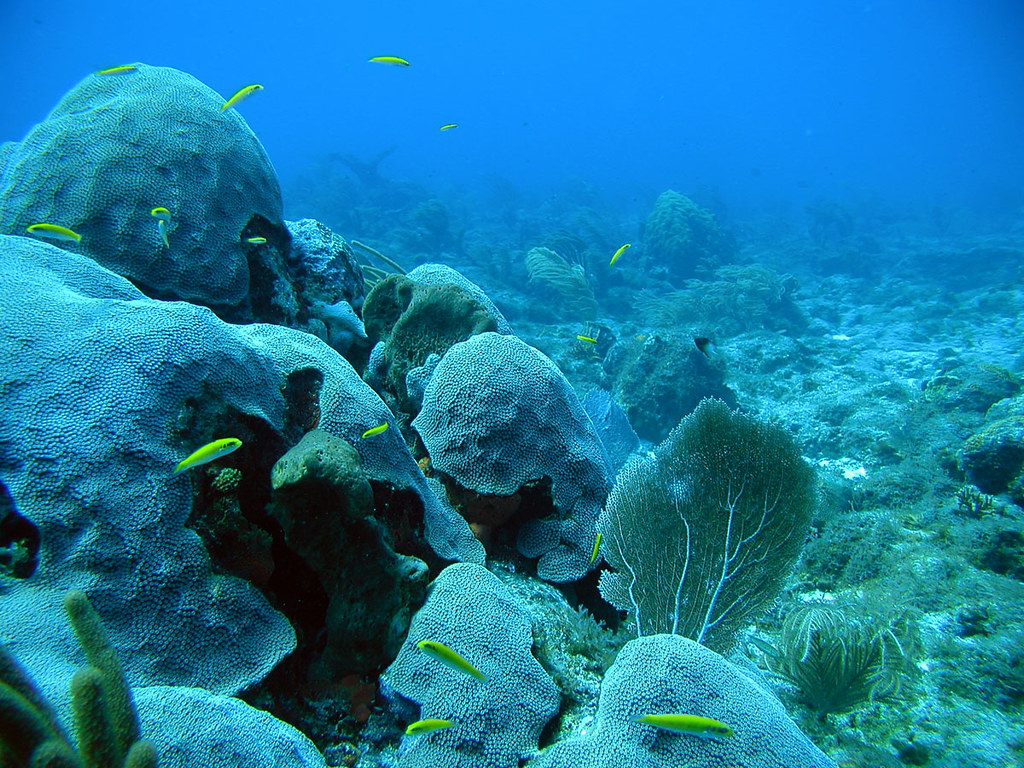
In the Gulf of Panama, where ocean temperatures swing like a pendulum, corals are doing something their counterparts elsewhere cannot: they are surviving. While the world's reefs face their fourth global bleaching event on record, these Panamanian corals have adapted to extreme heat in ways that baffle and inspire scientists. Their secret, according to researchers at McGill University, lies in a lifetime of temperature variability that has primed their cellular defenses. In lab tests, Gulf of Panama corals maintained their protein levels and resisted oxidative damage more effectively than corals from the more stable Gulf of Chiriquí, the researchers reported.[3][14]
Coral reefs cover less than one percent of the ocean floor but support about 25 percent of all marine creatures, per NOAA. They are also economic engines: in southeast Florida alone, reefs contribute over $3.4 billion annually and support more than 70,000 jobs in tourism and recreation, according to the National Oceanic and Atmospheric Administration. Yet these invaluable habitats face mounting threats from warmer and more acidified waters, pollution, coastal development, and overfishing.[6][7]
What Makes a Reef a 'Bright Spot'?
Resilience, as defined by ecologists, is the ability of a system to maintain key functions in the face of stressors by either withstanding an impact or recovering from one. For corals, that means having the right biological and environmental toolkit. According to the IUCN, resistance factors include acclimatisation, adaptive bleaching, zooxanthellae clades, and coral morphology. Avoidance factors—like local upwelling, currents, and shading—also play a role. And resilience factors include species and functional diversity, reproduction and connectivity, and shifting geographic ranges.[1][9]
Corals living in waters with frequent temperature swings are better at surviving extreme heat than are corals in waters with more stable temperatures.
The Super Reefs project, a partnership between The Nature Conservancy, Stanford University, and the Woods Hole Oceanographic Institution, has spent three years piloting strategies in Belize, Hawaiʻi, and the Marshall Islands to identify and protect heat-resilient corals. These 'super reefs' are not just surviving; they are thriving, and they may serve as 'mother reefs'—spreading larvae to other areas where they can grow into new resilient reefs, according to The Nature Conservancy.[12]
The Science of Survival
Coral bleaching occurs when elevated seawater temperatures and strong sunlight cause thermal stress that disrupts zooxanthellae photosynthesis, leading corals to expel their symbionts and appear white. Bleached corals can survive for days to months, but persistent stress can cause starvation and death. Survivors often suffer reduced growth, lowered reproduction, and greater disease susceptibility, according to the Reef Resilience Network.[2]
Susceptibility varies by species, colony form, reef zonation, and the type of Symbiodiniaceae symbionts. Heat-resistant symbionts can increase thermal tolerance but are often associated with slower coral growth. During the 2015-2017 bleaching event in the Mesoamerican Reef system, some branching species of Acropora were less susceptible than several massive coral species. And corals on reef flats often tolerate much higher water temperatures than colonies of the same species on reef slopes, per the Reef Resilience Network.[2]
The stability of the algae and bacteria living inside the coral also plays a role in resilience, according to the McGill study. In the Gulf of Panama, corals have adapted to frequent temperature swings, but the team found that bacterial microbiomes from both locations became more unstable and variable under heat stress—a sign of bleaching vulnerability.[3]
From Bright Spots to Blueprint
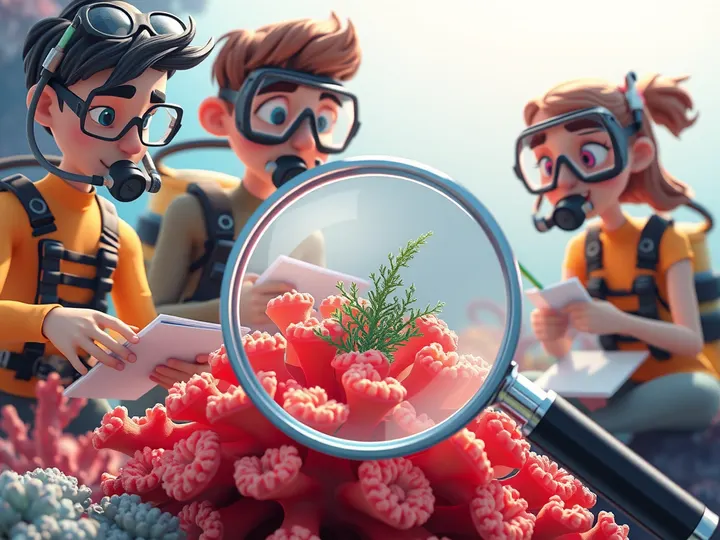
Conservation groups are translating these findings into action. The Coral Reef Alliance (CORAL) focuses on building connected reef networks—large, diverse, well-connected systems—to help corals share adaptive traits. They also work to reduce land-based pollution from sewage, runoff, and development, and to improve enforcement, funding, and planning of protected areas. 'Science tells us corals are able to adapt, but only if we help them by tackling the root causes of reef decline,' CORAL states.[4]
The Resilient Reefs Initiative (RRI), a AUD$14 million global partnership, works with local governments at UNESCO World Heritage coral reef sites. Their approach includes strategic planning, global expertise, action implementation, and local leadership through a Chief Resilience Officer. As a result, sites have a better understanding of their threats and opportunities, a pipeline of projects, and a clear plan for building resilience, according to the Great Barrier Reef Foundation.[13]
At the UN Ocean Conference in June 2025, 11 countries signed a commitment to protect climate-resilient coral reefs. The commitment calls on nations to integrate coral reef conservation into national biodiversity and climate strategies, prioritize climate-resilient reefs within 30×30 efforts, and strengthen national coral reef action plans and monitoring systems, according to the International Coral Reef Initiative.[14]
The Road Ahead: Hope and Hard Work
Despite the promise of bright spots, the challenges are immense. The IPCC Sixth Assessment Report in 2022 found that since the early 1980s, the frequency and severity of mass coral bleaching events have increased sharply worldwide. It is expected that many coral reefs will undergo irreversible phase shifts due to marine heatwaves with global warming levels above 1.5°C. In 2016, bleaching on the Great Barrier Reef killed 29 to 50 percent of the reef's coral, and bleaching is predicted to occur three times a decade there if warming is kept to 1.5°C—increasing to every other year at 2°C, according to Wikipedia's summary of scientific literature.[10]
Local conservation actions that reduce fishing and terrestrial influences promote the high production of inorganic carbon necessary for reef growth, according to Ecology and Society. However, global climate change threatens to undermine such actions because of increased bleaching and mortality caused by warm-water anomalies, weakened coral skeletons caused by reduced aragonite availability, and increased incidence of diseases. Many heavily managed reefs have already experienced net losses in accumulated inorganic carbon in recent decades and appear likely to continue this trend.[8]
The key to scaling up lessons from bright spots is to integrate resilience into restoration practice. A 2022 roadmap in Global Change Biology, authored by researchers from The Nature Conservancy, Stanford, and other institutions, outlines how to do just that. It emphasizes the need to protect diverse, connected, and healthy reefs, and to use interventions like stress-hardening corals, assisted migration, and manipulation of symbiotic partnerships—all while urgently reducing greenhouse gas emissions.[15][9]
The bright spots offer a glimmer of hope, but they are not a silver bullet. They are, however, a proof of concept: corals can adapt if given a chance. The question is whether we will act fast enough to give them that chance. As CORAL puts it, 'Reefs still have an incredible capacity to adapt. The key is making sure they're healthy, connected, and supported at scale.'[4]
Sources
- Coral Reef Resilience and Resistance to Bleaching — portals.iucn.org
- Coral Bleaching Biology | Reef Resilience Network — reefresilience.org
- Why some coral reefs resist bleaching | Newsroom - McGill University — mcgill.ca
- Coral Reef Alliance - Saving the World’s Coral Reefs — coral.org
- What is a Coral Reef? - NASA — nasa.gov
- Corals | NOAA Fisheries — fisheries.noaa.gov
- National Coral Reef Resilience Strategy — coast.noaa.gov
- Conservation Ecology: Ecological states and the resilience of coral reefs — ecologyandsociety.org
- Reef Resilience Focus Area | Florida Department of Environmental Protection — floridadep.gov
- Wikipedia: Coral bleaching — en.wikipedia.org
- Wikipedia: Coral reef protection — en.wikipedia.org
- Searching for Heat-Resilient Corals to Protect People and Nature — nature.org
- [PDF] Resilient Reefs Initiative: Successes and Lessons Report — barrierreef.org
- Investing in Climate-Resilient Reefs as a Strategy for Coral Survival and Achieving 30×30 – Together for the Ocean — for-the-ocean.org
- A roadmap to integrating resilience into the practice of coral reef restoration — pmc.ncbi.nlm.nih.gov
Reported with AI assistance using internet sources.