The Dish That Only Exists Because the Boat Was Late
From Tijuana to the Edo docks, the world's most distinctive dishes were improvised by cooks who ran out of something — and the improvisation stuck.
In 1924, Caesar Cardini, an Italian immigrant restaurateur, was working the Fourth of July weekend in Tijuana, Mexico, when a rush depleted his kitchen's normal ingredients. He improvised a salad from what remained: romaine lettuce, Worcestershire sauce, lemon juice, olive oil, egg, Parmesan, and croutons, assembled and dressed tableside. The salad was named after him. The anchovy that most contemporary Caesar dressings carry, and that many diners assume was original, was a later addition — most food historians believe Cardini's version had no anchovies at all, according to qz.com.[5][7]
The Nacho Problem and the Paper-Thin Potato
The pattern repeats across the twentieth century. In 1943, maître d' Ignacio "Nacho" Anaya found himself without a chef when a group of military wives arrived after hours. He tossed together tortilla chips, shredded cheese, and jalapeños and put them in the oven. According to iccadubai.ae, the nacho was one of seven famous foods invented by accident — and five of those seven, including the sandwich, nachos, popsicles, corn flakes, and the tarte tatin, were created by non-chefs.[1]
The potato chip has a messier paper trail. The familiar story holds that in 1853, a customer — often named as Cornelius Vanderbilt — sent back fried potatoes for being too thick, prompting a chef to slice them paper-thin, fry them crisp, and salt them heavily. But according to BBC Bitesize, the story is inaccurate: on the date of the reported incident the customer in question was travelling around Europe, and the restaurant he is said to have ordered them from, Moon's Lake House, did not open until 1854. The dish may be real; the anecdote is not.[7]
The chocolate chip cookie has a similar shape. Ruth Wakefield, who ran the Toll House Inn in Whitman, Massachusetts, is said to have run out of baker's chocolate or cocoa while making chocolate cookies and used chunks of chocolate instead, hoping they would melt. They did not. According to BBC Bitesize, she later sold the recipe to Nestlé for a dollar in 1939. The Harvard Crimson notes that the Toll House story is repeated uncritically in Massachusetts, a state it describes as a hotspot for uncritical culinary aetiology at least since the national near-deification of the original Thanksgiving feast in the 1860s.[6][7]
Five of the seven dishes on this list — the sandwich, nachos, popsicles, corn flakes and the tarte tatin — were created by non-chefs.
Sushi Was a Supply-Chain Story Before It Was a Cuisine
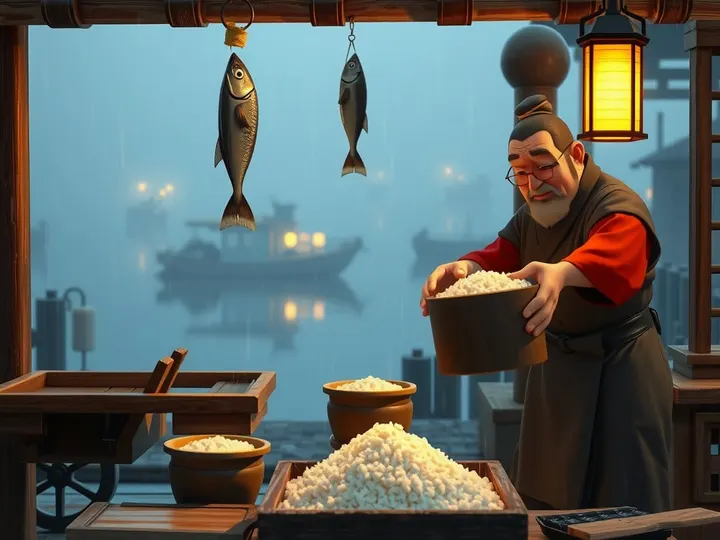
The most consequential substitutions are not single dishes but entire techniques. The earliest form of sushi, narezushi, originated in Southeast Asia as a method of preserving freshwater fish — lacto-fermenting it with salt and rice to prevent spoilage. During the Muromachi period, the Japanese developed namanare, a partially fermented style with a shorter fermentation window in which the rice was eaten along with the fish. In the Edo period, vinegar was mixed with rice instead of relying on lactic fermentation; the fermentation process was eliminated and sushi became a fast food. Many types of sushi known today — chirashizushi, inarizushi, makizushi, nigirizushi — were invented during this period and are types of haya-zushi. The chef Hanaya Yohei is commonly credited with inventing or perfecting nigirizushi in 1824 at his shop in Ryōgoku, according to Wikipedia's history of sushi.[8]
Then there is the salmon. Before refrigeration, Japan did not consume raw salmon because of the health risk from marine parasites. Salmon and salmon roe entered sashimi and sushi in the late 1980s, introduced from parasite-free Norwegian salmon after a deal with the Japanese company Nichirei for 5,000 tons of fish. A supply deal, not a culinary doctrine, created one of the most recognizable sushi orders on earth.[8]
What the Tomato Did to Italy, and What the Rice Did to Spain
The largest substitutions were not accidents but collisions. Before the Columbian Exchange brought tomatoes from the Americas, Italian cuisine as it is known today was inconceivable, according to gulfood.com. Tomatoes, potatoes, vanilla, and chocolate from the Americas revolutionised cuisines across the world; the potato was initially greeted with scepticism in Europe before evolving into a staple crop. The Middle East's introduction of rice and spices such as saffron reshaped Spanish gastronomy and birthed dishes like paella. The spice routes of antiquity connected East and West and moved pepper, cinnamon, and cloves into kitchens that had never seen them. Italian pasta dishes, as one source puts it, are now very different from what they were before the introduction of tomatoes in the 16th century.[3][14]
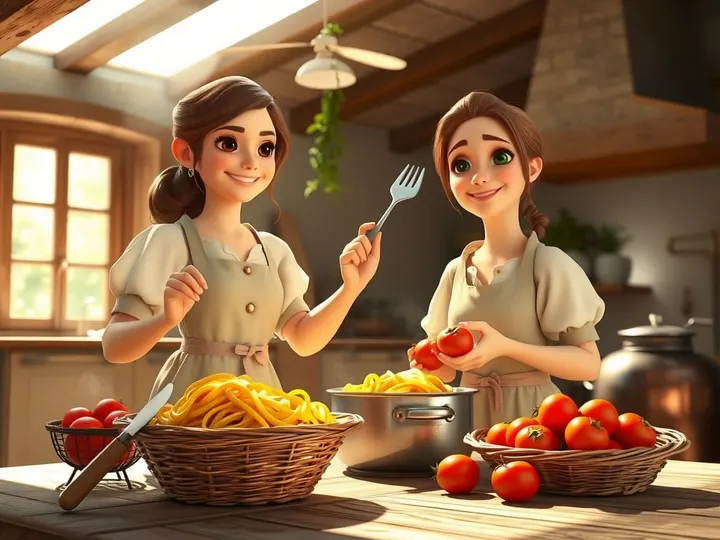
Pizza is the cleanest case of a substitution becoming an identity. The term was first recorded in AD 997 in a Latin manuscript from the southern Italian town of Gaeta, and Raffaele Esposito is often credited with creating the modern version in Naples at the end of the 19th century. It is uncertain when tomatoes were first added, though it certainly could not have been before the 16th century and the Columbian Exchange. The popular legend that pizza Margherita was invented in 1889 for Queen Margherita has been undermined by later research questioning the authenticity of the letter of recognition; both the story and the name Margherita were first promoted in the 1930s and 1940s. In 2009, Neapolitan pizza was registered with the European Union as a traditional speciality guaranteed dish.[9]
The Mill Town Was the Constraint
Sometimes the constraint is economic rather than meteorological. In 1920s Providence, Rhode Island, Greek immigrants opened lunch counters serving hot wieners to overnight mill workers; a wiener cost a dime, and the spiced meat sauce was a guarded secret recipe containing cinnamon and allspice. In Fall River, the chow mein sandwich appeared in the 1920s when Cantonese immigrants adapted their cooking to the tastes and budgets of Portuguese mill families — about 15 cents, eaten with a fork because it was mostly noodles. Maine's red snapper hot dog was a natural-casing frankfurter dyed bright red; the dye did nothing for the flavor. When the mills closed and the chains moved in, the wiener joints went dark one by one.[12]
The broader lesson is that what people eat in all places and times depends on seven key factors, including food availability, technology, seasons and climate, religion, socio-economic class, politics, and regional identity, according to foodtimeline.org. Researching a country's culinary history requires busting the myth of "national gastronomy" by comparing and contrasting foods by region. Wherever immigrants settled, so did their foods and recipes, and over time some of those recipes morphed into uniquely American foods — chicken fried steak and hot dogs among them. The impact of ethnic foods on American cuisine is a study of original culture, migration patterns, and economics and labor.[10]
The Myth Is Not the Same as the Dish
Food historians have learned to separate the two. The Harvard Crimson argues that people fail to think critically about where their food has come from — how dishes developed, why we eat what we eat — and that as we reach adulthood, just-so stories about food should become fuzzy, with more nuances, spectra, and uncertainty. The Crimson also repeats, and questions, the claim that Boston cream pie and Parker House rolls were invented at the Parker House Hotel. The brownie, by contrast, is said to have been created deliberately when Bertha Palmer asked the Palmer House Hotel pastry chefs in Chicago to make snacks that fit neatly into lunch boxes, according to BBC Bitesize — a reminder that not every origin story is an accident.[6][7]
Authenticity itself is unstable. Culinary traditions evolve over time due to migration, trade, colonization, and globalization, and what we consider authentic today may differ significantly from historical practices. Adaptations of Indian curry in British cuisine might be considered authentic in their own right if they respect traditional Indian culinary techniques and flavors, even with local British ingredients. Within a single country, regional variations can lead to multiple authentic versions of a dish — authentic Mexican mole varies by region, each using its local ingredients. Translators face the same problem: they must balance authenticity and accessibility, and when they suggest substitutions, the flavor profile can shift in ways that matter to the dish's identity.[13][14]
So the next time you reach for a substitute because the shop was out, you are not improvising outside the tradition. You are inside it. The sandwich came from the Earl of Sandwich, who wanted to keep gambling; the nacho came from a maître d' with no chef; the Caesar came from a holiday rush in Tijuana. The boat was late, the shipment did not arrive, the mill closed, the customer sent it back. The dish that resulted is now called traditional. Somewhere in your kitchen, the same thing is happening.[1][5][7]
Sources
- 7 Foods Invented by Accident, Including 5 Famous Dishes Created by Non Chefs — iccadubai.ae
- Popular Foods Which Were Invented By Accident - Great British Chefs — greatbritishchefs.com
- From Spice Routes to Digital Highways: The Evolution of Global Food Trade - Gulfood 2026 — gulfood.com
- ESD - Food trade disruption after global catastrophes — esd.copernicus.org
- 20 foods with surprising origin stories — qz.com
- The Stories We Tell About Food | The Harvard Crimson — thecrimson.com
- Myth-busting food origin stories - BBC Bitesize — bbc.co.uk
- Wikipedia: History of sushi — en.wikipedia.org
- Wikipedia: Pizza — en.wikipedia.org
- The Food Timeline: history notes--national gastronomy — foodtimeline.org
- The History of Food Delivery - History Guild — historyguild.org
- 100 Forgotten American Restaurant Dishes — Before Every Menu Looked the Same — youtube.com
- Translating Recipes: Keeping Culinary Traditions Alive — motaword.com
- The Problem of Authenticity in Global Cuisine — youtube.com
- Food and Culture: How Chefs and Cuisine Shape Society — culinaryartsswitzerland.com
Reported with AI assistance using internet sources.