The Last Speaker: Inside the Fight to Save Japan’s Ainu Language
With fewer than a dozen fluent speakers left, a language isolate that once held generations of ecological knowledge and bear myths is being kept alive by a handful of dedicated preservationists.
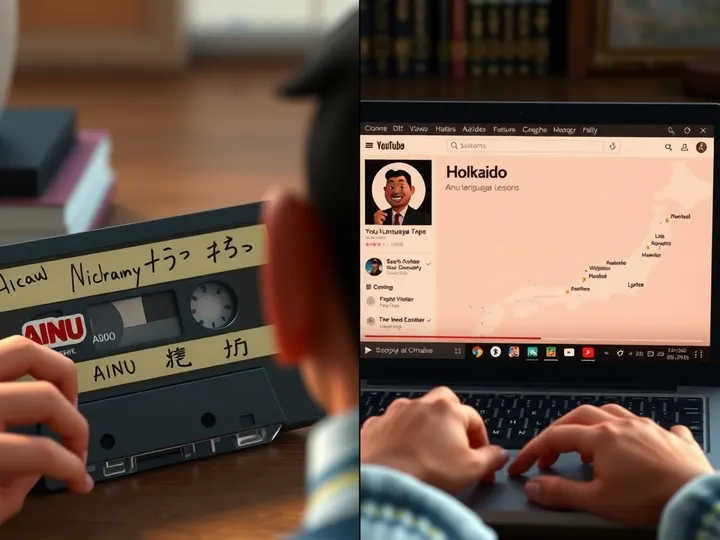
Maya Sekine’s bedtime stories were not from picture books but from old cassette tapes. Chosen by her father, the tapes carried Ainu folk tales told by elders—stories of bears and spirits, in a language that had not been spoken conversationally since the 1950s. As a child, Sekine realized her family’s language and culture were dying. So she began learning, and later created a YouTube channel to teach conversational Ainu to a new generation.[11][8]
The Ainu language is the indigenous tongue of Hokkaido, northern Japan, and of the Kuril Islands and Sakhalin. It is a language isolate—meaning it has no known relatives—and it has been classified as critically endangered by UNESCO. According to a 2023 survey of 472 Ainu respondents, only 0.8 percent said they could hold a conversation in the language. By 2021, there were no native speakers left, though a handful of semi-speakers and neo-speakers remain.[7][11]
“The language is more or less extinct as a living medium,” the Handbook of the Ainu Language stated in 2022, “but has still a few native semi-speakers, as well as a growing number of neo-speakers.”
One of the Last Fluents
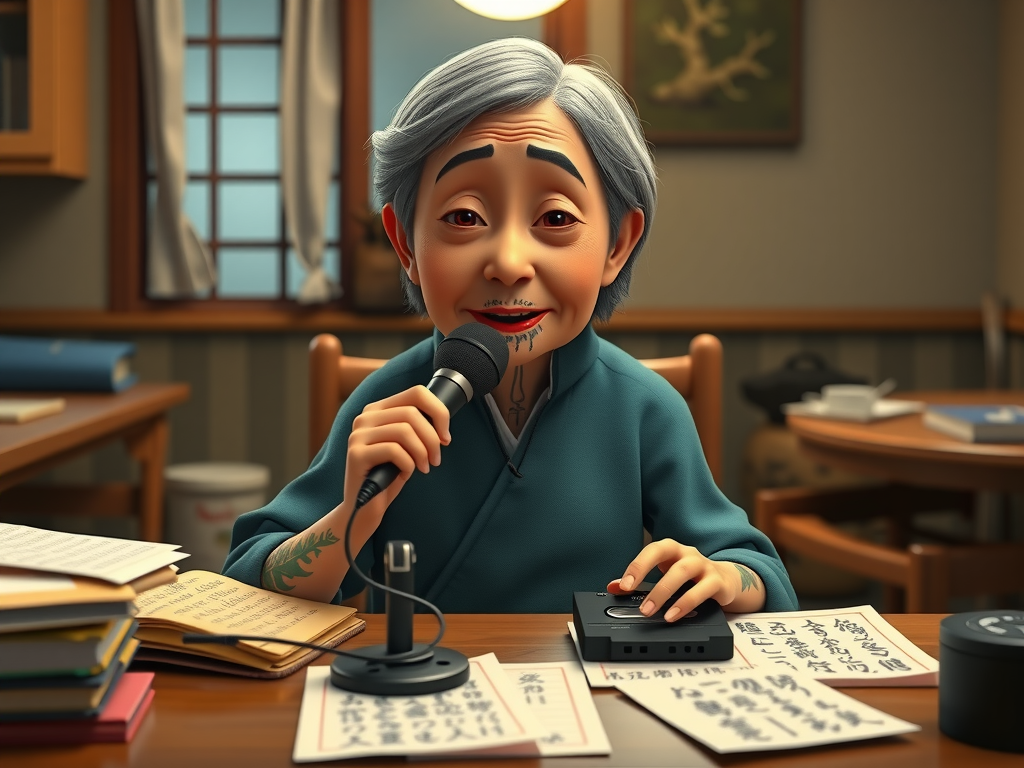
Among those semi-speakers is Ita Oda, described by researchers as “one of the last really fluent Ainu speakers.” Oda, now elderly, was recorded recounting 15 Ainu folktales for an archive. Her knowledge represents a direct link to the oral tradition that for centuries passed Ainu culture, mythology, and ecological knowledge from one generation to the next. The language traditionally had no native writing system—it lived in stories, songs, and ceremonies.[8][1]
Ainu’s decline is not accidental. Japanese colonization of Ainu territory began as early as the 1st millennium CE, but it accelerated after the Meiji Restoration in 1868. The government imposed assimilation policies: Ainu children were sent to Japanese-language schools where speaking Ainu was forbidden, and they were forced to adopt Japanese names. By the 1960s, only about 300 native speakers remained; by the 1980s, fewer than 100, with just 15 using it daily.[5][4][2]
Revitalization by Cassette Tape and YouTube
Kenji Sekine, Maya’s father, is not Ainu by birth but learned the language from old recordings and elders. He now teaches Ainu to both Ainu and non-Ainu students at a university in Hokkaido. Along with his wife Maki, he decided to raise their daughter Maya to speak Ainu—a rare commitment in a country where most public schools ignore the language entirely. “Most Japanese, consciously or unconsciously, feel that the Ainu people do not exist,” Kenji told The World. “The public school curriculum mainly ignores Ainu.”[8][11]
Maya’s YouTube channel, which she started as a teenager, teaches everyday phrases and has attracted thousands of subscribers. It is part of a broader uptick in revitalization efforts. In 2020, the National Ainu Museum opened in Shiraoi, with language preservation as a core mission. Some bus routes in Hokkaido now announce stops in Ainu. The Agency for Cultural Affairs is archiving speech recordings. Ainu language courses are offered at several universities, and Ainu radio broadcasts and newspapers are slowly increasing.[11][7][2]
Challenges and Hope
Despite these gains, the road is steep. The Japanese government officially recognized Ainu as an indigenous language in 2008, and a 2019 bill recognized Ainu as an indigenous people—but legal recognition has not translated into widespread curricular inclusion. The national education reform plan known as MEXT, focused on English and Japanese, makes no mention of Ainu. Some scholars argue that the disproportionate focus on English in Japanese education is “closing down spaces” for Ainu language learning.[7][3][5]
For Ainu people, language revival is tied to identity and history. The word Ainu itself means “a human being” in the language. The tongue contains more than 80 ways to describe a bear, reflecting a worldview deeply connected to nature. Without it, a unique system of knowledge—mythology, spiritual beliefs, ecological wisdom—risks disappearing. “One of our main objectives is to preserve and revive the language, as this is one of the most threatened elements of Ainu culture,” the National Ainu Museum states.[4][11][7]
The Ainu language has more than 80 different ways of describing a bear, reflecting a deep connection with nature that is encoded in its vocabulary.
Today, the number of fluent speakers can be counted on two hands—maybe fewer. But the neo-speakers, like Maya Sekine, are growing in number. She told the BBC that she hopes one day to have a conversation with her own children in Ainu. For a language that was nearly silenced by state policy, that hope itself is a kind of revival.[11][7]
Sources
- Ainu Language: Why It Was Almost Lost Forever | Language Learners Hub — languagelearnershub.com
- Survival Against the Tide: The Story of the Ainu and Ryukyuan Indigenous Languages — untold-japan.travel
- Policy Barriers to Ainu Language Revitalization in Japan — wpel.gse.upenn.edu
- Ainu people - Wikipedia — en.wikipedia.org
- Ainu | Definition, Culture, & Language — britannica.com
- 公益社団法人 北海道アイヌ協会 — ainu-assn.or.jp
- Wikipedia: Ainu language — en.wikipedia.org
- In Japan, the Ainu language is largely unknown and unloved, but linguists are fascinated by its mysteries - The World from PRX — theworld.org
- The Ainu language - short history, plus a note about last speakers and pandemics — youtube.com
- Efforts underway to save Ainu language and culture — japantimes.co.jp
- Can AI speak the language Japan tried to kill? — bbc.com
Reported with AI assistance using internet sources.