From Kakuma to the Olympic Stage: The Unlikely Journey of a South Sudanese Runner
Yiech Pur Biel, who fled war at age 10 and ran barefoot in a refugee camp, became a symbol of hope at the Rio 2016 Olympics — but the story of South Sudan's runners is one of resilience, not yet gold.
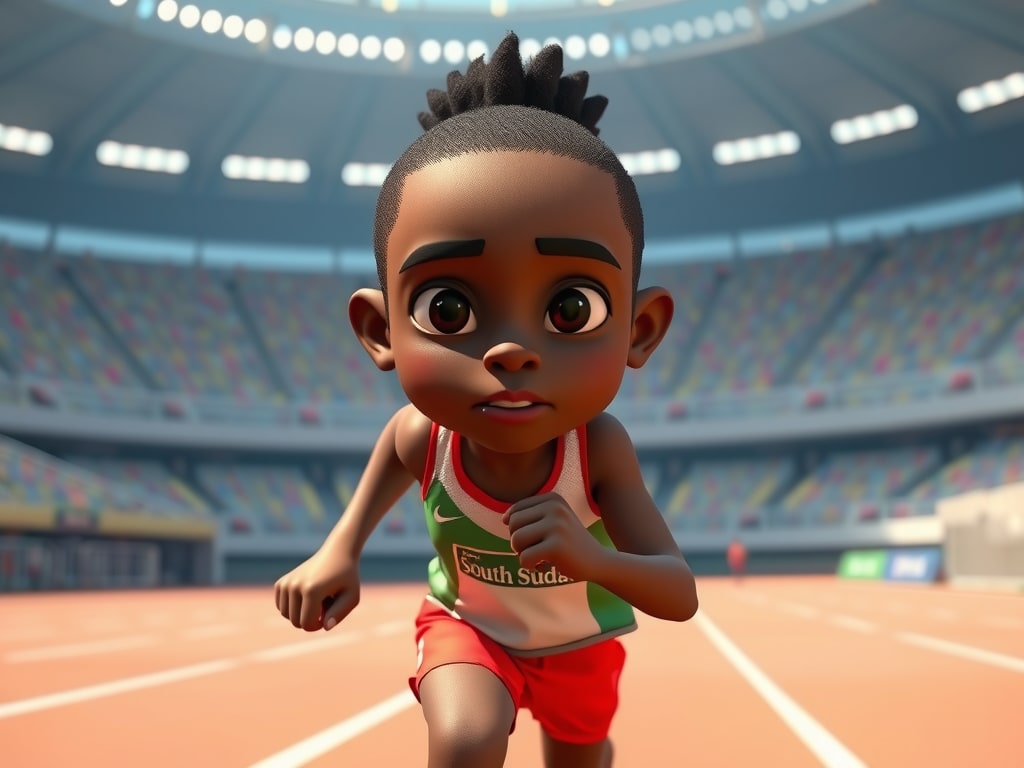
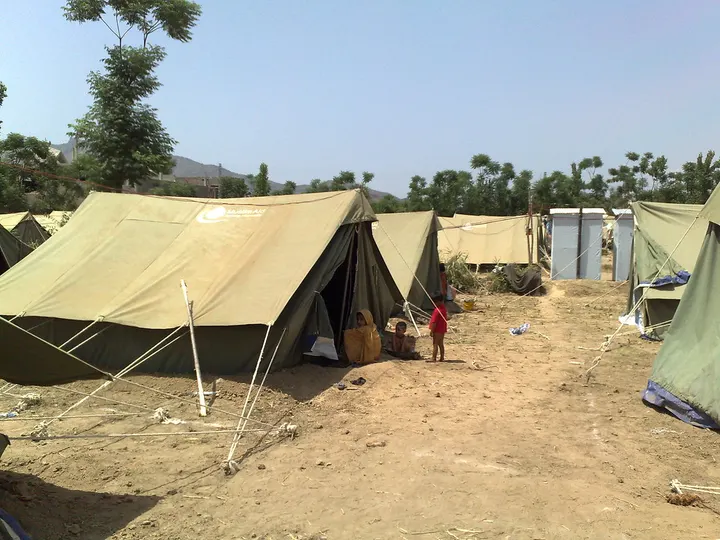
Kakuma refugee camp in Kenya is a dust-choked sprawl of more than 180,000 people, a place where childhoods are often measured in loss. For Yiech Pur Biel, it was where he arrived alone at age 10 after armed men attacked his village in 2005. He had fled into the bush, was found by UN workers, and spent the next decade in the camp, separated from his parents and siblings. Then, in 2015, a 10-kilometer race changed his life. Biel had no running shoes, so he ran barefoot. His feet bled, but he finished third — a performance that would carry him to the Rio 2016 Olympics as part of the first-ever Refugee Olympic Team.[1]
A Barefoot Start, a Historic Team
The International Olympic Committee created the Refugee Olympic Team in March 2016, a move then-president Thomas Bach called "a symbol of hope for all refugees in the world." The team marched in the opening ceremony in Rio as the penultimate delegation, just before the host nation — a symbolic placement that underscored their role as ambassadors for the world's displaced. Biel was one of ten athletes selected from a pool of refugees verified by the UN, and he competed in the 800 meters. He didn't medal, but his presence was the point. "It was a dream come true to be an Olympian for the first refugee team and make history in Rio de Janeiro in 2016," Biel later said, according to a Medium essay he wrote.[9][1]
Biel's path to Rio was not a straight line. The 10K race that launched him was organized by the Tegla Loroupe Peace Foundation and UNHCR, part of a broader effort to use sport as a tool for healing and integration in camps. Loroupe, a Kenyan marathon legend, became a mentor, and Biel began training seriously — still in the camp, still without proper gear, but with a goal. The selection criteria for the Refugee Team included sporting level, official refugee status, personal situation, and background. Biel fit the profile: a young man who had fled war, lived in exile for a decade, and shown raw talent on a dirt course.[1][9]
“I had no running shoes, but I wanted to participate so I ran barefoot. My feet bled, but I came in third.” — Yiech Pur Biel
The Family Reunion That Almost Wasn't
While Biel was training in Kakuma, a question haunted him: were his parents alive? He had not spoken to them since the attack in 2005. Then, one night, an NGO arranged a phone call. It was his mother. "I could hardly believe it," Biel wrote. His family was safe in South Sudan, living in a different village from the one he had fled. The reunion, though only by voice, gave him a sense of closure that many refugees never find. He later learned that his family had survived the years of conflict that had scattered so many across the region.[1]
Biel's story is one thread in a larger tapestry of South Sudanese runners who have used athletics to escape or transcend their circumstances. Guor Marial, who competed as an independent athlete under the Olympic flag at London 2012, fled his home in Unity state at age 8 and gained refugee status in the U.S. at 16. He refused to run for Sudan because, according to the Enough Project, the government was responsible for the deaths of 28 of his family members. "I'm running for the refugees," he said. Lopez Lomong, another South Sudanese "lost boy," was kidnapped at age 6 by the Sudan People's Liberation Army and escaped after three days of running. He later became a runner and represented the U.S. at the Olympics, bringing pride to his home country and the refugee community.[12][3][13]
The Unfinished Race: No Gold Yet
Despite the inspiring narratives, no South Sudanese runner has yet won Olympic gold. Biel did not advance past the heats in Rio. Guor Marial finished 47th in the marathon in 2012 and 82nd in 2016. The Refugee Olympic Team earned its first medal in 2024 when boxer Cindy Ngamba, a refugee from Cameroon, took bronze in the women's 75kg event. For South Sudan — a country that gained independence in 2011 and first sent a team to the Olympics in 2016 — the dream of a gold medal remains unfulfilled.[1][2][9][10]
The gap between the camp and the podium is immense. Training facilities, coaching, nutrition, and funding are scarce in Kakuma. Biel's own progression — from barefoot 10K to Olympic track — was propelled by the Tegla Loroupe Foundation, which set up a training center in Ngong, Kenya, for refugee athletes. But even there, resources are thin. The athletes often run on dirt tracks, share worn shoes, and lack access to sports medicine. The IOC's Olympic Refuge Foundation, established in 2017, aims to support refugees over the long term, but its impact on individual medal prospects is still nascent.[1][9]
A Voice for the Voiceless
Today, Biel is a Goodwill Ambassador for UNHCR, using his platform to advocate for refugee education and sport facilities. "My job as Goodwill Ambassador for UNHCR is to be a voice for refugees," he said. He has spoken at international forums, met with world leaders, and returned to Kakuma to inspire a new generation of runners. His message is simple: refugees are not just victims; they are people with potential, capable of extraordinary achievement if given the chance.[1]
The impact of Biel's journey extends beyond his own story. For the refugee community, his presence at Rio was a validation — a signal that they, too, could be seen and celebrated. For global audiences, it challenged stereotypes of refugees as burdens. As the American Immigration Council noted, the Refugee Olympic Team showcased "the determination and the power of sport" to transcend borders and politics. Biel's barefoot race in Kakuma was a small act of defiance against a life of displacement; his run in Rio was a declaration that refugees belong on the world's biggest stage.[5][1]
The Race Continues
Biel no longer competes at the elite level, but his work as an ambassador keeps him close to the track. He often tells young refugees in Kakuma about the day he ran 10 kilometers with bleeding feet — not to boast, but to show that suffering can be a starting point, not an ending. South Sudan's Olympic history is still being written, and its runners have yet to claim gold. But in the dusty streets of Kakuma, where children still run barefoot after makeshift balls, the next chapter may already be in motion.[1]
Sources
- Medium — medium.com
- Guor Marial - Wikipedia — en.wikipedia.org
- Lopez Lomong runs for refugees and clean water | World Vision — worldvision.org
- Refugee Olympic Team inspires as it makes history — unhcr.org
- The Refugee Olympic Team: Resilience and Hope at the 2024 Paris Summer Olympics - American Immigration Council — americanimmigrationcouncil.org
- Sports as a Tool for Refugee Empowerment - sportanddev — sportanddev.org
- ISCA - Integration Of Refugees Through Sport — irts.isca.org
- How sport can unify, inspire and empower refugees worldwide — weforum.org
- Wikipedia: Refugee Olympic Team — en.wikipedia.org
- Wikipedia: South Sudan at the Olympics — en.wikipedia.org
- Refugee Olympic Team: The Refugee Runners of South Sudan | UNICEF USA — unicefusa.org
- Sudan and South Sudan in the London 2012 Olympics - The Enough Project — enoughproject.org
- Lopez Lomong - Wikipedia — en.wikipedia.org
Reported with AI assistance using internet sources.