The Siege of Vienna 1683: How a City's Stand Shaped Modern Europe
A deep dive into the clash of empires that saved the Habsburg capital, redrew the map of Europe, and halted Ottoman expansion.
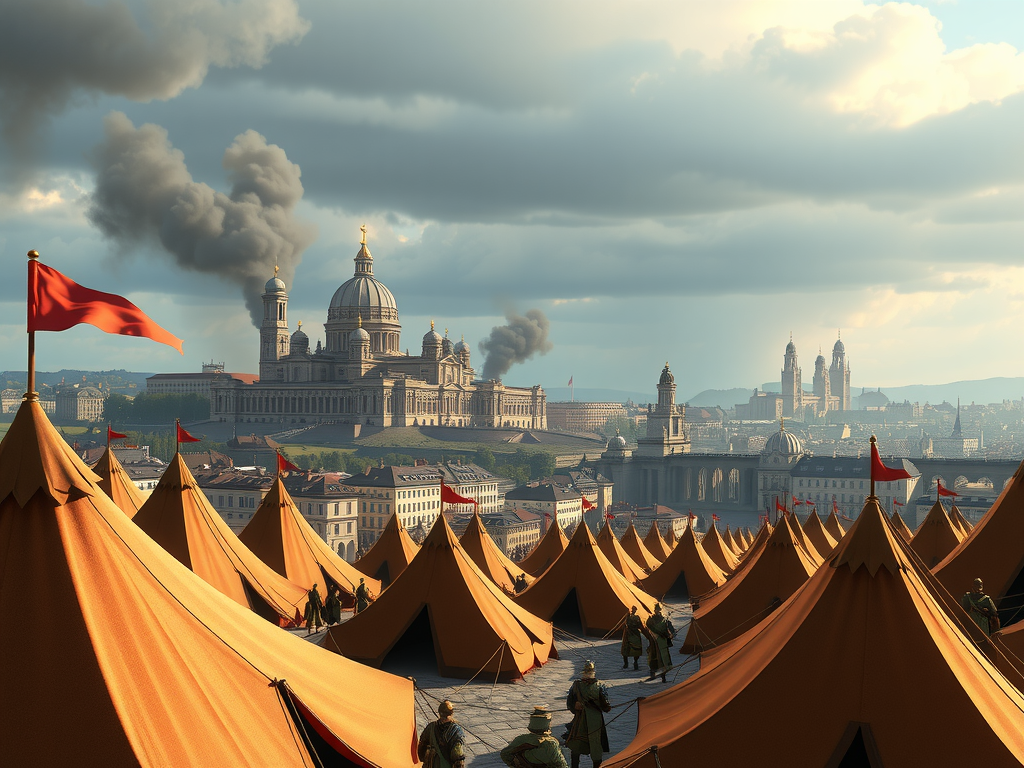
On 14 July 1683, an Ottoman army under Grand Vizier Kara Mustafa Pasha arrived at the gates of Vienna, beginning a siege that would test the city's defenses for two months. The Ottoman force numbered around 150,000 men by contemporary estimates, though some modern historians suggest between 120,000 and 140,000. Inside, the garrison led by Count Ernst Rüdiger von Starhemberg counted just 15,000 troops and 8,700 volunteers with 370 cannons, according to Wikipedia. The disparity was staggering, and the outcome was anything but certain.[1][6][11]
A Strategy of Subterfuge and Siege
Kara Mustafa's plan was audacious: instead of reducing frontier strongholds like Győr and Komárom, he pushed directly for Vienna, hoping that a swift capture would break Habsburg resistance as a fait accompli, according to a YouTube documentary. The Ottomans dug extensive siege works and employed miners to tunnel beneath the walls. Turkish mines and bombardment opened huge gaps in the city's fortifications, per Warfare History Network. Yet Starhemberg refused to capitulate, and his defenders repelled 18 major assaults, though by early September the situation was dire.[1][2][8]
The defenders, guided by Imperial chief engineer Georg Rimpler, used counter-mining tactics to thwart Ottoman tunnels and relied on advanced fortification techniques to buy time, according to EBSCO and the Wikipedia background. The siege was a brutal war of attrition, with the Janissaries—arguably the best infantrymen of their era—wasted in penny-packet attacks on breaches, as Reed Magazine put it. Kara Mustafa's decision to avoid a full-scale bombardment in hopes of taking the city intact would prove a fatal mistake, according to a YouTube analysis.[3][6][9][11]
The outcome was long in doubt.
The Winged Hussars Ride
Relief came through a coalition forged by diplomacy. Emperor Leopold I had signed the Treaty of Warsaw with Poland on 31 March 1683, pledging mutual defense: if the Ottomans attacked Kraków, Leopold would support Poland, and if Vienna were attacked, the Polish army would come to its aid, according to Wikipedia and Griffin Brady. By early September, a force of over 66,600 had gathered in the Tulln valley—Polish, Bavarian, German, Saxon, and Austrian troops under the overall command of Polish King Jan III Sobieski, per Warfare History Network.[2][5][6]
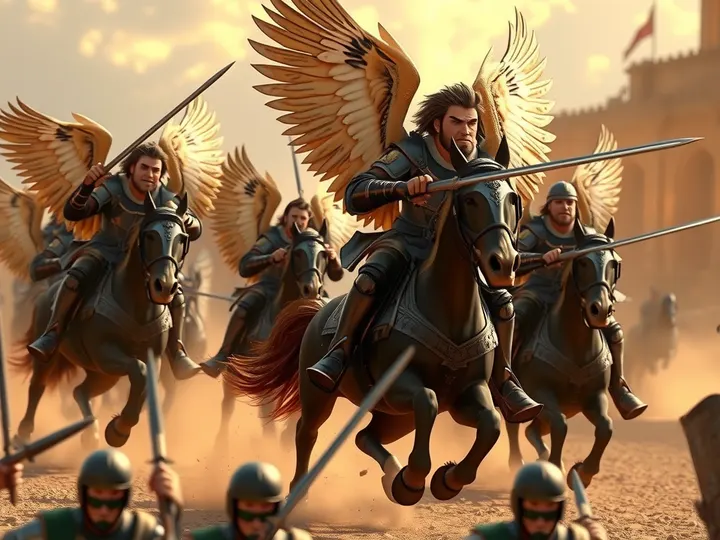
Sobieski's contribution was decisive. He brought about 23,000 soldiers, including 3,000 Winged Hussars among 14,000 cavalrymen, according to History Today and Griffin Brady. The Ottomans never expected an attack from Kahlenberg Mountain, which rises nearly 1,600 feet above the surrounding terrain; moving guns, horses, and men through the thick forest and up the steep incline seemed impossible, the latter source notes. But Sobieski did it. On 12 September, he led the largest cavalry charge in history, descending from the heights and overrunning the Ottoman army in a mere three hours, per Griffin Brady. The surprised Ottoman forces scattered and fled.[5][7]
Aftermath: The Turning Point
The immediate consequences were stark. Kara Mustafa Pasha was executed by his own Janissaries—strangled with a silk rope—for his failure, according to Griffin Brady. The Ottoman Empire, which had been at war with Europe for centuries, would gain no further ground on the continent and never again challenge Vienna, per Wikipedia. The battle marked a turning point in the Ottoman–Habsburg wars, a 300-year struggle, the encyclopedia notes.[5][6]
In the ensuing war that lasted until 1699, the Holy Roman Empire consolidated its gains, and the Treaty of Karlowitz formally recognized Austrian control over most of Ottoman Hungary, according to Wikipedia and EBSCO. The defeat initiated a series of military setbacks for the Ottomans, diminishing their influence in Europe and allowing Austria to emerge as a central power in the region, per EBSCO. The city of Vienna escaped pillage and destruction, and the Habsburg Empire survived to fight another day, as History Today notes.[3][6][7]
Reshaping Europe and Its Identity
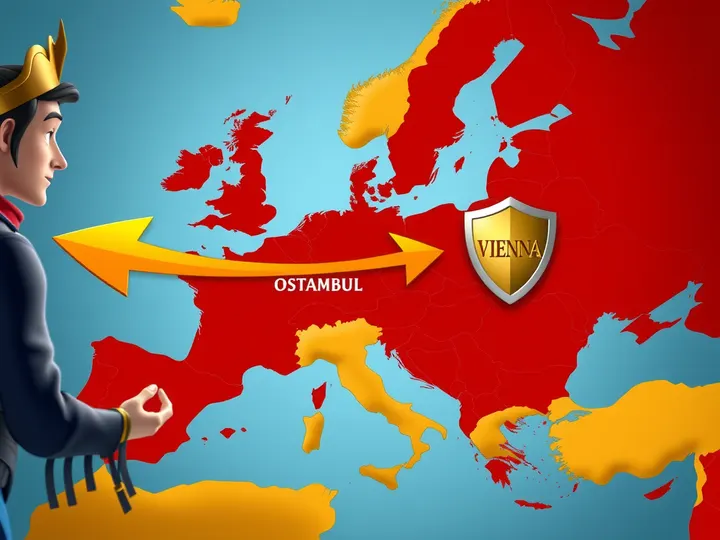
The siege's long-term impact extended beyond territory. It reshaped the balance of power in Europe, halting Ottoman expansion and marking the beginning of a slow Ottoman decline, according to Wikipedia and EBSCO. The victory also reinforced a European identity defined in opposition to the Ottoman threat; the siege was a significant event in shaping the perception of the Ottoman Empire as a major threat, per Wikipedia. The image of the Winged Hussars charging down Kahlenberg became a symbol of Christian Europe's resilience.[3][6]
Yet the victory was not inevitable. It was the combination of the Emperor's forces, the Imperial princes, and the Polish king that made victory possible, as History Today notes. Diplomacy and alliances were crucial: Leopold's only military ally outside the Holy Roman Empire was Jan Sobieski, and the Treaty of Warsaw was the linchpin that brought Polish cavalry to Vienna, according to Reed Magazine and Wikipedia. Without that diplomatic groundwork, the city might have fallen.[6][7][8]
The siege of Vienna was a pivot on which the fate of Europe turned. It saved the Habsburg capital, broke the Ottoman advance, and set the stage for Austria's rise. The battle's legacy endures not just in treaties and borders, but in the collective memory of a continent that saw itself, for a moment, saved by a charge of winged horsemen from the east.[1][3][6]
Sources
- The (Staggering) Siege of Vienna 1683 — youtube.com
- The 1683 Battle of Vienna — warfarehistorynetwork.com
- Defeat of the Ottomans at Vienna | History | Research Starters | EBSCO Research — ebsco.com
- The Battle of Vienna (1683) | Sabaton Official Website — sabaton.net
- The Battle of Vienna: The Most Famous Hussar Victory of All - Griffin Brady — griffin-brady.com
- Battle of Vienna — en.wikipedia.org
- The Siege of Vienna: 1683’s Winners and Losers | History Today — historytoday.com
- The Desperate Stand That Saved Europe: Siege of Vienna ... — youtube.com
- How the Siege of Vienna Changed the Course of History - Reed Magazine - Reed College — reed.edu
- If Vienna had fallen — medium.com
- How King of Poland DESTROYED 150,000 Ottomans and saved Europe | The Battle of Vienna 1683 — youtube.com
- The Entire History of the Siege of Vienna 1683 — thisishistory.substack.com
Reported with AI assistance using internet sources.