The Unlikely Hero of the Andes: Nando Parrado's 61-Mile Walk to Survival
After a plane crash in the Andes, Nando Parrado walked 61 miles across mountains to find help. His extraordinary feat of endurance and willpower is a testament to human survival instinct.

On December 20, 1972, two bearded, emaciated figures stumbled into the Chilean foothills, having walked out of the Andes after 10 days of climbing. They were Nando Parrado and Roberto Canessa, survivors of Uruguayan Air Force Flight 571, which had crashed 72 days earlier. Their arrival triggered the rescue of 14 friends still trapped on a glacier at 3,660 meters, a story that would become one of the most harrowing survival cases ever recorded.[2][4][10]
The ordeal began on October 13, 1972, when a chartered twin-engine plane carrying an Uruguayan rugby team crashed into a mountain ridge in the remote Andes of western Argentina. The impact sheared off both wings and the tail cone, and the fuselage slid down a glacier before ramming into an ice mound. Of the 45 people aboard, 32 survived the initial crash, but they were left exposed to extreme cold, high altitude, and near-total isolation.[2][4]
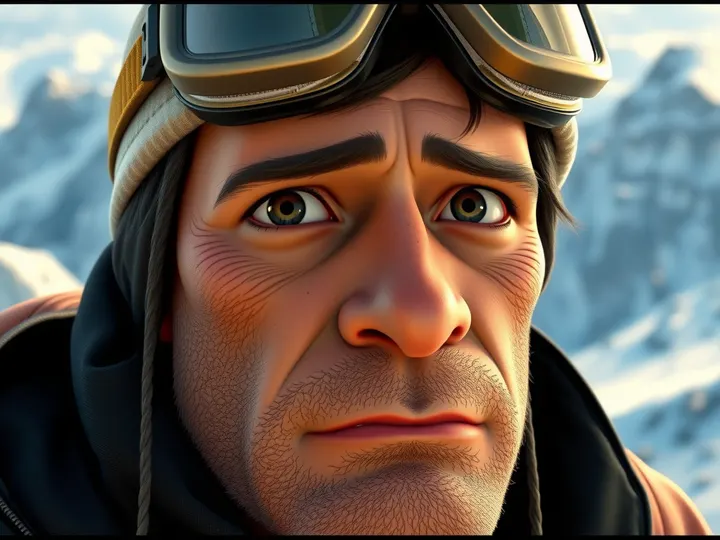
The Trek That Defied the Mountains
Parrado, then a 23-year-old university student, had lost his mother and younger sister in the crash. As days turned into weeks, the survivors faced sub-zero temperatures, starvation, and an avalanche that killed eight more. Search aircraft overflew the crash site but failed to spot the white fuselage against the snow. After two months, with hope of rescue fading, Parrado, Canessa, and teammate Antonio Vizintín set out on December 12 to find help. Vizintín turned back after three days to conserve food, leaving Parrado and Canessa to push on alone.[4][7][9]
Their route required climbing a 4,650-meter peak without proper mountaineering gear, enduring extreme cold and dehydration. According to source 10, they had no mountain knowledge, and they faced these challenges with inadequate clothing and no food. Parrado's prior experience as a competitive athlete and his fierce determination kept him moving, but the physical toll was immense. After nine days, they spotted a peasant, Sergio Catalán, on horseback—a sight that ended their trek and set the rescue in motion.[4][10]
They had no mountain knowledge, no food, and only inadequate clothing.
Mind Over Mountains: The Psychology of Survival
Parrado's mindset was shaped by a life that, by his own admission, had been directionless. He was described as 'drifting,' and that passivity vanished in the mountains. Facing the loss of his mother and sister, and the collapse of any hope of rescue, he transformed into a decisive leader. According to the Wharton School's analysis, the survivors organized themselves by distributing tasks according to individual skill, willpower, and fitness, and their testimonies point to cooperation and productive leadership, not chaos.[1][3]
Team captain Marcelo Pérez initially played a critical role in fostering optimism, but when he heard over the radio that search efforts had been called off, he quietly abandoned his leadership role. Parrado and Canessa stepped into the void, convinced that staying put meant death. Their decision to climb a mountain they had no technical skills to climb was a calculated gamble, driven by the stark realization that rescue was not coming to them.[3]
After the Rescue: A Second Ordeal

The rescue on December 22 and 23, 1972, made worldwide news. The 16 survivors were taken to hospitals in Chile and later returned to Uruguay, where they faced a media frenzy. But for Parrado, the return was bittersweet. He struggled to cope with the loss of his mother and sister, gave up his formal studies, and drifted for a period. The psychological trauma lingered, and it would take years before he could channel his experience into something constructive.[4][7]
Eventually, Parrado rebuilt his life, becoming a successful businessman and motivational speaker. He authored the international bestseller 'Miracle in the Andes' and collaborated on films including 'Alive' and the recent 'Society of the Snow.' His speaking engagements focus on helping others cope with psychological trauma, drawing on the lessons he learned in the mountains.[1][6]
The Role of Luck and the Lessons Drawn
Parrado's trek was not purely a triumph of will; luck and environmental factors played a crucial role. The survivors' decision to eat the flesh of the dead, a taboo they overcame to stay alive, was a grim necessity. On their trek, Parrado and Canessa found a river that led them to civilization, and they happened upon a peasant who could alert authorities. Without those breaks, their journey might have ended in silence.[4][9]
The story has captivated public imagination for decades, inspiring books, documentaries, and films. Piers Paul Read's 1974 book 'Alive' became an international bestseller, and the 2023 Spanish-language film 'Society of the Snow' brought the story to a new generation. According to Britannica, the incident is remembered for the survivors' resilience and the extreme measures they undertook to survive.[5][9]
Leadership experts have extracted lessons from the ordeal, emphasizing the importance of adaptive leadership and cooperation in extreme adversity. The survivors' ability to organize themselves, distribute tasks, and maintain a sense of purpose offers a case study in human resilience that extends far beyond the mountains.[3]
A Legacy of Endurance
Nando Parrado's 61-mile walk is not just a story of physical endurance; it is a testament to the human capacity to find hope in the bleakest of circumstances. His journey from a drifting student to a decisive survivor and, later, a speaker who helps others heal, underscores that the most profound transformations often emerge from the deepest crises. As Parrado himself has shown, the will to live can move mountains—literally.[1][4]
Sources
- Nando Parrado - Wikipedia — en.wikipedia.org
- Medical Lessons from the 1972 Andes Plane Crash - Carla Crous ... — journals.sagepub.com
- What the Andes Miracle Teaches about Adaptive Leadership - Knowledge at Wharton — knowledge.wharton.upenn.edu
- Uruguayan Air Force Flight 571 - Wikipedia — en.wikipedia.org
- Andes Plane Crash 1972: The Real Story Behind "Alive" - 72 Days of Survival — factualamerica.com
- Nando Parrado - Nordic Business Forum — nbforum.com
- Nando Parrado - Alchetron, The Free Social Encyclopedia — alchetron.com
- Survivors of 1972 Uruguay plane crash revisit their tale of going to the extremes to live - ABC News — abcnews.com
- Uruguayan Air Force flight 571 | Crash, Rescue, & Facts | Britannica — britannica.com
- Alpine Expeditions | Andes Survivors — alpineexpeditions.net
Reported with AI assistance using internet sources.