Can a Belt of Trees Stop the Sahara? The Great Green Wall's Hard Truths
Africa's Great Green Wall has restored 30 million hectares, but faces funding gaps, coordination failures, and climate uncertainty as it races toward a 2030 goal.
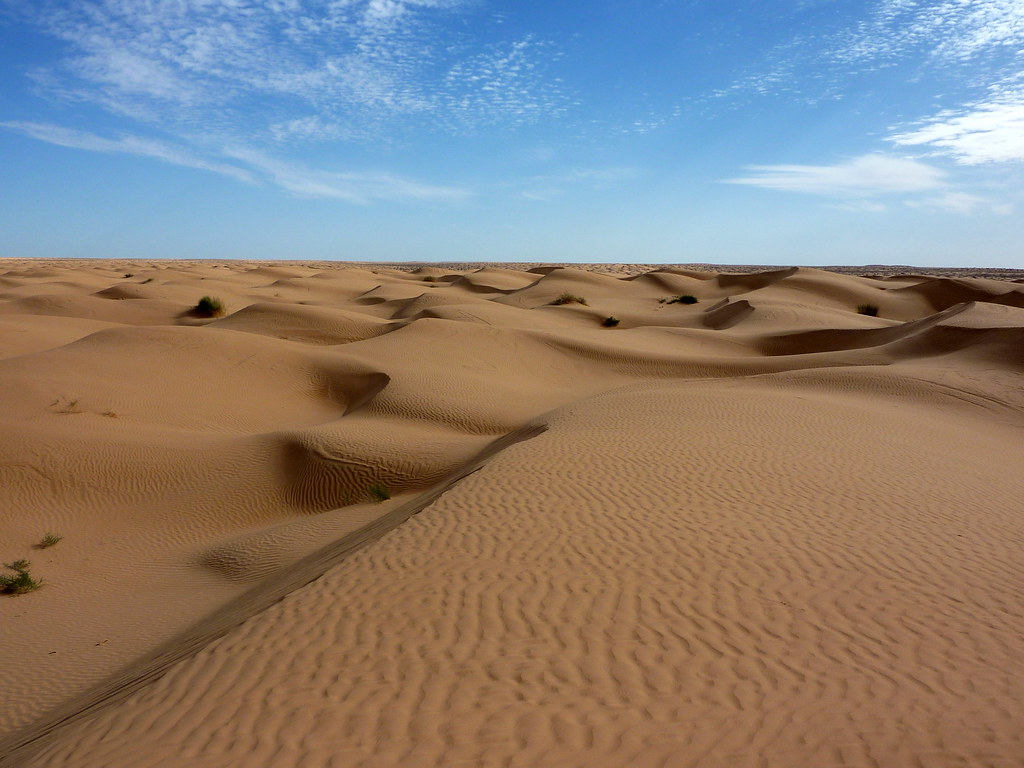
In the Sahel, the front line of climate change is a moving wall of sand. For decades, the Sahara has crept southward, swallowing farmland and pasture, forcing communities to abandon their homes. The African Union's answer is the Great Green Wall: an ambitious mosaic of trees, shrubs, and restored land stretching across the continent's waistline. By 2030, it aims to restore 100 million hectares of degraded land, sequester 250 million tons of carbon, and create 10 million green jobs [1][3][6]. As of 2024, about 30 million hectares have been restored—roughly 30% of the target—and tree survival rates stand at about 80% [1]. But behind these numbers lies a story of uneven progress, political inertia, and a hard question: can a belt of trees really stop the desert?[1][3][6]
The Numbers: Progress and Gaps
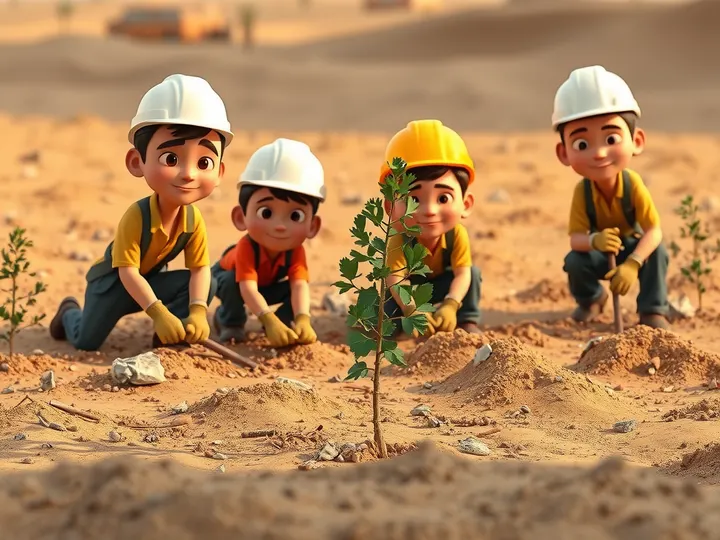
The Great Green Wall is not a single wall but a patchwork of projects across 22 countries [3]. Its flagship goal—restoring 100 million hectares by 2030—was set in 2007, but by 2020, less than 20% of that land had been restored [2]. The initiative has created only 350,000 jobs, far short of the 10 million promised [2]. Ethiopia leads the pack, having planted 5.5 billion seedlings and reclaimed 15 million hectares; Nigeria has restored 4.9 million hectares; Senegal has planted over 11 million trees [1]. But Chad, mired in conflict, has managed just 1.1 million seedlings [1]. The gap between nations is stark, and it reflects a deeper problem: funding and attention flow to stable countries, leaving fragile ones behind [1].[1][2][3]
The initiative has raised more than $14 billion in pledges [3], yet billions have failed to reach the ground [12]. A 2024 analysis of 36 reforestation plots in Senegal found that only two showed significant greening since planting [12]. Satellite data suggests low long-term ecological impact, with many monocultures of fast-growing trees vulnerable to disease and water stress [4][12]. The problem, researchers say, is not a lack of money but a failure to translate global finance into local action [12].[3][4][12]
The challenge is not lack of finance, but translating finance from global to local.
Why the Wall Stumbles: Funding, Coordination, and War
The Great Green Wall's biggest enemies are not droughts but donor fatigue and bureaucratic drift. A 2020 report by the UN Convention to Combat Desertification found that the program had insufficient funding and monitoring, which allowed governments to treat it as a low priority [2]. Political instability has been a recurring saboteur: war and unrest in member countries have prevented them from implementing the strategies they signed up for [2]. The result is a patchwork of projects with little regional coherence.[2]
There is also a scientific critique. Some researchers argue the green wall concept is based on an outdated understanding of desertification. Desertification, they say, is not a broad-front invasion of sand but a highly localized process driven by human mismanagement—overgrazing, deforestation, poor farming practices [4]. Planting trees in long lines may not address the root causes. In fact, afforestation can reduce soil moisture and lower water tables, and in some cases has increased water scarcity for people and livestock [4]. Resource enclosures created by tree plantations have also worked against pastoralist livelihoods, who depend on open grazing lands [4].[4]
The initiative has also been criticized for being more than an ecological project. Large-scale afforestation is a form of 'internal territorialization,' extending state power over people through demarcating boundaries and designating land uses [4]. This can alienate local communities, which is why experts now urge a shift away from a tree-planting exercise toward a holistic, participatory approach that involves communities in building their livelihoods and incomes [6].[4][6]
Bright Spots: Where It Works
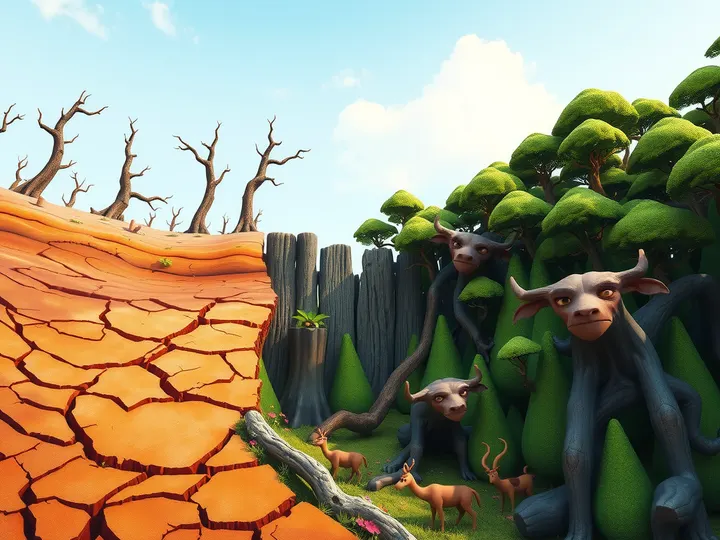
Despite the challenges, some countries have turned the wall into a lifeline. Senegal and Ethiopia have shown notable successes, driven by community involvement and political will [1]. In Senegal, over 11 million trees have been planted, and reforestation efforts have become a model for others [1][6]. Ethiopia has reclaimed 15 million hectares, partly through mass seedling campaigns [1]. These successes share a common ingredient: local people are not just spectators but beneficiaries. The initiative provides jobs and improves food security for communities [1]. In Nigeria, 4.9 million hectares of degraded land have been restored, and the project has helped reduce poverty and enhance water security [1][9].[1][6][9]
The Great Green Wall Accelerator, launched in 2021, aims to build on these successes by creating a monitoring system, analyzing which projects work, and fostering cooperation among member countries [2]. The Global Environment Facility has provided over $1 billion in grants, leveraging an additional $6 billion from other sources [9]. These funds have helped improve landscape resilience and livelihoods, though the gains are unevenly distributed [9].[2][9]
Climate Change: The Wall's Ultimate Test
Even if the wall is built, climate change may be moving the goalposts. The Sahel has seen temperatures rise exponentially over the last 60 years, with more frequent and intense heatwaves [8]. The Sahara is expected to expand as the climate warms, threatening the viability of the Great Green Wall [1]. Some projections suggest drylands could cover 50% to 56% of Earth's land by 2100 under moderate and high-warming scenarios [10]. The Lake Chad basin, a vital water source for the region, has already shrunk to one-tenth of its original size since the 1970s [8].[1][8][10]
A 2021 study in the journal Nature Sustainability used the Inclusive Wealth Index to assess the economic benefits of the Great Green Wall and found that public funding may be necessary, as the benefits—carbon sequestration, biodiversity, and food security—are largely non-market [7]. But a key barrier is the difficulty of comparing these benefits against trade-offs for other sectors [7]. Without a clear economic case, donors remain hesitant, especially in politically unstable nations [1].[1][7]
The Wall's Future: From Trees to Systems
The Great Green Wall is not a silver bullet. Researchers argue it cannot significantly alter the root causes of migration and conflict in the Sahel [5]. Nor can it be considered a nature-based solution in its entirety, as some projects fail to meet the IUCN's criteria for such approaches [5]. But the initiative has evolved from a simple tree-planting venture to an integrated approach to natural resource management [9]. Methods like forest gardens, oasis rehabilitation, and agroforestry are being implemented across the region [11]. These approaches mimic natural ecosystems and provide food, fuel, and income for local communities [11].[5][9][11]
The road to 2030 is steep. The initiative needs to restore nearly 70 million more hectares in less than a decade, while facing security threats, water scarcity, and a changing climate [1][6]. Yet, as the successes in Senegal and Ethiopia show, progress is possible when communities are at the center. The Great Green Wall may not be a literal wall, but it is a test of whether humanity can cooperate on a continental scale to push back against desertification. The answer, so far, is a cautious maybe.[1][6]
Sources
- Great Green Wall (Africa) - Wikipedia — en.wikipedia.org
- The Great Green Wall — education.nationalgeographic.org
- Great Green Wall Initiative | UNCCD — unccd.int
- Great Green Walls: Hype, Myth, and Science – CVD — cvdvn.net
- [PDF] The Great Green Wall An overview and lessons learnt - Sign in - DIIS — pure.diis.dk
- Progress is slow on Africa’s Great Green Wall, but some bright spots bloom — news.mongabay.com
- Valuing the Great Green Wall economic benefits with the Inclusive Wealth Index approach — nature.com
- The Great Green Wall: A Wall of Hope or a Mirage? — earth.org
- Great Green Wall Initiative | GEF — thegef.org
- Wikipedia: Desertification — en.wikipedia.org
- Africa's ambitious Great Green Wall Initiative · Planet Wild — planetwild.com
- Africa's Great Green Mirage? Assessing the disconnect ... — sciencedirect.com
- Why Southern Africa is building a Great Green Wall — thinklandscape.globallandscapesforum.org
Reported with AI assistance using internet sources.