From Wheelchair to World Stage: The Paralympian Who Redefined Limits
After a motorcycle accident left him paralyzed, John McFall went on to become a Paralympic sprinter, a surgeon, and the first physically disabled astronaut candidate—proving that limits are often just starting points.
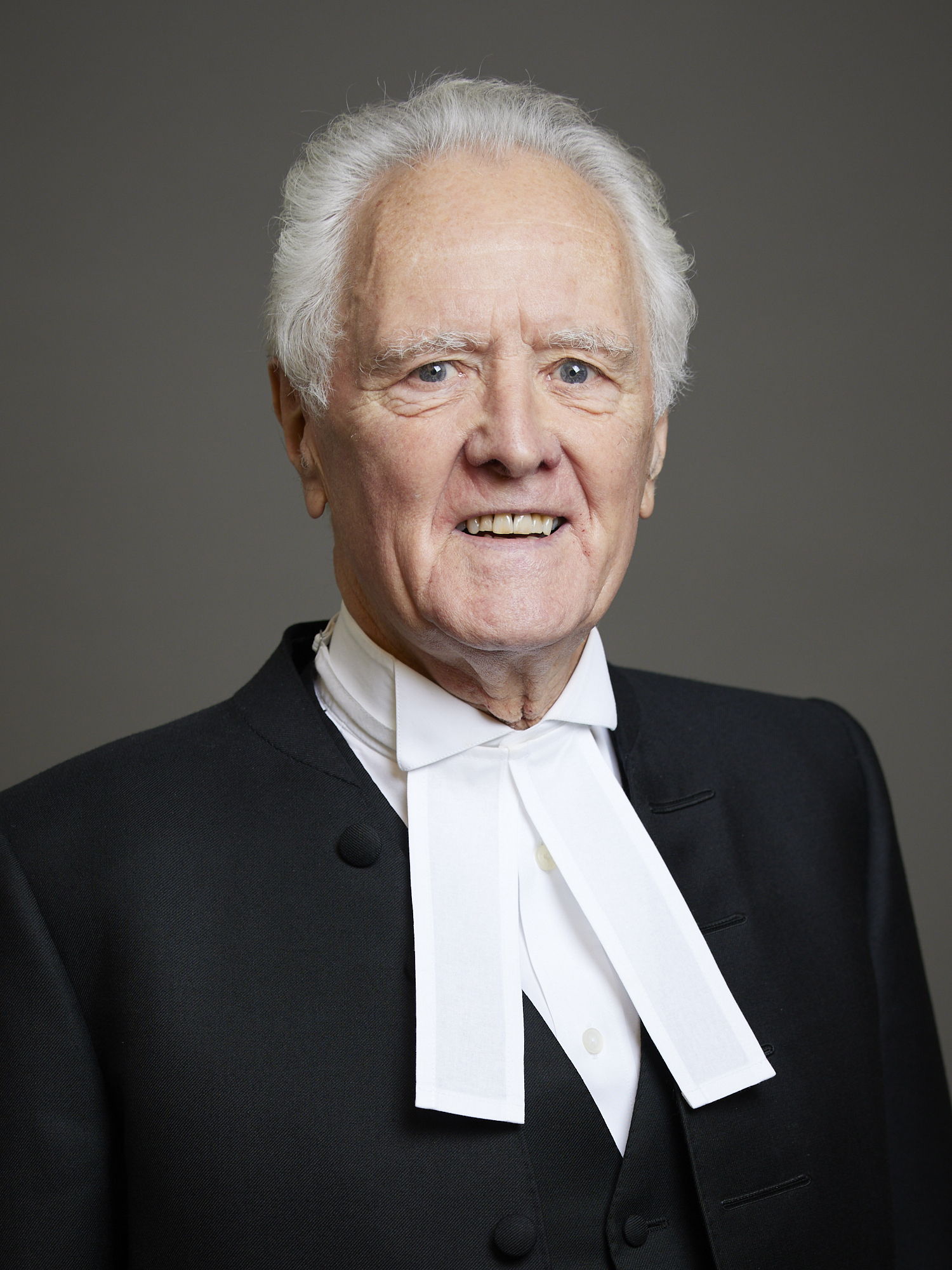
In 2000, John McFall was 19, on a gap year in Thailand, when a motorcycle accident changed everything. His right leg was amputated above the knee. Back in England, he spent months in hospital, then learned to walk with a prosthesis. But he didn't stop there. By summer 2003, he was running again, and by 2004 he entered his first race. Within four years, he'd be on the podium at the Beijing Paralympics. That trajectory—from trauma to track to surgery to space—is not a straight line. It's a spiral upward, each turn building on the last.[1][2]
The Sprinter Who Refused to Stay Down

McFall's athletic career took off quickly. He turned professional in 2005, representing Wales and Great Britain. In 2007, he hit a peak: gold in the 100m and 200m at the IWAS World Wheelchair and Amputee Games, and a world ranking of 2nd in the 100m, 1st in the 200m. Then came Beijing 2008, where he won bronze in the T42 100m. For many, that would be the pinnacle. For McFall, it was a launchpad. He had already taken pre-medical exams in 2008, planning to retire from athletics after the 2009 season to train as a doctor. He'd been a sprinter with a prosthetic leg; now he wanted to be a surgeon with a past.[1][2][3]
“I think I can bring lots of things to the feasibility study but I think in particular I can bring inspiration that science is for everyone but inspiration that space is for everyone.”
The transition from athletics to medicine wasn't a pivot; it was a continuation. McFall has said that his experiences as a Paralympian—standing on the start line, handling pressure, losing and winning—prepared him for the long hours and tough conversations of a surgical career. He graduated from Cardiff University with a Bachelor of Medicine and Surgery in 2014, became a member of the Royal College of Surgeons in 2016, and is now a trauma and orthopaedic specialist registrar in southern England. The discipline of sprinting, the focus of surgery—same muscle, different race.[1][2][4][13]
From Operating Table to Orbit
In November 2022, McFall added another title: parastronaut. The European Space Agency selected him as the first physically disabled member of its astronaut reserve, specifically to participate in the 'Fly!' feasibility study. The goal: systematically assess the barriers to spaceflight for people with physical disabilities. McFall's role was not just symbolic. He became the test case, the expert with lived experience, working alongside engineers and doctors to figure out what it takes to get an amputee safely into orbit.[3][7][8][11]
The Fly! study concluded in December 2024 with a clear verdict: there is no technical reason why someone with a disability like McFall's cannot fly a long-duration mission to the International Space Station. The adaptations were surprisingly minor—a different hydraulic fluid in his prosthetic knee to meet safety standards, a small adjustment to the spacecraft's footrest to accommodate his foot angle. But the real challenge, McFall has said, was not technical. It was mindset. “People have already a preconception of what a person with a physical disability can achieve,” he told the Southeast ADA Center. The study's success, he added, was about changing those preconceptions.[8][14]
A Mission That Could Rewrite the Rules

In 2025, McFall became the first person with a physical disability to be medically certified for a long-duration space mission. That certification is a landmark, but it's not a flight assignment. However, a new agreement between the UK Space Agency and the US commercial space company Vast could send McFall to Haven-1, a planned commercial space station, as early as 2027. The mission would be a two-week medical experiment, studying how microgravity affects a body with an amputation. McFall's research could also drive innovations in prosthetics, making them lighter and more adaptable for people on Earth.[4][6][9]
The science is compelling. McFall has less lower-limb tissue to absorb fluid shifts in microgravity, which could affect his vision and temperature regulation differently than his crewmates. But the broader significance is cultural. If the mission goes ahead, McFall would be the first person with a physical disability to live and work in space. As he told The Guardian, “We’re saying it’s OK for people with disabilities to be astronauts. We’ve demonstrated that it’s possible, that we’re open-minded enough to give people the opportunities to do this and recognise that they are equally capable.”[6][9]
The Impact Beyond the Launch Pad
McFall's story has already shifted public perception. He's not just an athlete who overcame adversity; he's a surgeon who operates on the same bodies that might one day break in space. His selection as an astronaut candidate signals to the world that disability doesn't preclude excellence—it just requires different solutions. The Fly! project, with its six domains from medical to operations, is building a template for inclusive space travel. And McFall, with his calm pragmatism, is the face of that change.[7][8]
As he awaits his chance to launch, McFall continues his training and his surgical work. He remains a member of the ESA astronaut reserve, cleared for activities in orbit. The next phase of Fly!—the mission-ready phase—includes safety certification and hardware certification, a process he's navigating with his prosthetic manufacturer, Ottobock, and ESA's independent safety engineers. The work is meticulous, unglamorous, and essential. It's the kind of work that makes history possible.[3][14]
“The main difficulty that we faced was not really technical… but was really about the mindsets. People have already a preconception of what a person with a physical disability can achieve.”
John McFall's journey from a hospital bed in Thailand to the edge of space is not a story about defying odds. It's a story about redefining what odds mean. He didn't just overcome his accident; he built a life that made his accident irrelevant. He's a sprinter who became a surgeon, a surgeon who became an astronaut candidate, and an astronaut candidate who might change how we think about human potential. The launch date is uncertain, but the trajectory is clear: up.[2][6][9]
Sources
- John McFall (athlete) - Wikipedia — en.wikipedia.org
- Hire John McFall | Speaker Agent Contact Details — motivationalspeakersagency.co.uk
- John McFall Is Breaking Barriers as the World’s First Parastronaut | Scientific American — scientificamerican.com
- Paralympian could become first astronaut with disability ... — bbc.com
- When John McFall lost his right leg at 19, no one could have known the former Paralympic sprinter might one day carry the first amputee body into orbit, where two weeks in microgravity could test what — spacedaily.com
- The extraordinary physiological challenges facing amputee John McFall in space — theconversation.com
- ESA - Fly! — esa.int
- The World’s First Astronaut with a Physical Disability Is Cleared for Long-Duration Space Missions < Southeast ADA Center — adasoutheast.org
- British Paralympian could be first astronaut with physical disability to live in orbit | European Space Agency | The Guardian — theguardian.com
- Wikipedia: Paralympic Games — en.wikipedia.org
- ESA - John McFall — esa.int
- From Paralympics to Space: John McFall's Journey | TikTok — tiktok.com
- The First Astronaut With a Disability Is a Paralympic Bronze Medalist — smithsonianmag.com
- John McFall | Prosthetics, possibility & parabolic flights | ESA Explores #16 — youtube.com
- From the track to The Moon 🌔🚀... - World Para Athletics — facebook.com
Reported with AI assistance using internet sources.