The Ocean's Twilight Zone: Why the Fish You've Never Heard Of Feed the Ones You Have
A few hundred metres down sits the largest untapped protein reserve on Earth — and the rules for taking it are being written now.
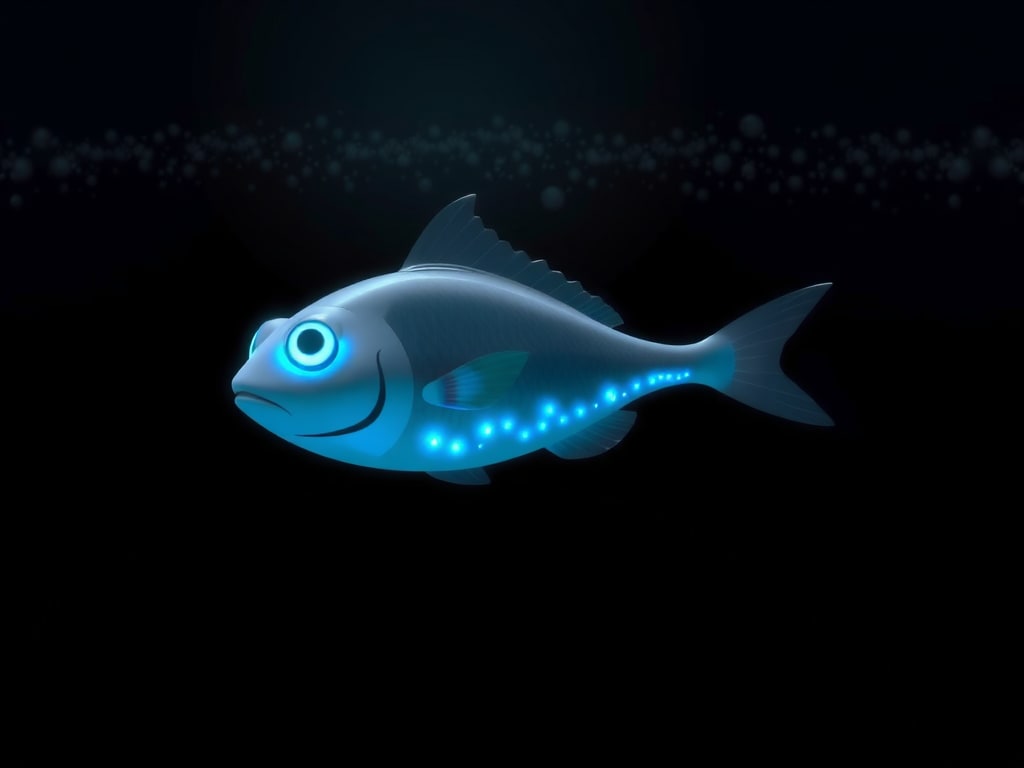
Somewhere between 200 and 1,000 metres beneath the surface, in water so dim that only one percent of sunlight reaches the top of the layer and none reaches the bottom, swims the biggest concentration of fish biomass on the planet. They are small, mostly finger-length, and almost entirely unknown to anyone who has not spent a career trawling at night. The mesopelagic zone occupies about 60 percent of the planet's surface and about 20 percent of the ocean's volume, according to Wikipedia's entry on the layer, and it is, by most accounts, the last great unclaimed fishery.[3]
The Largest Daily Migration on Earth
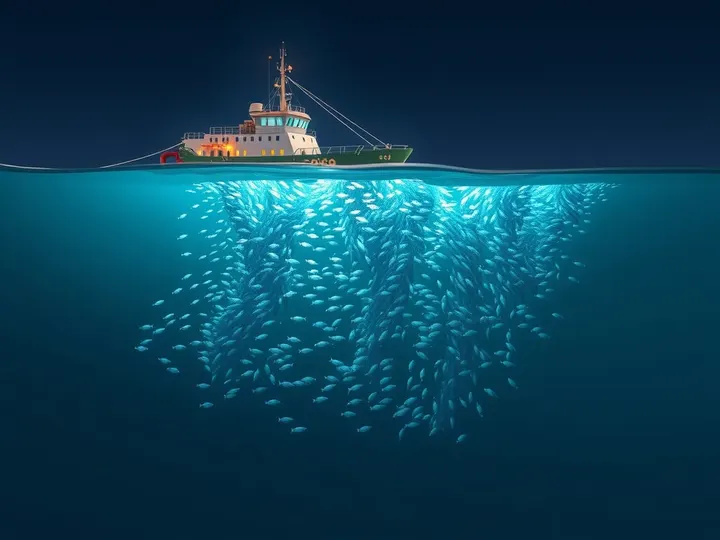
Every evening, as the light fails, the twilight zone empties upward. Mesopelagic species make what researchers describe as the largest daily migration on earth, rising toward the surface to feed at night and descending back into the dark to avoid predators by day — a cycle known as diel vertical migration, according to a Frontiers paper on public support for twilight-zone fishing. Lanternfish, the family Myctophidae, are the archetypes: during daylight hours most species hold between 300 and 1,500 metres down, then rise into the epipelagic zone between 10 and 100 metres towards sundown, per Wikipedia's lanternfish entry. They do it to dodge predation and to follow the zooplankton they eat, which migrate on the same schedule.[4][6]
That nightly commute is not just a curiosity. It is a conveyor belt. The Frontiers paper notes that this vertical migration is a key mechanism supporting the biological carbon pump, cycling carbon from surface waters toward the deeper ocean where it can be captured and stored for 100 or more years. Wikipedia's mesopelagic entry puts numbers on it: an estimated 90 percent of particulate organic carbon exported from the sunlit zone is respired in the mesopelagic layer, and in one study in the Equatorial Pacific, myctophids were estimated to actively transport 15–28 percent of the passive carbon sinking to the deep. Near the Canary Islands, a separate study attributed 53 percent of vertical carbon flux to active transport by a combination of zooplankton and micronekton.[3][6]
The estimated global biomass of lanternfish is 550–660 million tonnes — several times the entire world fisheries catch.
Ten Times More Fish Than We Thought
For decades the standard figure for mesopelagic fish worldwide was about 1,000 million tons. Then the Malaspina 2010 Circumnavigation Expedition recalculated it. Using data from that voyage, Irigoien et al. 2014 showed there are about 10 times more mesopelagic fish than previously estimated, putting the biomass at roughly 10–15,000 million tons, according to the University of Miami's Shark Research and Conservation Program. The same work found that mesopelagic biomass is closely tied to photosynthetic plankton, which form the base of the marine food web; larger plankton eat them, and mesopelagic fish eat the herbivorous plankton. Recent estimates of mesopelagic biomass dwarf estimates of pelagic biomass by one to two orders of magnitude, per the Frontiers study.[1][6]
Lanternfish alone may have a total global biomass of 1.8 to 16 gigatonnes, accounting for up to 65 percent of all deep-sea fish biomass, according to Wikipedia. Commercial fisheries for them already exist off South Africa, in the sub-Antarctic, and in the Gulf of Oman. They are heavily preyed upon by whales and dolphins, large pelagic fish such as salmon, tuna and sharks, pinnipeds, sea birds — notably penguins — and large squid. By releasing fecal pellets at depth, lanternfish make the biological pump more efficient, which is a polite way of saying they help bury carbon.[4]
Norway's Trial Boats and the Silage Market
The commercial interest is real, if still tentative. Mongabay reports that the EU is pumping large amounts of money and time into studying the viability of these fisheries, with Norway as a hotspot for such research, and that trial fishing for twilight species began in Norway in 2016 and is set to continue. The target product is not a fillet for your plate. It is silage — a liquid typically made from fish waste, used in fertilizers and aquaculture feeds. Turning a lanternfish into fishmeal is less lucrative than turning it into a tuna steak, but it is a way to feed the tuna steak's supply chain.[5]
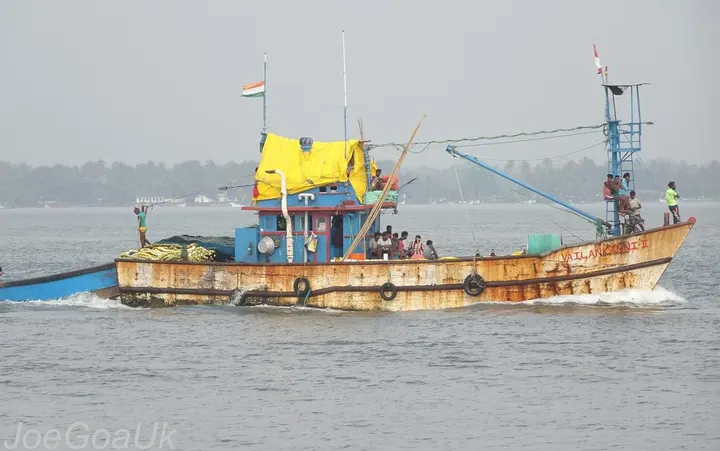
Catching them is another matter. Due to the constant movement of these fish, they are notoriously hard to catch, according to Mongabay, and if they are brought to the surface, many turn into a kind of gelatinous goop. The Frontiers paper adds that twilight-zone resources have gained commercial attention as a new ingredient source for fishmeal and fish oil, and that many initiatives worldwide have begun exploring how to harvest them and what markets would buy them. Select twilight-zone species are already commercially harvested, including orange roughy and hoki, with some fisheries holding Marine Stewardship Council sustainability certification.[5][6]
Who Owns the Protein Nobody Is Watching
The governance question is being settled quietly, in the same incremental way most high-seas rules are made. The available notes do not detail a single binding regime for mesopelagic harvest. The Western and Central Pacific Fisheries Commission describes itself as a regional fisheries management organisation, which is the standard category for bodies that set catch limits on the high seas. Research activities in Norway, whose trial fishery has run since 2016, and EU member states funding the science, are confirmed in the notes.[5][8]
The Risk to the Surface Food Web
The ecological case against large-scale harvest rests on a simple chain of dependency. Lanternfish are heavily preyed upon by whales and dolphins, salmon, tuna, sharks, pinnipeds, penguins and large squid, per Wikipedia. If you remove the prey, you do not simply remove a competitor for fishmeal; you remove the caloric bridge between the plankton and everything that eats at the surface. The carbon pump is the second exposure. The Frontiers paper notes that the vertical migration supports carbon storage for 100 or more years, and Wikipedia's mesopelagic entry estimates 90 percent of exported particulate organic carbon is respired in that layer. A fishery that intercepts the migrants at night, near the surface, is a fishery that interrupts the pump at its most active point.[3][4][6]
There is also the matter of what we do not know. The Mongabay piece notes that mesopelagic fish are hard to catch precisely because they move constantly, which means stock assessments are correspondingly hard. The Irigoien revision — a tenfold increase over previous estimates — is a reminder that the baseline itself is a moving target. You cannot manage what you cannot count, and the counting is still being argued over.[1][5]
The So-What
The food-security argument for harvesting the twilight zone is straightforward: 10–15,000 million tons of fish, most of it convertible to fishmeal and fish oil, in a world where aquaculture demand keeps rising. The argument against is equally straightforward: that biomass is already feeding the fish we eat, the whales we watch, and the carbon cycle we depend on.[1][5][6][8]
Sources
- Fish living in the “twilight zone” have a greater biomass than previously thought. – Shark Research & Conservation Program (SRC) | University of Miami — sharkresearch.earth.miami.edu
- Diel vertical migration - Wikipedia — en.wikipedia.org
- Wikipedia: Mesopelagic zone — en.wikipedia.org
- Wikipedia: Lanternfish — en.wikipedia.org
- Twilight zone fishing: Can we fish the ocean’s mesopelagic layer? — news.mongabay.com
- Frontiers | Assessing public support for commercial fishing in the ocean twilight zone considering climate trade-offs and ocean literacy — frontiersin.org
- Now Hiring: 700 Commercial Fishing Jobs | Indeed — indeed.com
- Regional Fisheries Management Organizations | Western and Central Pacific Fisheries Commission — wcpfc.int
Reported with AI assistance using internet sources.