The Great Manga Gold Rush: Macron's Saudi-Backed Theme Park and the Global Soft Power Battle
France's plan to build a manga theme park with Saudi funding highlights a new era of cultural diplomacy and economic opportunism.
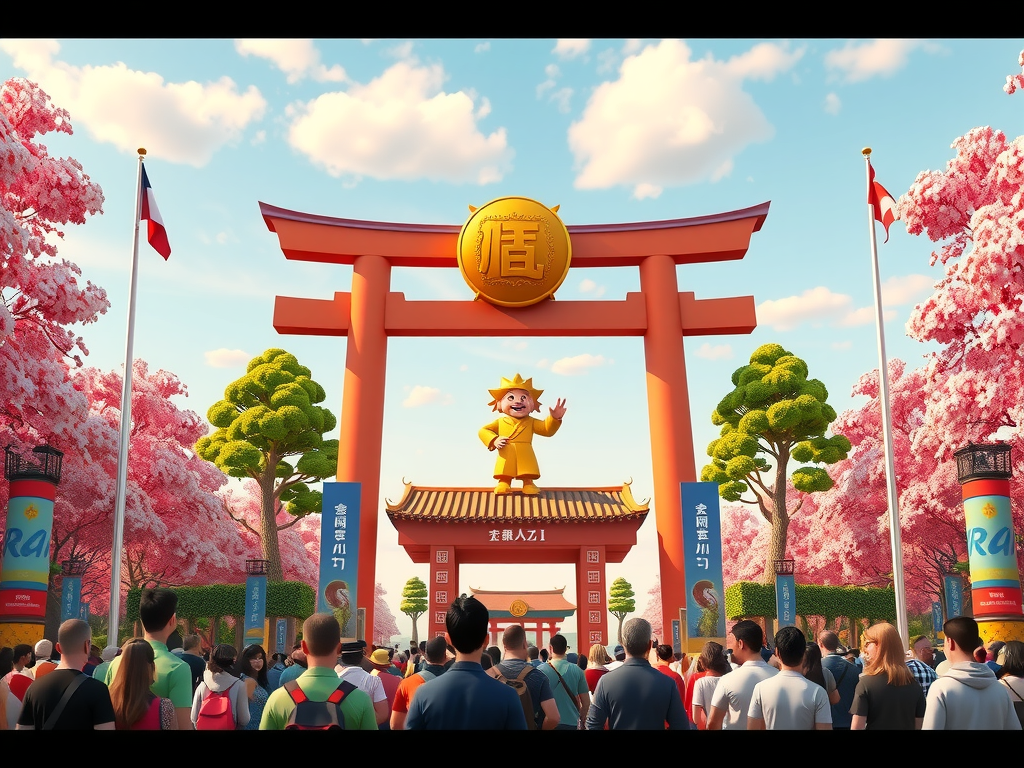
Paris is betting that anime can do for France what the Eiffel Tower did for the 1889 World's Fair. According to a report from the Japan Economic Foundation, France's cultural diplomacy has long been a three-dimensional affair—politics, economy, and culture—with the latter as its core.[13][1]
The Deal: What We Know (and Don't)
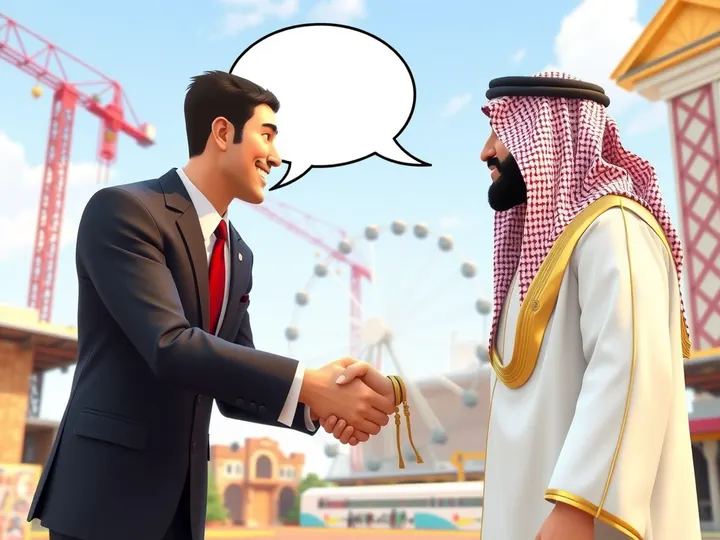
Details of the Macron-Saudi deal remain as sketchy as a bootleg manga scan. Neither the Élysée Palace nor Saudi Arabia's Public Investment Fund has confirmed specific figures, location, or a timeline. But the context is telling. Saudi Arabia has already committed to a $500,000-square-meter Dragon Ball theme park near Riyadh, part of its Qiddiya giga-project, as reported by the Wall Street Journal. That park, announced by Toei Animation, will feature seven themed areas, five state-of-the-art rides, and a 70-meter Shenron statue with a roller coaster inside.[10][11]
Saudi Arabia's cultural sector contributed approximately SR60 billion to GDP in 2023, and investments in cultural infrastructure have exceeded SR81 billion.
Soft Power, Hard Cash
The concept of soft power, popularized by Joseph Nye in 1990, is simple: influence through attraction, not coercion. A country's culture, political values, and foreign policies are the three resources that make it work. For France, culture has been a diplomatic weapon since the Alliance française was founded in 1883. Today, the French Ministry of Foreign Affairs directs two-thirds of its budget to culture, education, and development aid, and maintains a global network of 150 Institut français and 27 research institutes. But in the 21st century, soft power is increasingly measured in yen, dollars, and riyals—and Japan's Cool Japan Fund, with its 60 billion yen budget, has shown how pop culture can be monetized on a national scale.[8][13]
Saudi Arabia, for its part, is on a cultural spending spree. According to Arab News, the kingdom's cultural sector contributed roughly SR60 billion to GDP in 2023, and investments in cultural infrastructure have exceeded SR81 billion. The number of workers in the sector has surged to 234,000, and companies operating in it surpassed 51,000—a 23.6 percent increase since 2021. At a recent Cultural Investment Conference, 89 agreements worth nearly SR5 billion ($1.3 billion) were signed. The global cultural investment market is estimated at $2.3 trillion annually, or 3.1 percent of world output. For a nation looking to diversify beyond oil, manga is a surprisingly serious business.[3]
France's Cultural Diplomacy: From Molière to Manga
France's cultural diplomacy has always been about more than just art—it's a strategic tool to build long-term influence. As the Japan Economic Foundation notes, cultural diplomacy is a two-way exchange, and France has embraced everything from digital art festivals to video games. The proposed manga park would be a natural extension of this strategy, tapping into the global anime boom that has seen titles like 'Jujutsu Kaisen' and 'Demon Slayer' plastered on fast fashion brands like H&M and Urban Outfitters, according to The Daily Campus. Anime and manga, the same source notes, create 'almost limitless opportunities for self-realization and expression'—a powerful draw for a nation seeking to project modernity and youthfulness.[13][2]
But France isn't just competing with Japan—it's competing with everyone. The Global Soft Power Index, produced by Brand Finance, ranks nations on their ability to attract investments, promote tourism, and invite talent. A stronger soft power means more than just cultural cachet; it's a direct economic lever. Critics, however, might see it as a Faustian bargain—selling out French cultural purity for Saudi petrodollars.[6][9]
Saudi Arabia's Play: Beyond Oil
Saudi Arabia's motivations are clear: diversify the economy and reshape its global image. The Dragon Ball park is a prime example. According to the Wall Street Journal, the move 'underscores the kingdom’s ambitions to diversify beyond oil.' The kingdom has already invested heavily in sports, entertainment, and tourism, and its cultural sector is booming.[10][3]
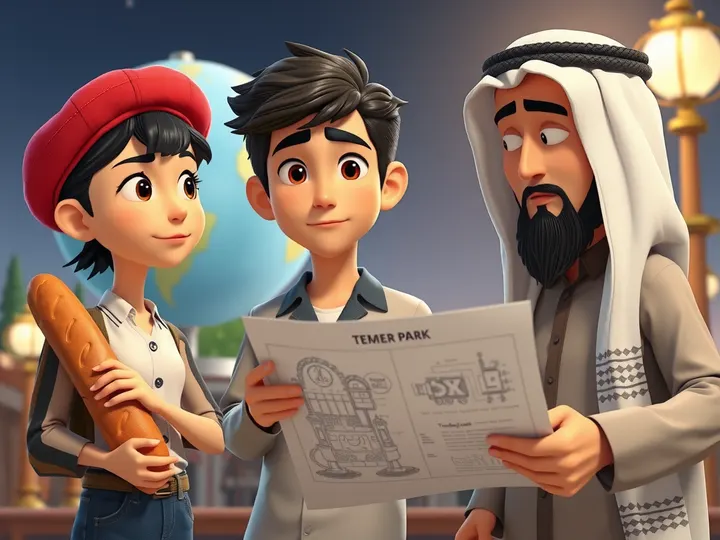
Reactions: Enthusiasm, Skepticism, and a Side of Otaku
Anime and manga have a dedicated fanbase in France, one of the largest in Europe, and many see the park as a validation of their passion.[2][3]
The Global Theme Park Race
Disney has been expanding its parks globally, and Japan has its own anime-themed attractions, though nothing on the scale of a full park. Saudi Arabia's Dragon Ball park is set to be the world's first of its kind, and it's a direct competitor to any French venture. The key differentiator would be location. Both are betting that anime's global appeal is more than a passing fad.[10][11]
Economic and Cultural Impacts on France
France's tourism industry, already a global leader, could see a boost from anime fans worldwide. The precedent of Disneyland Paris, which struggled for years before turning a profit, is a cautionary tale.[2][13]
The Bigger Picture: Soft Power in the 21st Century
As Joseph Nye noted, soft power can be wielded for good or ill, and it's a difficult instrument to control. Governments can't force people to love their culture; they can only create opportunities for it to be appreciated. And for anime fans, it's a dream come true—or a nightmare of commercialization. Either way, the world is watching.[8][6]
As the global soft power index rises and falls, one thing is clear: the battle for cultural influence is no longer fought with bombs or tariffs, but with theme parks, streaming services, and merchandise.[6][2]
Sources
- Matosian A.E. Soft Power and Cool Japan: Shaping Japan's National Image — aurora-journals.com
- Anime: A global commodity or soft power strategy? | The Daily Campus — dailycampus.com
- Cultural investment: A mine of promising opportunities in Saudi Arabia — arabnews.com
- Cultural investment in Saudi Arabia | Bayut Blog — bayut.sa
- Supporting Saudi's cultural renaissance | Strategy& Middle East — strategyand.pwc.com
- Brand Finance's Global Soft Power Index — static.brandirectory.com
- Soft Power: Pop Culture, Politics & Global Influence | Office Hours with Professor Tom Le — youtube.com
- Soft power - Wikipedia — en.wikipedia.org
- Wikipedia: Cultural diplomacy — en.wikipedia.org
- Saudi Arabia Fund to Build World’s First ‘Dragon Ball’ Theme Park - WSJ — wsj.com
- [Construction to Commence for the World’s Only Dragon Ball Theme Park!] | DRAGON BALL OFFICIAL SITE — en.dragon-ball-official.com
- Soft Power and cultural diplomacy — youtube.com
- The Realms of Power in Cultural Diplomacy from France's ... — jef.or.jp
- Japanese Pop Culture and Cultural Diplomacy: Overseas Expansion, Reception, and the Role of Fan Communities - Japan Policy Forum — japanpolicyforum.jp
Reported with AI assistance using internet sources.