The Case Against the Eight-Hour Sleep Rule
The eight-hour block is a modern invention, and the research on how much sleep we actually need is messier than the advice industry admits.
In the early 1990s, researchers at the National Institute of Mental Health put more than a dozen men in a lab and took away artificial light for several weeks. The men began sleeping in segments—waking after midnight, staying up for an hour or more, then returning to bed. It was, according to historian A. Roger Ekirch, a clinical echo of a pattern that had once been ordinary. Before gas lamps and electric bulbs, Ekirch argues, sleep commonly came in two acts: a 'first sleep' and a 'second sleep,' bridged by a wakeful hour after midnight. The consolidated eight-hour block we now treat as biological bedrock is, by that account, a recent invention—and the science of how much sleep people actually need is far less tidy than the rule suggests.[1]
How the Eight-Hour Block Became Gospel
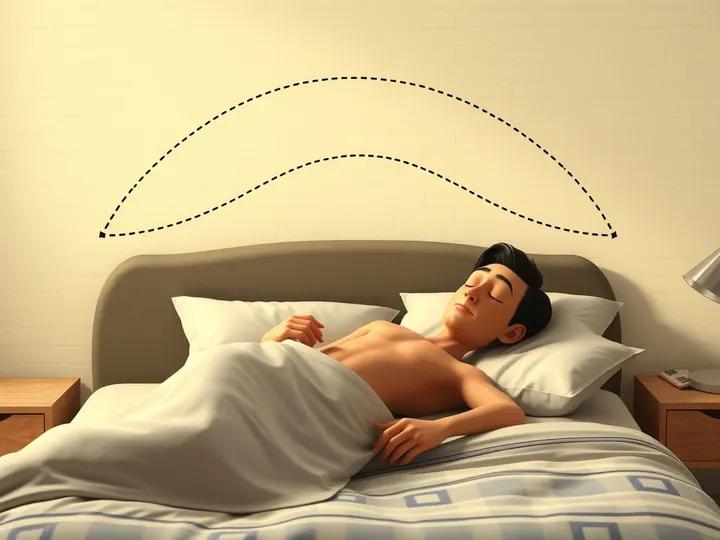
Ekirch's segmented-sleep theory, first published two decades ago, has been widely accepted by historians, literary scholars and the general public, according to a re-examination of the evidence published on pmc.ncbi.nlm.nih.gov. The textual trail runs back to Homer's Odyssey and Virgil's Aeneid, both of which describe the hour that ends the first sleep. Ethnographic accounts from the Tiv of central Nigeria and the Surinamese Maroons—cultures without modern lighting—recorded first and second sleep as well. The pattern was dominant in the Western world until the mid- to late nineteenth century, according to Ekirch's own summary on sites.google.com. Then artificial illumination, first gas and then electric, reconfigured the human circadian clock, while the Industrial Revolution's emphasis on efficiency and productivity compressed sleep into a single block. By the end of the 1800s, second sleep among most urban residents amounted to little more than turning over for an extra ten minutes or so, Ekirch writes. Not until segmented sleep had largely disappeared did doctors begin to treat it as a medical concern.[1][2][3]
By the end of the nineteenth century, 'second sleep' among most urban residents represented little more than turning over in one's bed for an extra ten minutes or so of slumber.
The theory is not airtight. A 2015 study of three non-industrial equatorial societies found monophasic nighttime sleep in all three, though Ekirch questioned the authors' conclusions, according to Wikipedia's entry on polyphasic sleep. And a scholarly reconsideration on pmc.ncbi.nlm.nih.gov asks whether the evidence might support other models of early modern sleep that are not characterized by segmentation. The past is not a clean control group. But the historical record does make one thing clear: the eight-hour rule is a cultural artifact as much as a biological one.[2][10]
The U-Shape That Swallows the Target
If the eight-hour block is modern, what does the health evidence say about duration? The most-cited finding is a U-shaped curve. A meta-analysis of prospective studies, summarized on windturbinesyndrome.com, found that both short and long sleep duration were associated with a greater risk of developing or dying of coronary heart disease, and that long sleep was also linked to higher risks of stroke and total cardiovascular disease. The authors concluded that both short and long duration are predictors, or markers, of cardiovascular outcomes. In most included studies, the reference category was seven to eight hours per night—not eight as a minimum.[5]
A later prospective cohort study published in Frontiers, with data from frontiersin.org, found that sleeping less than five hours or longer than nine hours per day was significantly associated with elevated all-cause mortality. The hazard ratios across sleep categories were 1.40, 1.12, 1.00 (reference), 1.35 and 1.74. For cardiovascular mortality, the ratios were 1.66, 1.15, 1.00, 1.55 and 1.81. The authors also presented population attributable fraction (PAF) calculations, under a causal assumption, attributing 187,000 CVD events to short sleep and 947,000 to long sleep. That asymmetry is a warning: long sleep may be a marker of underlying illness rather than a cause of it. The American Academy of Sleep Medicine and the Sleep Research Society recommend adults obtain seven or more hours per night—a floor, not a fixed target.[6]
The measurement problem cuts deep. A meta-analysis cited by the same Frontiers study noted that some previous work found consistent associations between short and long sleep and mortality, while others did not. The relationship is real but not simple, and the advice industry's confident 'eight hours or else' framing outruns the evidence.[6]
The Clock Changes With Age—and With Your Genes
Sleep need is not a constant. Newborns aged 0 to 3 months need 14 to 17 hours per day, according to dreemhealth.com; toddlers 11 to 14; school-age children 9 to 11; teenagers 8 to 10, with hormonal changes shifting their circadian rhythms later; most adults 7 to 9; and older adults generally 7 to 8. Those are population ranges, not prescriptions. A neurobehavioral review on pmc.ncbi.nlm.nih.gov notes that sleep patterns and neurophysiology change dynamically across the lifespan, and that in adults, sleep quality and macrostructure trajectories show high variability. The same review points out that much of the literature relies on cross-sectional or two-wave longitudinal designs, limiting our ability to untangle whether poor sleep causes poor health or vice versa—effects that can compound over time.[15][16]
Genes explain a surprising share of the variance. A twin study of 12-year-olds, reported on pmc.ncbi.nlm.nih.gov, found that additive genetic factors accounted for 65 percent of the variance in total sleep time and 83 percent in sleep onset latency; genetic factors also accounted for 52 percent of wake after sleep onset and 57 percent of sleep efficiency. Shared environment mainly influenced timing—67 percent of sleep start time and 86 percent of sleep end time. An earlier genetic study on genepi.qimr.edu.au found that genetic differences accounted for at least 33 percent of the variance in sleep quality and disturbance, and 40 percent of sleep pattern, with no effect of shared family environment. Some people are simply short sleepers by nature; others are long sleepers. Both extremes have been associated with increased mortality risk, which again suggests that long sleep can be a symptom, not a sin.[7][8]
Waking Up Is Not a Failure
Night wakings are often treated as pathology. The physiology says otherwise. Sleep cycles through NREM and REM stages roughly every 90 minutes, occurring four to six times in a good night's sleep, according to Wikipedia's sleep entry. Deep sleep (stage N3) is concentrated early in the night, while REM proportion increases in the two cycles before natural awakening. Awakening can mean the end of sleep, or simply a moment to survey the environment and readjust body position before falling back asleep. One study cited there found awake time rising from 3 percent in the first 90-minute cycle to 13–14 percent in the fifth, with most of that awake time occurring shortly after REM sleep. In other words, brief awakenings are built into the architecture.[9]
Fragmentation matters when it is frequent, prolonged, or accompanied by daytime impairment—not when it is a normal part of the cycle. The historical record suggests that a single mid-night waking was once so ordinary that it structured social life. The modern panic about 'sleep maintenance insomnia' may say more about our expectations than our biology.[1][9]
The Evidence Is Messier Than the Advice
Much of what we know about sleep duration comes from questionnaires, not lab equipment. The cardiovascular meta-analysis assessed sleep duration by questionnaire and incident cases through certification and event registers. Self-report is a blunt instrument: a study of adolescents in the Future of Families and Child-Wellbeing Study, published on pubmed.ncbi.nlm.nih.gov, found that self-reported sleep duration overestimated actigraphy-assessed duration by 27.87 minutes after adjustment, with agreement between duration categories at just 73 percent. The gap was larger on weekends and for Black adolescents and those with lower socioeconomic status. Reliance on self-report may misclassify sleep duration and underestimate insufficient sleep, particularly in marginalized groups.[5][11]
Even objective measures have limits. Polysomnography is the gold standard, but it is costly and lab-bound; wrist actigraphy can falsely label quiet wakefulness as sleep, according to a review on uen.pressbooks.pub. Smartphone apps are increasingly used by the public, and one study on explorationpub.com found that a smartphone app significantly overestimated total sleep time compared with actigraphy, though sleep efficiency estimates were similar. The evidence base is a patchwork of self-reports, wearables and small lab studies—not the monolithic foundation the advice industry implies.[12][13]
A Calmer Way to Sleep
What does the evidence actually support? First, treat seven hours as a rough floor for adults, not eight as a rigid target—the official recommendation is seven or more. Second, expect variation: your genes, age and chronotype shape what is normal for you. Third, do not fear the mid-night wake. If you wake and feel fine the next day, it is likely part of a normal cycle. Fourth, be skeptical of trackers. They can be useful for spotting trends, but they overestimate sleep and can feed anxiety. Fifth, focus on consistency of timing—shared environment strongly influences when we sleep—and on daytime function rather than a number on a screen. The eight-hour rule is a historical artifact, not a biological law. The evidence points toward a more forgiving, individualized standard: enough sleep to feel alert, not a perfect block to chase.[6][8][9][12]
Sources
- Segmented Sleep, by A. Roger Ekirch — harpers.org
- Have we lost sleep? A reconsideration of segmented sleep in early modern England — pmc.ncbi.nlm.nih.gov
- Roger Ekirch - Segmented Sleep — sites.google.com
- The U-Shaped Association between Sleep Duration, All-Cause Mortality and Cardiovascular Risk in a Hispanic/Latino Clinically Based Cohort — mdpi.com
- Sleep duration predicts cardiovascular outcomes — windturbinesyndrome.com
- Frontiers | Association of Sleep Duration With All-Cause and Cardiovascular Mortality: A Prospective Cohort Study — frontiersin.org
- Evidence for Genetic Influences on Sleep Disturbance and ... — genepi.qimr.edu.au
- Genetic and Environmental Contributions to Sleep-Wake Behavior in 12-Year-Old Twins — pmc.ncbi.nlm.nih.gov
- Wikipedia: Sleep — en.wikipedia.org
- Wikipedia: Polyphasic sleep — en.wikipedia.org
- Measurement bias in adolescent sleep duration: Comparison of self-reported and actigraphy-assessed sleep duration among adolescents in the Future of Families and Child-Wellbeing Study. — pubmed.ncbi.nlm.nih.gov
- Objective measurement of sleep by smartphone application: comparison with actigraphy and relation to self-reported sleep — explorationpub.com
- An Examination of Sleep Diary versus Wrist Actigraphy Data – RANGE: Journal of Undergraduate Research (2024) — uen.pressbooks.pub
- Sleep Patterns At Every Age From Newborns To Older Adults — sleepclinicpretoria.co.za
- Sleep Across the Lifespan: A Neurobehavioral Perspective — pmc.ncbi.nlm.nih.gov
- Sleep across ages: why do our needs change? — dreemhealth.com
Reported with AI assistance using internet sources.