The Human Computers Who Put America on the Moon
Before digital machines, a cadre of women—many of them Black, many uncredited—calculated the trajectories that made Apollo possible. Their stories, hidden for decades, are finally being told.
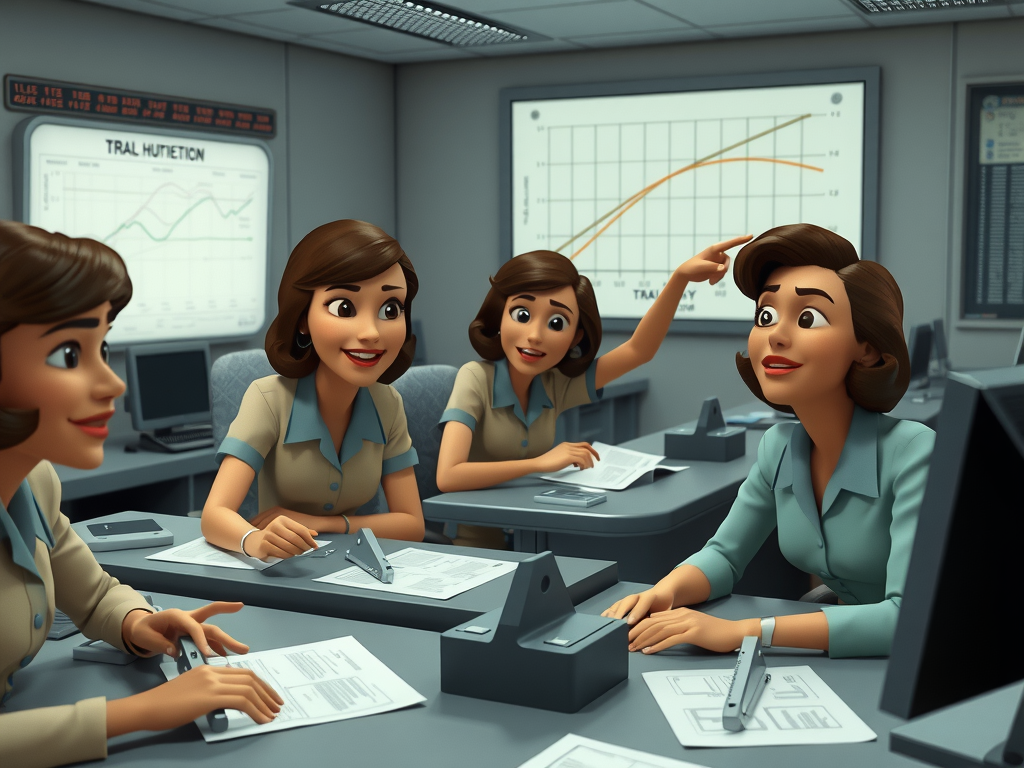
On July 20, 1969, as the Lunar Module Eagle descended toward the Sea of Tranquility, a 51-year-old mathematician in Hampton, Virginia, watched with the rest of the world. But Katherine Johnson had more than a spectator's stake in the landing: she had calculated trajectories for Apollo 11, including the rendezvous paths for the Lunar Module and command module. Johnson, who joined NASA's predecessor NACA in 1953, was part of a hidden army of human computers—women who did the complex math for America's space program by hand, long before electronic machines took over. Their work, largely untold for decades, is now recognized as foundational to the Space Age.[2][6][11]
The Women Behind the Numbers
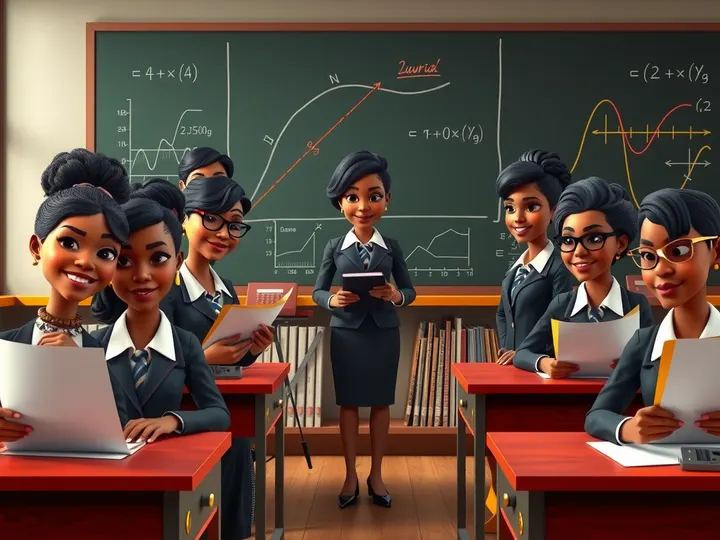
When NACA began hiring women as computers in 1935, it wasn't an act of progressivism; it was pragmatism. Men were needed for engineering and test piloting, and women—often with mathematics degrees—could do the painstaking calculations at a fraction of the cost. But the agency didn't open these roles to African American women until 1943, when World War II created a labor shortage. That's when Dorothy Vaughan arrived at Langley Memorial Aeronautical Laboratory in Virginia, joining a segregated unit of Black women who would become known as the West Area Computers.[7][9]
Vaughan, who had a mathematics degree from Wilberforce University, quickly proved indispensable. By 1949, she became NACA's first African American manager, leading the West Area Computing Unit. Her colleague Mary Jackson, who joined the lab in 1951, worked on the supersonic pressure tunnel project, testing data from wind tunnel and flight experiments. Jackson later fought to become NASA's first African American woman engineer, taking graduate courses at night after being told she lacked the credentials. Katherine Johnson, meanwhile, was the only woman to move from the computer center to another department—the Flight Research Division—where her knack for analytic geometry caught the attention of engineers who would soon be sending men into orbit.[1][5][7]
"Get the girl to check the numbers." — John Glenn, asking for Katherine Johnson to verify the computer's calculations for his orbital mission.
Segregation, Slide Rules, and the Fight for Credit
Life for these women was a double bind: they had to prove their mathematical brilliance in a field that doubted their gender, while navigating the Jim Crow segregation that permeated the American South. At Langley, Black computers worked, ate, and used restrooms in separate facilities from their white colleagues. Katherine Johnson, who refused to use the "colored" restroom and ignored the segregated cafeteria signs, later said she "didn't feel the segregation at NASA, because everybody there was doing research." But the barriers were real: she had to walk half a mile to the nearest "colored" bathroom, and her name was routinely omitted from reports because "computers" weren't credited as authors.[2][9][10]
The women at the Jet Propulsion Laboratory in California faced similar challenges, albeit without the racial segregation. Barbara "Barby" Canright, hired in 1939, was the first female human computer at JPL, calculating rocket needs and propellants by hand. Her supervisor, Macie Roberts, made the deliberate choice to hire only women, believing men would undermine the group's cohesion. Helen Ling, another JPL supervisor, went further: she hired women without engineering degrees, encouraged them to attend night school, and offered unofficial unpaid maternity leave—decades before such policies were standard.[1]
The work itself was grueling. Human computers performed hundreds of thousands of calculations, using slide rules, graph paper, and mechanical calculators. They computed launch windows, trajectories, fuel consumption, and—crucially—the rendezvous equations that would allow the Apollo Lunar Module to meet the command module in lunar orbit. A single error could send an astronaut into deep space or cause a catastrophic crash. The pressure was immense, yet these women were often kept in the dark about the purpose of their work. As the film Hidden Figures depicts, they were given heavily redacted data and told to calculate, without knowing what they were calculating for.[12][13]
The Math That Made Apollo Possible
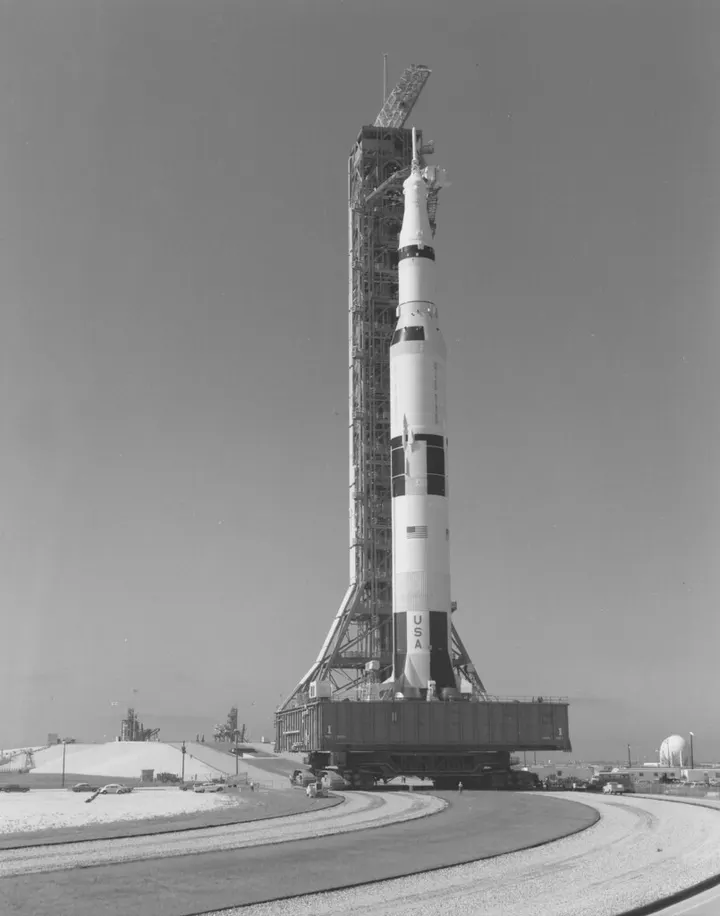
Katherine Johnson's contributions to the Mercury and Apollo programs are now legendary. In 1961, she calculated the flight trajectory for Alan Shepard's Freedom 7 mission, the first American in space. She also determined the launch window for that flight—the precise moment when the rocket could lift off and still achieve its orbital path. The next year, when NASA used electronic computers for the first time to calculate John Glenn's orbit around Earth, Glenn himself asked for Johnson to verify the numbers by hand. "Get the girl," he reportedly said. "If she says the numbers are good, I'm ready to go." Johnson ran the same equations through the same math, and Glenn's Friendship 7 mission was a success.[2][5][6][7]
For Apollo, Johnson's work was even more critical. She calculated the trajectory for Apollo 11's flight to the Moon, including the rendezvous paths for the Lunar Module and command module. When Apollo 13's oxygen tank exploded in 1970, Johnson was called upon to help calculate the return flight—a trajectory that would bring the crippled spacecraft and its three astronauts safely back to Earth. Her calculations, done by hand, were instrumental in the successful rescue. As one NASA historian put it, "If Katherine Johnson hadn't done the math, we might not have gotten to the Moon."[2][6]
From Hidden to Heroines: The Long Road to Recognition
For decades, the stories of these women were buried in archives and footnotes. They were, as actress Octavia Spencer put it, "an embarrassment"—a national oversight that left their contributions unrecognized. The turning point came in 2016 with the publication of Margot Lee Shetterly's book Hidden Figures, which was quickly adapted into an Oscar-nominated film starring Taraji P. Henson, Octavia Spencer, and Janelle Monáe. The film brought Katherine Johnson, Dorothy Vaughan, and Mary Jackson to global attention, showing a new generation the faces behind the math that put Americans in space.[4][10]
The recognition was long overdue. In 2015, President Barack Obama awarded Katherine Johnson the Presidential Medal of Freedom, America's highest civilian honor. Mary Jackson received a posthumous Congressional Gold Medal in 2019, and NASA renamed a building in her honor. The agency also established the Katherine Johnson Computational Research Facility in 2016. But the legacy extends beyond awards. As one commenter on a social media post about Hidden Figures put it, "I'm thankful this movie exists because without it I would've never even known how Black women were so involved."[5][8][10]
A Legacy That Launched a Thousand Careers
The human computers of NASA and JPL didn't just calculate trajectories; they paved the way for women in STEM. Many of them, like Dorothy Vaughan, learned to program the early electronic computers that would eventually replace them, becoming some of the first computer programmers in the process. Their stories have inspired a new generation of women and girls to pursue careers in science, technology, engineering, and mathematics. As one educator wrote, "If you've ever doubted your ability to do math because of who you are or where you come from, Katherine Johnson's story will change your perspective."[11][12]
Today, NASA's Artemis program aims to return humans to the Moon, and it does so with a workforce that is more diverse than ever. But it's worth remembering that the first footprints on the lunar surface were made possible by women who never got to walk there themselves—women who, with slide rules and sharp pencils, did the math that turned a dream into a destination. Their names may have been hidden for too long, but their calculations are etched into the very fabric of spaceflight.[4][7]
Sources
- Human Computers: The Early Women of NASA | HISTORY — history.com
- Katherine Johnson - Wikipedia — en.wikipedia.org
- When Computers Were Human - NASA — nasa.gov
- TheGrio - Katherine Johnson, Mary Jackson, and Dorothy... — facebook.com
- Women who Achieve: NASA Trailblazers Katherine Johnson, Dorothy Vaughan and Mary Jackson - Pennsylvania Psychiatric Institute — ppimhs.org
- DPMA | Katherine Johnson — dpma.de
- Black Women Mathematicians in Aeronautics and the Space Race — nps.gov
- Instagram — instagram.com
- NASA's West Area Computers — education.nationalgeographic.org
- Wikipedia: Hidden Figures — en.wikipedia.org
- Katherine Johnson: The Human Computer Who Reached the Moon — mathisfigureoutable.com
- When Computers Were Human – Teachable Moment | NASA JPL Education — jpl.nasa.gov
- history - What are some specific examples of the calculations human "computers" did for the Mercury space program? - Space Exploration Stack Exchange — space.stackexchange.com
- From Hidden to Modern Figures — nasa.gov
Reported with AI assistance using internet sources.