Breakfast Without Borders: From Iceland's Geothermal Rye to Japan's Fermented Soybeans
A look at the world's most unusual morning meals, from bread baked in hot springs to natto's polarizing texture, and what they say about culture, adaptation, and nutrition.
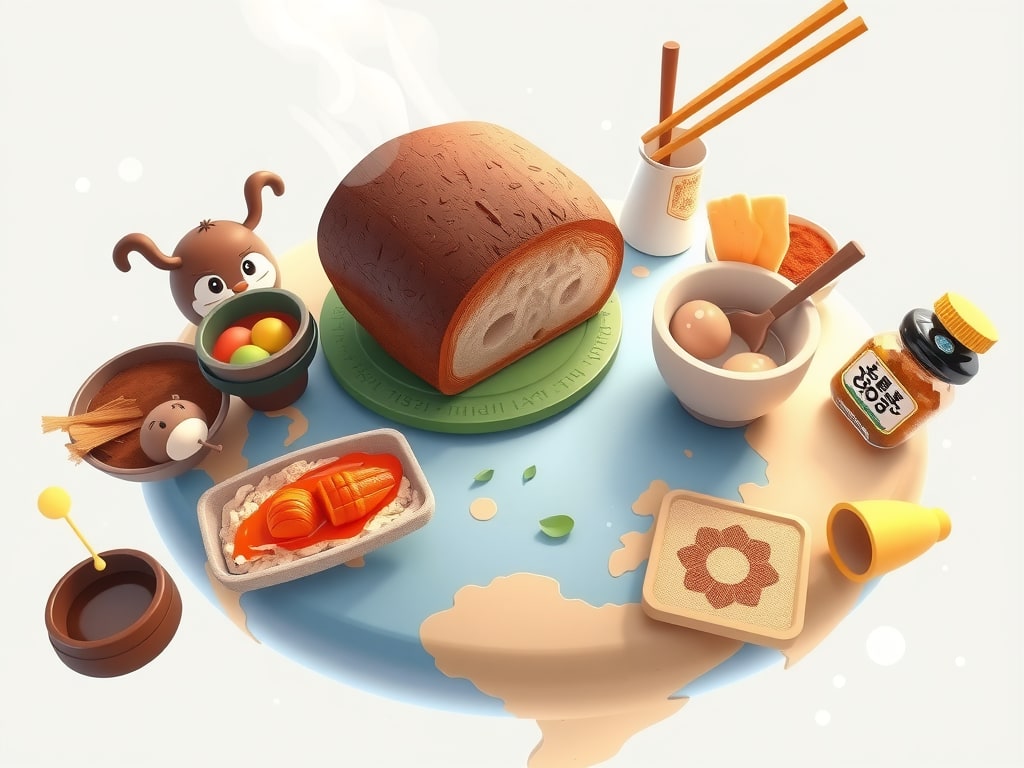
At Laugarvatn, a lakeside village in southern Iceland, Sigurður Rafn Hilmarsson, proprietor of the local geothermal baths, digs a hole about 30 centimeters deep, lowers a pot of rye dough into the sputtering pit, and covers it with earth and a stone. Twenty-four hours later, he pulls out a dark, mildly sweet loaf — rúgbrauð, or hverabrauð, the 'hot spring bread' that has been a staple of Icelandic cuisine for generations. The method, he told the BBC, 'was passed down from my grandmother to my mother to me.' In a world of instant oats and drive-thru breakfast sandwiches, this is breakfast as a geological process.[2][3]
The Bread That Bakes Itself

Iceland's geothermal rye bread is a product of necessity and ingenuity. Historically, Icelanders relied on their abundant hot springs not just for bathing but for cooking and washing clothes, according to the BBC. Rye itself arrived via trade: after the Danish crown imposed a trade monopoly in 1602, rye from Denmark — one of Europe's most prominent rye producers — became the island's predominant cereal, a status it held until the monopoly ended in 1786. The result was a bread that could be baked without any fuel beyond the earth's own heat, a trick that suited a land with scant timber and harsh winters.[3][10]
The traditional recipe is simple: rye flour, water, a touch of sugar or treacle, and time. The dough is sealed in a pot or wooden cask and buried near a geyser or hot spring. The steady, moist heat — around 100°C — steams the loaf over the course of a day, producing a dense, crustless bread that keeps for weeks. Modern versions are often baked in ovens, but Hilmarsson remains true to the old way, according to the BBC. 'It's not just bread,' he told the broadcaster. 'It's a connection to the land.'[2][3][10]
The bread is typically served with butter, smoked salmon, or herring, according to Atlas Obscura. It's also the base for brauðsúpa, a dessert soup made from stale rúgbrauð simmered with raisins and lemon, served hot with whipped cream. And it has a nickname: þrumari, or 'thunderbread,' a nod to its flatulent side effects when eaten in excess, as Wikipedia notes.[2][10]
“The culinary tradition of baking bread using geothermal energy is known in Icelandic as hverabraud or rúgbraud, translating to ‘hot spring bread’.”
Natto: Japan's Love-It-or-Hate-It Morning Staple
Halfway around the world, another breakfast provokes a different kind of heat. Natto — fermented soybeans — is a traditional Japanese food that has been eaten for centuries, often as part of a typical morning meal with rice, miso soup, and pickled vegetables, according to NYrture, a New York-based natto producer. Its texture is often described as sticky, stringy, and slimy, with a smell that some find off-putting. 'It's an acquired taste,' admits a Wikipedia entry, noting its 'powerful smell, strong flavor, and sticky, slimy texture.'[4][8]
The production process is precise: soybeans are soaked for 12 to 20 hours, steamed for six hours, then inoculated with Bacillus subtilis var. natto and fermented at 40°C for up to 24 hours, according to Wikipedia and ScienceDirect. After fermentation, the beans are cooled and aged in a refrigerator for up to a week to develop their characteristic stringiness, per ScienceDirect. Traditionally, boiled rice straw provided the bacteria, and some Japanese families still wrap cooked soybeans in straw to make natto at home, as Japan Experience notes.[4][5][9]
The dish's origins are shrouded in legend. One tale credits samurai Minamoto no Yoshiie, who, during a campaign in northeastern Japan in the 1080s, is said to have discovered fermented soybeans wrapped in rice straw, according to NYrture and Wikipedia. Another story attributes it to Prince Shotoku in the 7th century, who allegedly wrapped leftover boiled soybeans in straw for his horse; the beans fermented, and people found them delicious, per Wikipedia. By the Edo period (17th century), natto was a common street food, sold fresh by walking vendors, says NYrture.[4][8]
Today, natto is most popular in eastern Japan, including the Kanto, Tohoku, and Hokkaido regions, and less so in Kansai, according to Wikipedia. It's typically eaten on rice, drizzled with soy sauce and topped with mustard, as Revolution Fermentation describes. Its divisive nature is part of its charm: a breakfast that demands a decision.[4][6][7]
Nutrition: The Good, the Stringy, and the Thunderous
Both of these unusual breakfasts pack a nutritional punch — with caveats. Natto is rich in protein, fiber, vitamins, and minerals, and is one of the best dietary sources of vitamin K2, which supports bone and heart health, according to Japan Experience and Revolution Fermentation. A 50-gram serving provides 33% of the daily value for iron, 73% for manganese, and a whopping 542% for vitamin K, per Wikipedia. Fermentation also makes soybeans easier to digest and destroys anti-nutrients, notes Revolution Fermentation. The process produces nattokinase, an enzyme with potential blood pressure-lowering and clot-dissolving effects, according to ScienceDirect.[4][5][6][9]
Rúgbrauð, meanwhile, is a dense, whole-grain rye bread — high in fiber and low in fat, though its sweetness varies. The main drawback, as Wikipedia wryly notes, is its nickname 'thunderbread,' a testament to its gaseous aftereffects. But for Icelanders, the bread's value goes beyond nutrition: it's a link to their environment and history, a way of using the land's own heat to create something sustaining.[10]
Tradition in a Modern World
These breakfasts are not frozen in time. In Iceland, most bakers now use ovens, but geothermal baking persists as a cultural touchstone — and a tourist draw. In September 2022, American seismologist Julian Lozos attempted to bake rúgbrauð in his car during a heatwave in California's San Fernando Valley, an experiment that made Icelandic press and earned him an interview with Ryan Seacrest, according to Wikipedia. It failed, but the attempt highlighted the bread's quirky appeal.[3][10]
Natto, too, is evolving. While it remains a morning staple in Japan, it's gaining attention abroad as a 'superfood,' with Western producers like NYrture introducing it to new audiences. Yet its cultural significance remains rooted in daily life: a hearty breakfast of natto, rice, and miso soup is, as NYrture puts it, the Japanese equivalent of eggs, bacon, and toast.[8][9]
What makes these breakfasts unusual is not just their ingredients but their stories. They emerge from environmental constraints — Iceland's volcanic heat, Japan's humid climate — and from human resourcefulness. They are, in the truest sense, foods that carry their landscapes to the table.[3][5][10]
So the next time you sit down to your usual morning meal, consider the possibilities. Somewhere, a loaf is baking in the earth. Somewhere else, a bowl of beans is stretching into silky threads. Breakfast, it turns out, is as diverse as the world itself.[3][8]
Sources
- The Epic Journey of Icelandic Rye Bread - From Geothermal Magic to Gou — icelandicstore.is
- The Icelandic Bakery That Buries Its Bread in Hot Springs — atlasobscura.com
- The bread baked by bubbling geysers — bbc.com
- Natto - Wikipedia — en.wikipedia.org
- Natto - an overview | ScienceDirect Topics — sciencedirect.com
- How to Make Homemade Natto | Revolution Fermentation — revolutionfermentation.com
- Natto Power | Natto Culture — natto-power.com
- Natto: Japanese History of a Modern-Day Superfood – NYrture New York Natto — nyrture.com
- Natto: Japan's unique fermented soybean delicacy | Japan Experience — japan-experience.com
- Wikipedia: Rúgbrauð — en.wikipedia.org
- Breakfast Around the World: 40 Traditional Dishes — wander-lush.org
- 27 Breakfasts From Around The World - Beryl Shereshewsky — beryl.nyc
- Bizarre Things The Rest Of The World Eats For Breakfast — mashed.com
- Acculturation and consumption: Textures of cultural adaptation — sciencedirect.com
- Food heritage as a catalyst for environmental sustainability — discovery.ucl.ac.uk
Reported with AI assistance using internet sources.