When the Taps Run Dry: Cape Town, Mexico City, and the New Urban Water Crisis
From Cape Town's 'Day Zero' to Mexico City's looming dry taps, cities worldwide are confronting a shared water crisis—and scrambling for solutions.
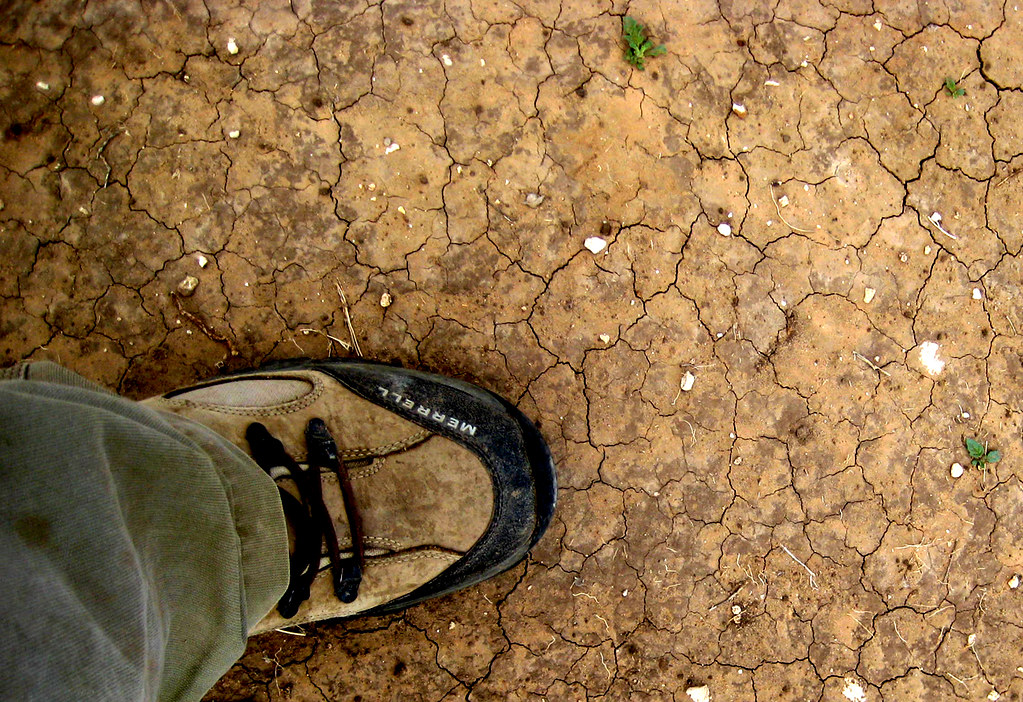
In April 2024, residents of Bogotá, Colombia, began rationing water after the Chingaza reservoir system—which supplies 70 percent of the city's water—hit its lowest level in history, following months of dry weather tied to El Niño. [11] A few years earlier, Cape Town, South Africa, famously staved off 'Day Zero' in 2018, when the city of four million nearly ran out of water after a rare drought. [9][11] And Mexico City, one of the world's largest metropolises, currently faces the possibility of taps running dry in as little as a few weeks. [11] These are not isolated events; they are symptoms of a global crisis that researchers say is being driven by climate change, urbanization, and governance failures.[11][9]
The Common Drivers: Climate, Growth, and Infrastructure
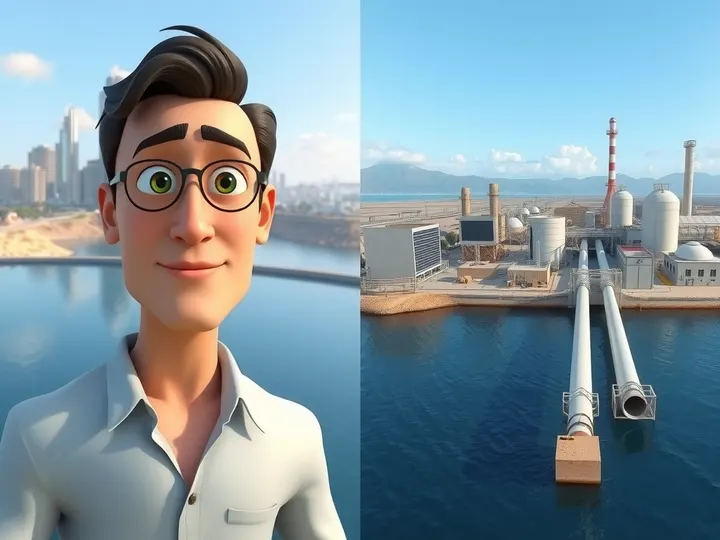
The primary causes of urban water shortages are strikingly similar across continents. Climate change is rapidly diminishing freshwater supplies through rising temperatures, shrinking snowpack, melting glaciers, and intensifying drought. [13] Nearly 40 percent of the world's land area now experiences increasingly frequent and severe droughts, disrupting food systems, energy production, and public health. [13] At the same time, urbanization and population growth are straining resources: the global urban population facing water scarcity is projected to increase from 933 million in 2016 to 1.693–2.373 billion by 2050. [2] India alone is expected to see an increase of 153–422 million water-scarce urban residents. [2][13][2]
Cape Town's crisis illustrates the interplay of these factors. The Western Cape Water Supply System relies almost entirely on rainfall captured in six major dams in mountainous areas. [9] A multi-year drought that began in 2015 pushed dam levels down to between 14 and 29 percent of capacity by mid-2017. [9] The city, which had grown by almost a million people over the previous decade without developing new water sources, was forced to impose strict restrictions. [12] Urban and agricultural use consume about 70 and 30 percent of the water supply, respectively, with significant seasonal variations. [9][9][12]
Mexico City's predicament is compounded by geography and infrastructure. The city has long over-exploited its groundwater aquifers, a factor that contributes to water scarcity globally. [3] Climate change is exacerbating water affordability and availability issues, as higher temperatures increase evaporation and alter precipitation patterns. [7][6] The result is a city where some neighborhoods have water only a few hours a day, while others face the prospect of none at all.[3][7][6]
Innovative Responses: From Greywater to Desalination
Cities are fighting back with a mix of old and new solutions. Cape Town adopted an increasing block tariff structure, penalizing heavy users while keeping the first block near zero to ensure equitable access to basic water. [9] This helped cut daily usage by more than half to around 500 million liters per day in March 2018. [9] Strong rains in June 2018 and again in 2020 eventually refilled the dams, but the crisis had already sparked a search for more resilient supplies. [9][9]
Innovative technologies are emerging from unlikely places. According to UNICEF, young innovators have developed Cycleau, which turns greywater into drinking water, and HurRain, which collects water from arid skies using technology inspired by desert beetles and cacti. [4] Desalination—removing salt from seawater—has become more energy-efficient and cost-effective with advances in reverse osmosis and solar-powered desalination, according to Sea Going Green. [5] Rainwater harvesting, an ancient method, is being revived for domestic use, irrigation, and groundwater recharge. [5][4][5]
More than two thirds of water-scarce cities can relieve water scarcity by infrastructure investment, but the environmental trade-offs of large-scale solutions must be guarded against. [2]
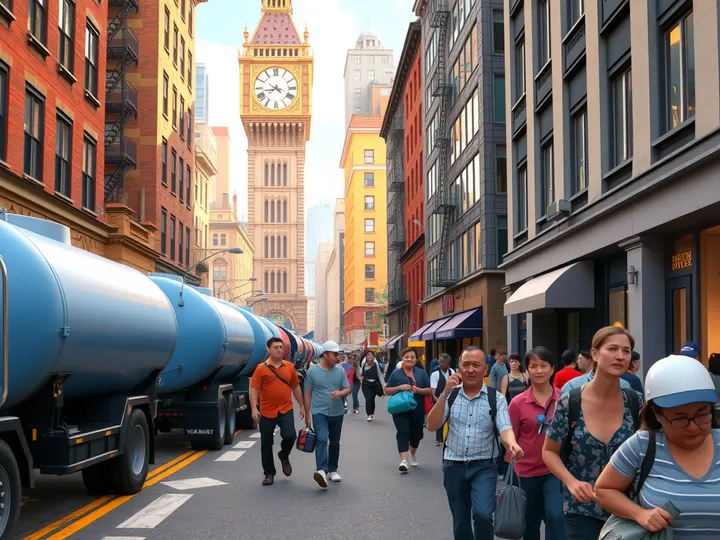
Nature-based solutions are also gaining traction. By protecting, restoring, and sustainably managing forests within watersheds, cities can improve water quality and quantity in a cost-effective way, according to the World Resources Institute. [11] For example, Bogotá's Chingaza reservoir system depends on the health of surrounding páramo ecosystems, which act as natural sponges. [11] Similarly, cities like Los Angeles are exploring how to adapt stormwater systems to handle fewer but more intense storms, as projected by climate models. [8][11][8]
The Challenges That Remain
Despite these innovations, common challenges persist. Many cities rely on a limited number of reservoirs, making them vulnerable to drought. [12] Over-pumping of groundwater has led to depleted aquifers, as seen in California's Central Valley. [12] And providing water to vulnerable populations—the elderly, the poor, those in informal settlements—remains a daunting task. [12] The urban water affordability crisis is exacerbated by climate change, as water becomes scarcer and more expensive to treat and deliver. [6][12][6]
The consequences of inaction are severe. Water scarcity carries profound humanitarian, environmental, and economic costs. [13] Globally, $260 billion is lost each year due to inadequate access to basic water and sanitation, while universal access would generate an estimated $18.5 billion annually in economic benefits from avoided deaths alone. [13] By 2030, up to 700 million people could be displaced due to worsening water stress, contributing to climate migration and geopolitical instability. [13] In Cape Town, the crisis threatened the economy, tourism, and even public safety, with observers expressing concern about the risk of violence. [12][13][12]
A Global Wake-Up Call
The water crisis is not a distant problem; it is unfolding now, in cities rich and poor. Half of the world's largest cities experience water scarcity, according to Wikipedia. [3] The number of large cities exposed to water scarcity is projected to increase from 193 to as many as 284, including 10–20 megacities. [2] As climate change continues to raise global temperatures and make rainfall more erratic, water sources are less able to maintain a consistent supply and reliably replenish. [11][3][2][11]
The good news is that solutions exist—from infrastructure investment to nature-based approaches to simple conservation. More than two thirds of water-scarce cities can relieve water scarcity by infrastructure investment, but the environmental trade-offs of large-scale solutions must be guarded against. [2] The challenge lies in political will, funding, and the equitable distribution of water. As the World Resources Institute notes, more cities will likely face these kinds of shortages as climate change, deforestation, and ecosystem degradation increasingly threaten the natural systems that maintain water supplies. [11] The time to act is now, before the taps run dry.[2][11]
Sources
- The Nature and Causes of the Global Water Crisis | Water Resources and Hydrogeology — hydro.stanford.edu
- Future global urban water scarcity and potential solutions | Nature Communications — nature.com
- Water scarcity - Wikipedia — en.wikipedia.org
- Young innovators design solutions to water scarcity | UNICEF Europe and Central Asia — unicef.org
- 7 Sustainable Solutions to Water Scarcity — Sea Going Green — seagoinggreen.org
- Urban water affordability crisis exacerbated by climate change — nature.com
- Climate Impacts on Water Resources | Climate Change Impacts | US EPA — 19january2017snapshot.epa.gov
- The Impact of Climate Change on Stormwater Management | Water Supply Security (WSS) — ucanr.edu
- Wikipedia: Cape Town water crisis — en.wikipedia.org
- How Cities Run Dry: Drivers Of Water Shortages And Policy Implications • Energy Innovation — energyinnovation.org
- As Cities Face Water Shortages, Nature Offers Solutions | World Resources Institute — wri.org
- Running Out of Water: Cape Town, the U.S., and Drought - Legal Aggregate - Stanford Law School — law.stanford.edu
- Understanding Water Scarcity and Its Global Significance — ccc.bc.edu
- Frontiers | Effects of Urban Development Patterns on Municipal Water Shortage — frontiersin.org
- Addressing a Growing Water Crisis in the U.S. | CDC Foundation — cdcfoundation.org
Reported with AI assistance using internet sources.