The Software That Saved Apollo 11: Margaret Hamilton's Unsung Triumph
While Neil Armstrong took the giant leap, Margaret Hamilton's software engineering was crucial to the mission's success. Her story is a reminder of the unsung heroes behind historic achievements and a lesson in perseverance and innovation.
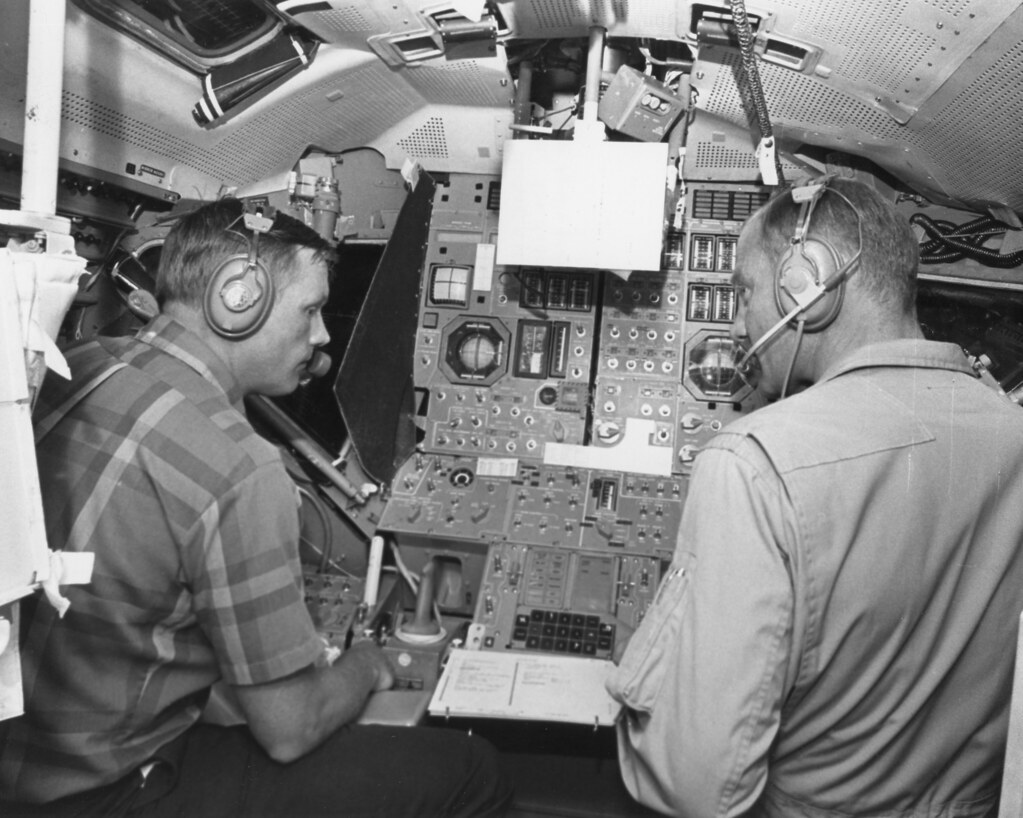
On July 20, 1969, as the lunar module Eagle descended toward the Moon's surface, an unexpected computer alarm blared in the cockpit. Astronaut Neil Armstrong, his pulse steady, had just seconds to decide: abort or continue. The alarm was triggered by the Apollo Guidance Computer (AGC) — a machine with less processing power than a modern calculator — and its software, written by Margaret Hamilton and her team at MIT, was about to face its ultimate test. The software, designed to prioritize tasks and recover from errors, flagged a critical issue: the computer was overloaded, but it was not failing. Instead, it was doing exactly what Hamilton had programmed it to do — dropping non-critical tasks to keep the landing on track. The mission continued, and history was made. But behind that giant leap for mankind was a quiet revolution in software engineering, led by a woman who had to fight for her place in a field that didn't yet have a name.[1][2][4][6]
The Challenge: Writing Software From Scratch
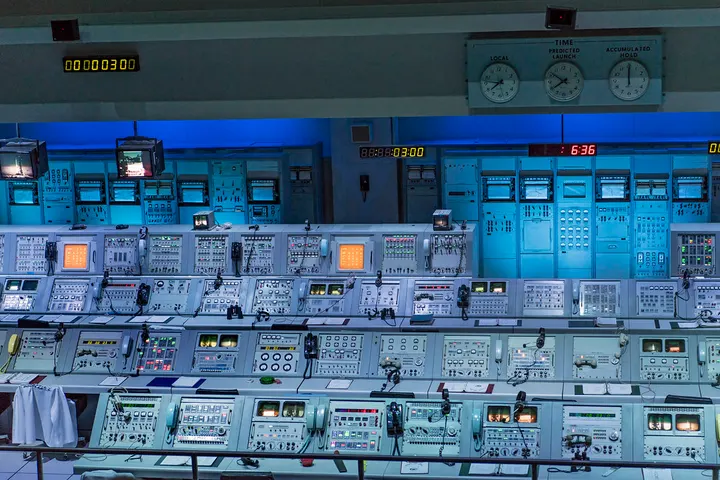
In the early 1960s, software engineering was not a discipline. It wasn't taught in universities, and there were no textbooks or best practices. Hamilton, who had studied mathematics and philosophy at Earlham College in Indiana, joined the MIT Instrumentation Laboratory in 1961, working first on the SAGE Project — an Air Force system designed to detect enemy aircraft. There, she wrote software for one of the first large-scale computers, but the real challenge came when MIT was tapped in 1961 to build the guidance computer for NASA's Apollo program. The AGC, as it became known, was the first digital, general-purpose, multitasking, interactive portable computer — and the first to use integrated circuits. But the software needed to run it didn't exist. Hamilton and her team had to invent it from scratch, designing programming techniques that had never been tried before. They had to figure out everything on their own, from how to manage memory to how to ensure the system could handle the unforgiving environment of space.[2][7][8][10]
The AGC's memory was a marvel of handcrafted engineering. Most of the software was stored in core rope memory, a read-only system where wires were woven through and around magnetic cores by hand. Writing and assembling a program took months, and a single error meant re-weaving the rope. The entire computer had just 36,864 words of read-only memory and 2,048 words of erasable memory — a fraction of what a modern smartphone uses for a single app. Yet, this hardware was only half the story. The software had to be flawless, because there was no second chance in space. Hamilton's team adopted a rigorous approach, testing and retesting, simulating every conceivable scenario. Their diligence paid off: no software bugs are ever known to have occurred during any crewed Apollo mission, a record that still stands as a testament to their discipline.[2][8][10]
“She was one of the first computer software developers; she was the first to use the term 'software engineering.'”
The Term 'Software Engineer' and a Battle for Respect
Hamilton didn't just write code; she fought for its legitimacy. In the 1960s, programming was often seen as a support role, not a serious engineering discipline. Hamilton was determined to change that. She coined the term "software engineering" to give the work the same respect as hardware engineering. As she later explained, "I began to use the term 'software engineering' to distinguish it from hardware and other kinds of engineering, yet treat each type of engineering as part of the overall systems engineering process." This wasn't just semantics. It was a battle for recognition, and Hamilton was at the forefront. She led the Software Engineering Division at MIT, becoming the first female programmer on the Apollo project and later its director. But being a woman in a male-dominated field in the 1960s came with its own obstacles. She faced skepticism and bias, but she overcame them through sheer expertise and determination. Her work spoke louder than any prejudice.[1][2][3][4][6]
The Landing: When the Software Saved the Mission
The most dramatic moment for Hamilton's software came during the Apollo 11 landing. As the Eagle descended, the AGC was bombarded with tasks. The rendezvous radar, which was not needed for landing, was feeding the computer with extra data, overloading its processing capacity. The computer's priority display system — a feature Hamilton had designed — kicked in. It alerted the astronauts to the problem, showing a "1202" alarm that indicated the computer was overloaded but still functioning. The software was designed to restart itself if it became overloaded, dropping lower-priority tasks to keep the critical ones running. This was exactly what Hamilton had programmed for. Her error detection and recovery software allowed the computer to communicate asynchronously with the astronauts, interrupting them with priority displays in emergencies. The astronauts, trained by Hamilton's team, knew to trust the computer. They continued the descent, and the landing succeeded. Without that software, the mission would likely have been aborted.[1][4][6]
Hamilton's innovation wasn't just about code; it was about human-machine interaction. She understood that the astronauts needed to be able to trust the computer, and that the computer needed to communicate clearly. Her solution for one potential problem was simple: when a priority display appears, the astronaut should count to five. This gave the computer time to recover and the astronaut time to assess the situation. It was a small but crucial detail that exemplified her holistic approach to software design.[1]
The Photo and the Legacy
One of the most iconic images of the Apollo era shows Hamilton standing next to a stack of code listings that rises to her shoulder. The photo, taken at MIT, symbolizes the sheer volume of software she and her team wrote. The code, printed on paper, was as tall as she was — a physical manifestation of the intellectual effort behind the mission. But the photo also represents something deeper: the recognition that software was as critical to spaceflight as any piece of hardware. Hamilton's work laid the foundation for modern software engineering, influencing everything from rigorous testing methods to the way we think about human-computer interaction. Her contributions were finally acknowledged in 2016, when President Barack Obama awarded her the Presidential Medal of Freedom, the highest civilian honor in the United States. The citation praised her work leading to the development of on-board flight software for NASA's Apollo Moon missions.[1][2][4][5]
Lessons for Today's Engineers
Hamilton's approach offers timeless lessons for today's software engineers and leaders. First, reliability is paramount. In an era where software failures can cause financial losses or even loss of life, Hamilton's insistence on rigorous testing and error detection is more relevant than ever. Second, human-machine interaction matters. Hamilton designed software that could communicate with astronauts in real-time, respecting their role in the loop. Today's systems, from self-driving cars to medical devices, must similarly consider how humans will interact with them. Finally, Hamilton's perseverance in the face of doubt — both about software engineering and about women in the field — is a reminder that innovation often comes from those who challenge the status quo.[4]
Margaret Hamilton's story is not just a footnote in the history of the Moon landing; it is a central chapter. While Neil Armstrong and Buzz Aldrin took the giant leap, Hamilton and her team provided the invisible safety net. They proved that software could be as reliable as the most meticulously crafted hardware, and that a woman's place was not just in the kitchen, but at the helm of the most ambitious engineering project of the 20th century. As we look back on Apollo 11, let us remember not only the footprints on the Moon but also the lines of code that got us there.[1][2]
Sources
- Margaret Hamilton (software engineer) - Wikipedia — en.wikipedia.org
- Margaret Hamilton: The First Software Engineer - History of Data Science — historyofdatascience.com
- Margaret Hamilton | Biography & Facts — britannica.com
- Margaret Hamilton — science.nasa.gov
- Margaret H. Hamilton: Apollo Computer Programmer | Space — space.com
- Margaret Hamilton - CHM — computerhistory.org
- Apollo 11 Computing Power: The Tech Behind It | FedTech Magazine — fedtechmagazine.com
- 50 years ago : the computer and software that took Apol... — space-collectibles.com
- The Apollo Guidance Computer — computer.org
- Wikipedia: Apollo Guidance Computer — en.wikipedia.org
Reported with AI assistance using internet sources.