The Forgotten Pioneers: How Women’s Football Thrived in the 1920s Before Being Banned
Before the modern women’s game, packed stadiums in England cheered female footballers. This history reveals how sexism stopped the sport for 50 years—and why that past matters today.
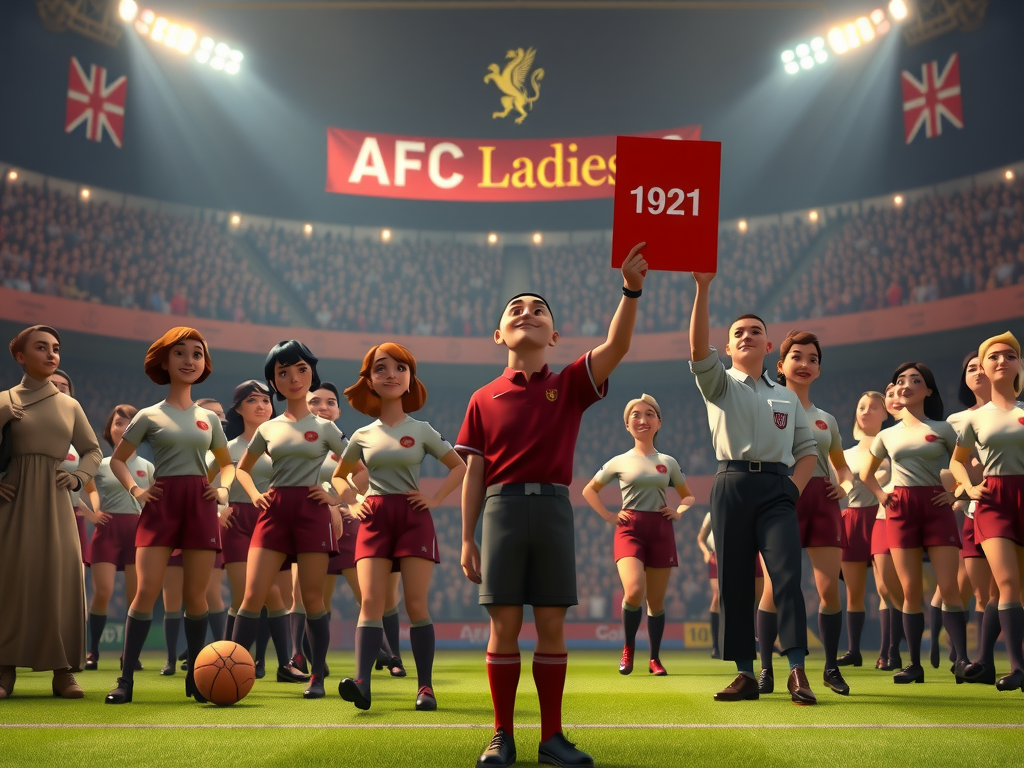
In the aftermath of World War I, women's football in England experienced an unprecedented boom. Teams like Dick, Kerr's Ladies F.C. drew enormous crowds, with a match on Boxing Day 1920 at Goodison Park attracting 53,000 spectators. This golden era, however, was short-lived. In 1921, the Football Association (FA) banned women's teams from playing on affiliated grounds, effectively killing the sport for half a century.[1][2]
A Golden Era: Women's Football in the 1920s
Dick, Kerr's Ladies Football Club was one of the earliest known women's teams in England, existing from 1917 to 1965 and playing 755 games, per Wikipedia. In 1920, they played more matches than any professional men's team. Key players like Lily Parr and Alice Woods became household names, drawing crowds to grounds across the country.[1][2]
International matches also captured public imagination. In 1920, Dick, Kerr's Ladies played a French side in front of 25,000 spectators—a match widely considered the first women's international game, according to Wikipedia. The Boxing Day match at Goodison Park in 1920 set a world record for women's club attendance that stood for over 98 years.[1][2]
“The Dick, Kerr's Ladies playing more games in 1920 than any professional men's team in the same period.” — Wikipedia
The Ban: Football 'Not Fitted for Females'
On December 5, 1921, the FA banned all women's teams from playing on Association-affiliated grounds, according to Wikipedia. The stated reasons: football was “not fitted for females,” high player expenses, and alleged financial corruption. The FA claimed charitable donations were being misappropriated. The ban forced women's games to smaller capacity fields with fewer resources and less exposure.[1][2]
In response, women formed the English Ladies' Football Association (ELFA), incorporating 57 teams. But without access to major grounds, crowds dwindled and funding remained limited, per Wikipedia. The FA's decision effectively dismantled the thriving women's football scene.[1]
“The FA claimed that football was unsuitable for females and that charitable donations were being misappropriated.” — Wikipedia
50 Years Lost: The Long Shadow of the Ban
The FA ban stayed in place for 50 years. Most women's teams disbanded, and the few that remained played in obscurity. It took an order from UEFA in 1971 to force the FA to remove its restrictions on women's playing rights, according to Wikipedia. The FA finally recognized women's football in July 1971, but it would take until 1993 for the FA to take over its administration and funding.[1][2]
The Women's Football Association was established in 1969, leading to the creation of a women's England team and premier league. However, the decades-long ban had set back the sport's development enormously, leaving it to rebuild from scratch.[1]
Lessons for Today's Fight for Equality
The story of the 1921 ban is a stark reminder of how institutional sexism can derail progress.[1][2]
Yet the passion of the 1920s pioneers endures. Lily Parr, Alice Woods, and their teammates proved that women's football could draw massive crowds.[2]
The ban was rescinded in 1971, but the echoes of that decision are still felt.[1][2]
Sources
- Wikipedia: Women's football in England — en.wikipedia.org
- Wikipedia: Dick, Kerr Ladies F.C. — en.wikipedia.org
Reported with AI assistance using internet sources.