The Race to Save the Last Vaquitas: Inside the Fight to Keep the World's Most Endangered Mammal Alive
With fewer than 10 vaquitas left in the Gulf of California, the world's smallest porpoise is on the brink. This piece goes beyond the headlines to explore the innovative conservation efforts—from acoustic monitoring to trained dogs—and the complex politics of illegal fishing.
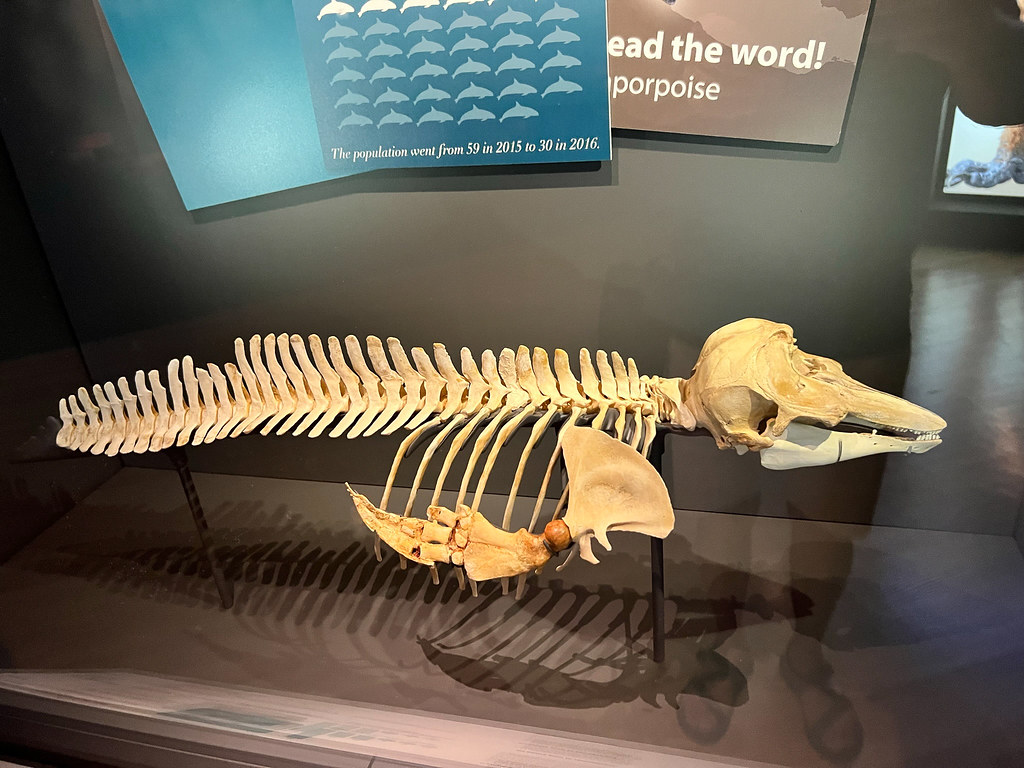
In the murky, tide-swept waters of the northern Gulf of California, a ghost is fading. The vaquita — the world's smallest porpoise, endemic to this one corner of the sea — has been counted at fewer than ten individuals as of 2023, according to the World Wildlife Fund. Every census in recent decades has put the population below 1,000, but the slide has been brutal: from an estimated 567 in 1997 to roughly 245 by 2008, and then a dizzying 92% decline between 1997 and 2015, per a University of Miami conservation report. By summer 2018, scientists estimated fewer than 19 remained, with a median of just 8. The vaquita is not just endangered; it is, as the IUCN has classified it since 1996, critically endangered — and now, quite possibly, on its last fins.[1][2][3][4][11]
Counting Ghosts: How Scientists Track an Almost-Invisible Porpoise

Counting vaquitas is no easy task. They are shy, small, and surface rarely, so researchers rely on two main tools: visual surveys and passive acoustic monitoring (PAM). PAM uses underwater microphones, or hydrophones, to record the vaquita's distinctive echolocation clicks. As a Whale Scientists article explains, detectors automatically identify click trains, which researchers then manually confirm, and the analysis is based on the average number of clicks within 24 hours. This method has documented a 58% decline in detection rates from 1997 to 2007, and from 2011 to 2015, annual rates of change in acoustic activity fell by 17%, 3%, 46%, and 35% — a population decline of about 34% per year, per the same source.[4][11]
But the hydrophones face the same dangers as the porpoises they track. Fishing gear can entangle and destroy the equipment, which has restricted studies to areas and times with limited gillnet and trawl fishing — inside the Vaquita Refuge from June through September, according to Whale Scientists. That limitation is a grim irony: the very nets that kill vaquitas also blind the scientists trying to save them.[4]
From 2011 to 2015, annual rates of change in acoustic activity decreased by 17%, 3%, 46%, and 35% respectively — a population decline of 34% per year.
The Net That Kills: Totoaba and the Black-Market Bladder
The vaquita's decline is not a natural tragedy. It is a bycatch crisis, driven by gillnets set for a fish called the totoaba — a large, similarly sized species whose swim bladder is trafficked to Asia at prices that rival cocaine by weight, according to Sea Shepherd. The totoaba fishery was officially closed in 1975 due to severe overfishing, but illegal nets continue to kill vaquitas, as NOAA Fisheries notes. Despite a partial gillnet ban in 2015 and a permanent exclusion zone in 2017, illegal totoaba fishing remains prevalent in vaquita habitat, and the population has continued to fall, according to Wikipedia's background on the species.[7][10][8]
The Mexican government has announced bans and enforcement efforts — a two-year gillnet ban in April 2015, a permanent ban in July 2016, and a ban on night fishing to thwart poachers, per the Porpoise Conservation Society. The International Whaling Commission approved emergency measures in 2016 to permanently ban gillnet fishing in the vaquita's range, remove existing nets, and suppress the illegal totoaba trade, according to the University of Miami report. Yet the nets remain. As the IUCN Cetacean Specialist Group puts it, none of the measures to prevent gillnet fishing were properly implemented by authorities, and the estimated rate of decline has remained extremely high.[6][3][11]
Innovation in the Water: Dogs, Drones, and Dolphins
With the vaquita teetering on the edge, conservationists have turned to unconventional tools. The World Wildlife Fund reports that trained dogs and drone surveillance are being deployed to detect vaquitas and monitor illegal fishing. Sea Shepherd crews work side-by-side with the Mexican Navy to patrol the refuge, recover ghost gear, and deter poachers, according to the organization's website. But the most dramatic — and controversial — effort was VaquitaCPR, a program that attempted to capture vaquitas for a protected breeding sanctuary.[2][7]
In June 2017, Mexico announced plans to use trained dolphins to corral the remaining porpoises into a sanctuary, but that method failed, per the University of Miami report. In November 2017, VaquitaCPR caught a mature female and transported her to a floating sea pen, but she died within hours from stress. The program has since ceased active capture efforts, according to the same source. The experience underscored a painful lesson: for a species this fragile, even well-intentioned rescue can be lethal.[3]
The Sanctuary Debate: A Lifeline or a Death Trap?
The capture-and-sanctuary plan remains deeply divisive. Proponents, like the VaquitaCPR program, argue that with the population so low, a sanctuary is critical to buy time while gillnets are removed from the wild. The program's plan outlined four phases: capture, house and care, breed, and reintroduce into a gillnet-free habitat, according to VaquitaCPR's website. But critics point to the 2017 deaths and the stress inflicted on captured animals, as Wikipedia's article notes: attempts to start a captive population have proved more threatening than helpful. Research indicates the vaquita is still reproducing in the wild, and genetic diversity remains sufficient for recovery — if the nets are kept out of the refuge, according to Sea Shepherd.[12][8][7]
The sanctuary debate also reflects a deeper tension: saving a species versus saving a way of life. Local fishing communities, long dependent on gillnets for shrimp and finfish, have seen their livelihoods threatened by bans. The suspension of compensation to fishermen who agreed not to fish with gillnets, and the lack of acceptable alternatives, led to a resumption of illegal fishing, according to the IUCN Cetacean Specialist Group. Conservation groups have offered alternative livelihoods such as sustainable fishing practices and eco-tourism, per the World Wildlife Fund, but the transition is slow and fraught.[11][2]
Why It Matters: The Gulf's Canary
The vaquita is not just a small, shy porpoise; it is a sentinel for the entire Gulf of California, a UNESCO World Heritage Site and one of the most ecologically diverse seas on Earth, home to more than 5,000 species of micro-invertebrates, according to Wikipedia. The northern gulf, with tidal ranges up to 5 meters, is a unique and fragile ecosystem. The vaquita's extinction would be the first cetacean lost to human activity in modern times — a grim milestone. But there is hope, however slender. A 2022 study's simulations indicate that the species has a chance to survive and recover if all bycatch is halted, despite other threats, per Wikipedia. The window is closing, but it is not yet shut.[9][8]
The race to save the vaquita is a race against time, bureaucracy, and human greed. Every hydrophone click counted, every ghost net recovered, every illegal net seized is a small victory. But the ultimate test is whether the world — and Mexico in particular — can enforce the laws already on the books. As the IUCN Cetacean Specialist Group states, the first and immediate conservation priority must be to strengthen enforcement efforts and fishing regulations, including a complete ban on gillnet possession and use throughout the vaquita's range. The vaquita's fate rests on that simple, brutal requirement: keep the nets out of the water.[5]
Sources
- Natural History: Vaquita — biologicaldiversity.org
- Only ~10 vaquitas remain — worldwildlife.org
- A Story of Dramatic Conservation Effort: Saving the Vaquita Porpoise (Phocoena sinus) from Extinction – Shark Research & Conservation Program (SRC) | University of Miami — sharkresearch.earth.miami.edu
- Acoustic monitoring of the critically endangered vaquita — whalescientists.com
- Vaquita — mmc.gov
- Save the Vaquita Porpoise — Porpoise Conservation Society — porpoise.org
- Vaquita: On The Brink Of Extinction — seashepherd.org
- Wikipedia: Vaquita — en.wikipedia.org
- Wikipedia: Gulf of California — en.wikipedia.org
- Vaquita Conservation and Abundance — fisheries.noaa.gov
- Vaquita — iucn-csg.org
- VaquitaCPR Conservation Program Plan | VaquitaCPR — vaquitacpr.org
Reported with AI assistance using internet sources.